3 December 2025
Black Pepper Grades Explained: Bold, Tellicherry, Malabar
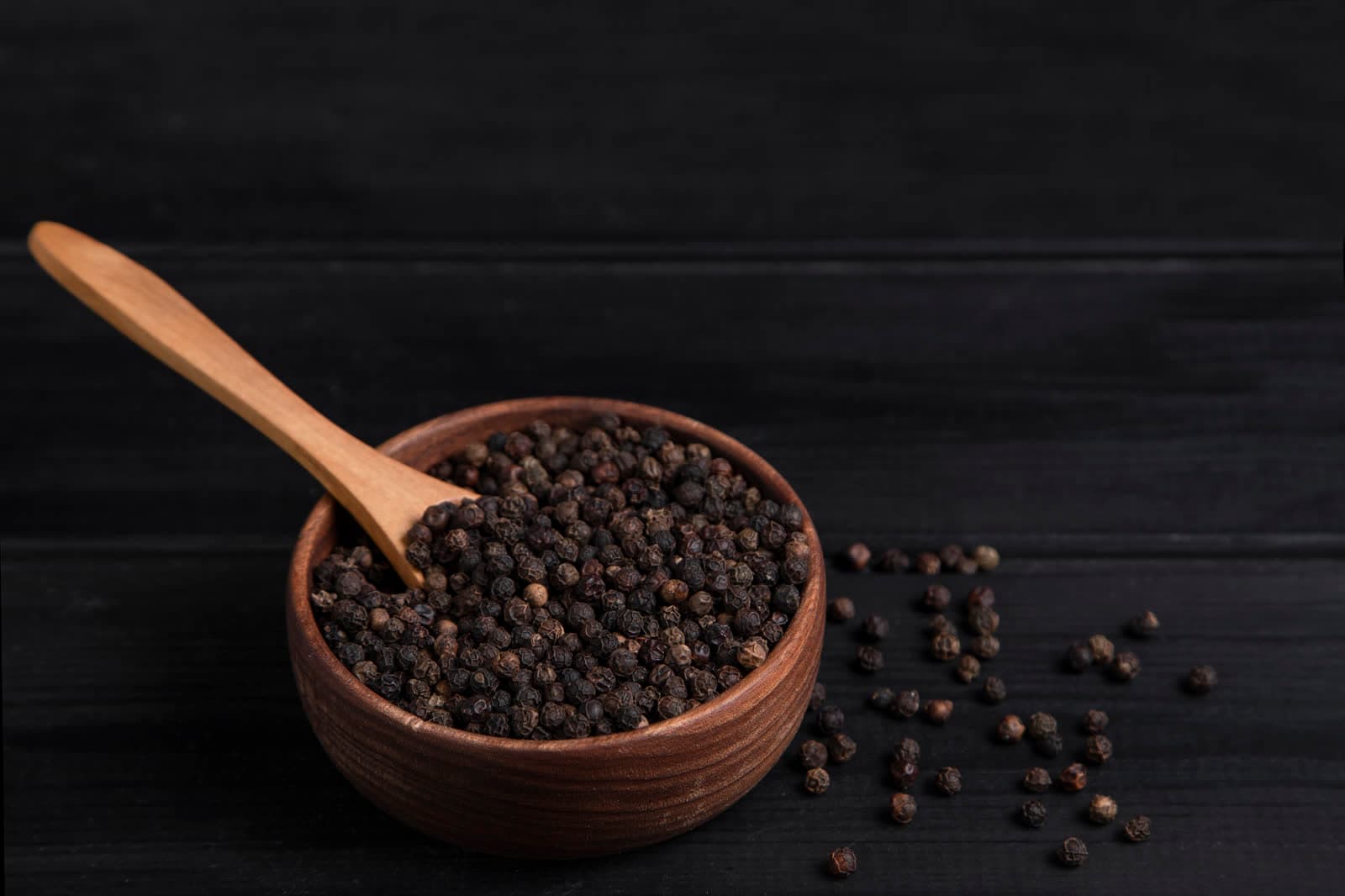
Black pepper sits on almost every Indian table, yet most of us buy it without a second look at the label. Understanding black pepper grades changes that. Words like "bold", "Tellicherry" and "Malabar" describe how the berries were sorted, and once you know what they mean, you can tell at a glance whether a pack of peppercorns will bring real heat and fragrance to your winter rasam or just a dusty sting.
Why black pepper is graded at all
Peppercorns are the dried berries of a climbing vine. The berries on a single spike do not ripen evenly, and after harvest and drying, any batch contains berries of different sizes and maturity, along with some dust, stalks and underdeveloped berries. Grading sorts all of this into consistent lots.
Graders look at a few things:
- Size: berries are sieved, and those retained on larger mesh sizes make the higher grades.
- Density: measured as the weight of a fixed volume of pepper. Heavier lots contain more mature, well-filled berries.
- Light berries and pinheads: hollow, underdeveloped berries and tiny immature ones are counted and kept to a minimum in better grades.
- Cleanliness and moisture: extraneous matter should be low, and the pepper should be properly dry so it does not grow mould in storage.
You will also see the word "garbled" in trade grades. It simply means the pepper has been cleaned and sorted. Ungarbled pepper has not been through that step.
Bold vs regular black pepper: what size tells you
"Bold" pepper is made up of larger berries, the ones held back on the bigger sieves. Regular or standard pepper is a mix of sizes, often with a higher share of small berries. Neither is fake or inferior by definition, but they suit different jobs.
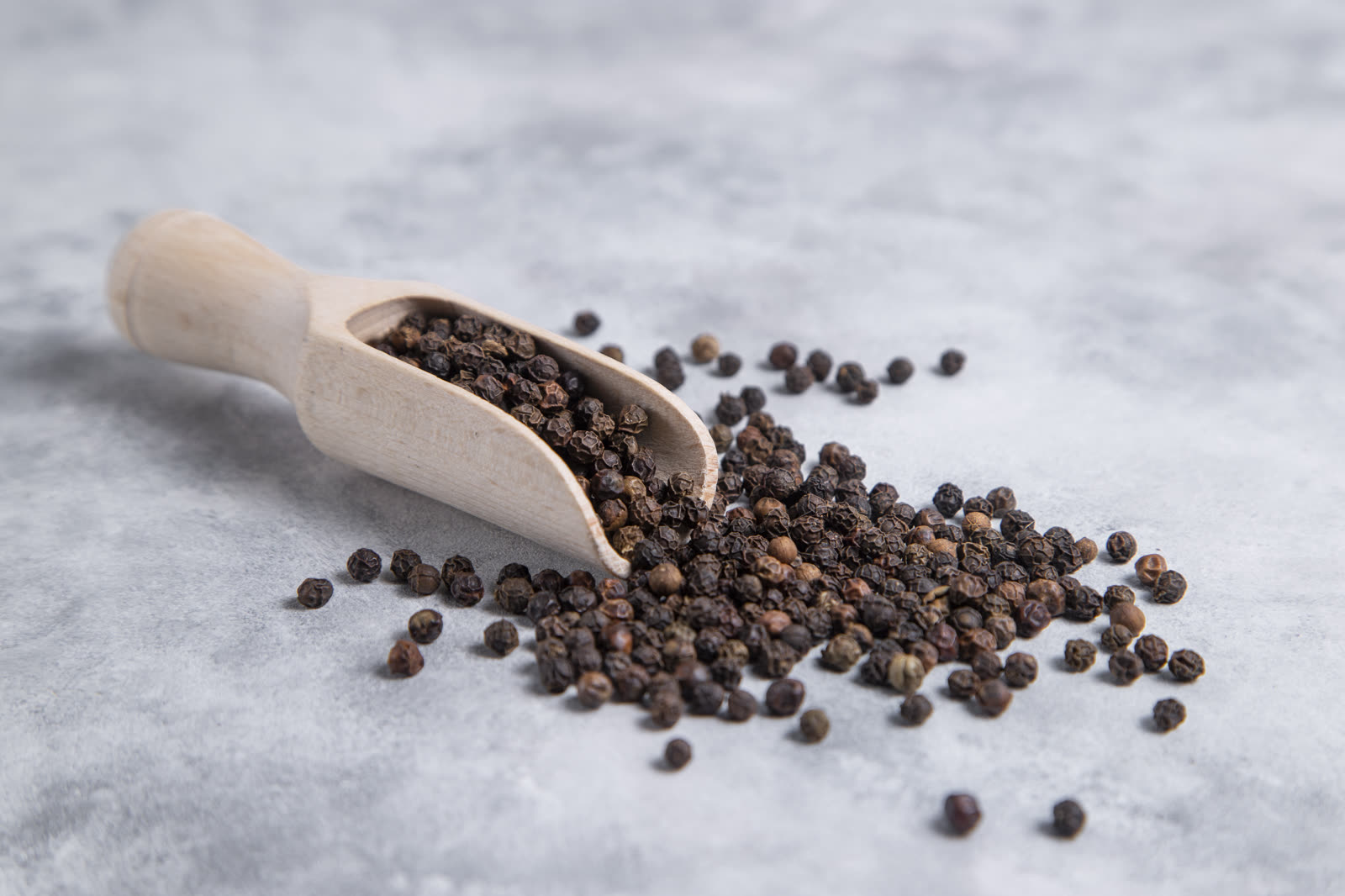
Larger berries tend to be more fully developed. A mature berry has a thick layer of flesh around the seed, and that outer layer is where much of pepper's aroma sits. Pepper's two personalities come from two different sources: the sharp heat comes mainly from a compound called piperine, while the woody, citrusy, slightly piney fragrance comes from volatile oils. Mature, well-dried berries generally carry both in good measure.
| Term | What it refers to | Good to know |
|---|---|---|
| Bold | Larger berries retained on bigger sieves | Ideal for grinders, whole use and dishes where pepper leads |
| Regular or standard | Mixed sizes, more small berries | Fine for everyday grinding if clean and aromatic |
| Garbled | Cleaned and sorted pepper | Fewer stalks, stones and light berries |
| Light berries | Hollow, underdeveloped berries | Low in flavour, tend to float in water |
| Pinheads | Very small, immature berries | Add bulk rather than flavour |
What Tellicherry and Malabar actually mean
Both names come from India's south-western coast, which has been at the centre of the pepper trade for centuries. Malabar is the historical name for that stretch of coastline, and Tellicherry, now Thalassery, was one of its trading ports.
In today's spice trade, though, these words are used mainly as grade names. Malabar grades, such as MG1 (Malabar Garbled grade 1), describe a standard, cleaned black pepper of good density. Tellicherry grades describe a selection of the larger berries from the crop, with terms like TGEB (Tellicherry Garbled Extra Bold) and TGSEB (Tellicherry Garbled Special Extra Bold) marking the biggest sizes.
So when you see "Tellicherry" on a jar, read it first as a promise about berry size and grading, not as a guarantee of a particular farm or village. What matters in your kitchen is whether the pepper actually meets that description: big, dense, clean and fragrant. The checks below help you find out for yourself.
Density, aroma and colour: qualities you can check at home
Density and the water test
Drop a teaspoon of peppercorns into a glass of water and give it a minute. Mature, dense berries mostly sink. Light, hollow berries float. A few floaters are normal, but if a good share stays on top, the lot has a lot of light berries. The same test helps flag papaya seeds, a known adulterant: they look similar at a glance but are smoother, paler and more oval, and they tend to float.
Aroma and heat
Crack a berry between your teeth or crush a few in a mortar. Good pepper smells sharp, woody and bright even before it hits the tongue, and the heat builds steadily rather than fading at once. If you have to crush a spoonful to smell anything, the pepper is old or poorly stored.
Colour and texture
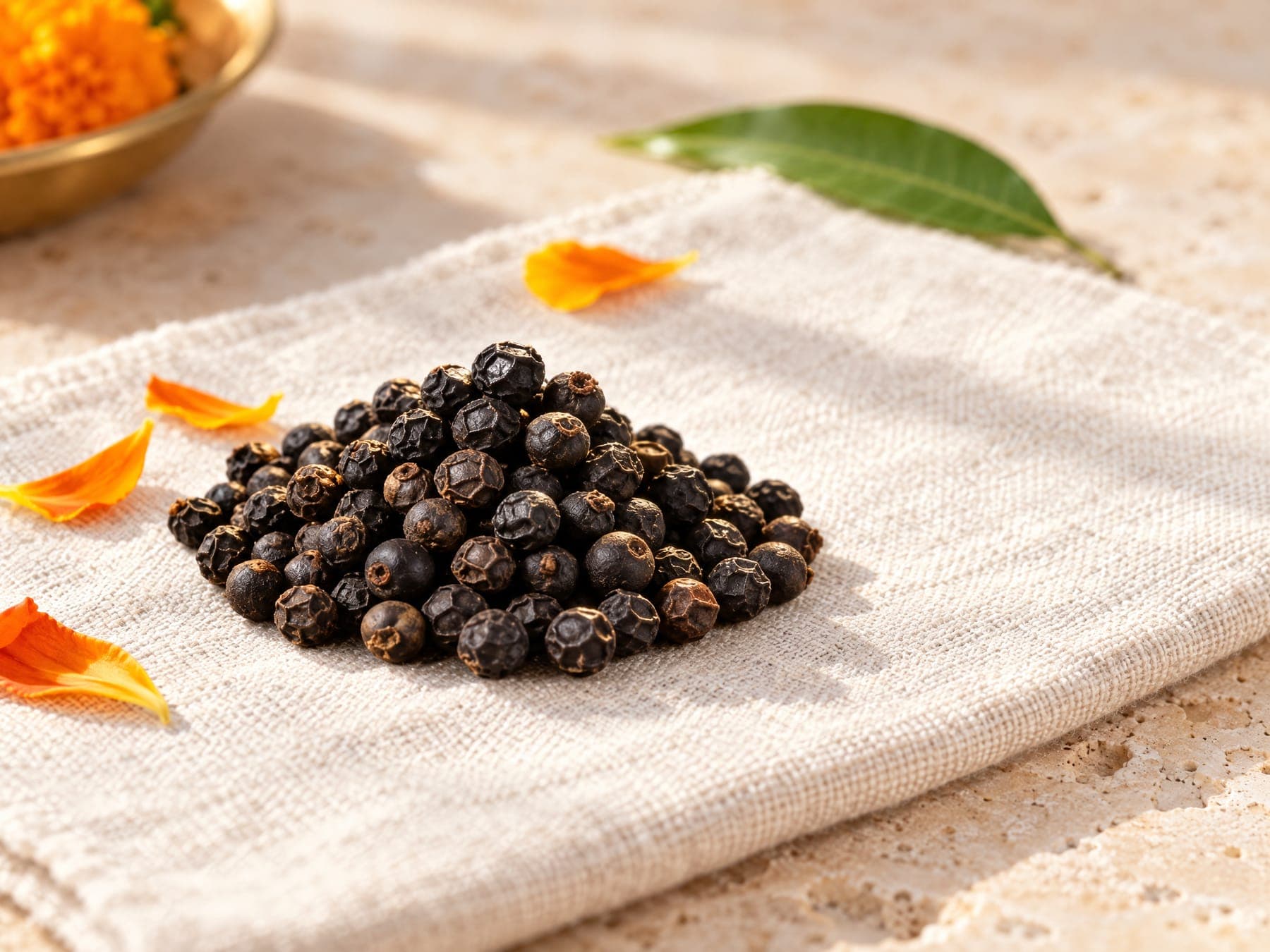
Look for dark brown to black berries with deep, even wrinkles. Some colour variation is natural. A greyish, dusty coating often points to age, while berries that feel soft or smell musty may have picked up moisture. Good peppercorns are hard and snap cleanly when crushed.
How to judge peppercorns before buying
- Check uniformity. Bold pepper should look even in size, without lots of tiny pinheads mixed in.
- Look for clean berries. Stalks, stones, dust and broken bits should be rare.
- Feel the weight. Dense pepper feels heavy for its volume. Light, rattly pepper is often full of hollow berries.
- Smell it. Fresh pepper announces itself as soon as the pack is opened.
- Read the pack. A packing or best-before date, a resealable closure and food safety registrations such as FSSAI are signs of careful, certified handling.
Whole peppercorns or black pepper powder?
Whole peppercorns keep their aroma far longer than ground pepper, because the volatile oils stay locked inside the berry until you crush it. For dishes where pepper is the hero, grinding fresh from a clean, graded whole black pepper gives you the most fragrance. A simple hand grinder or mortar is enough.
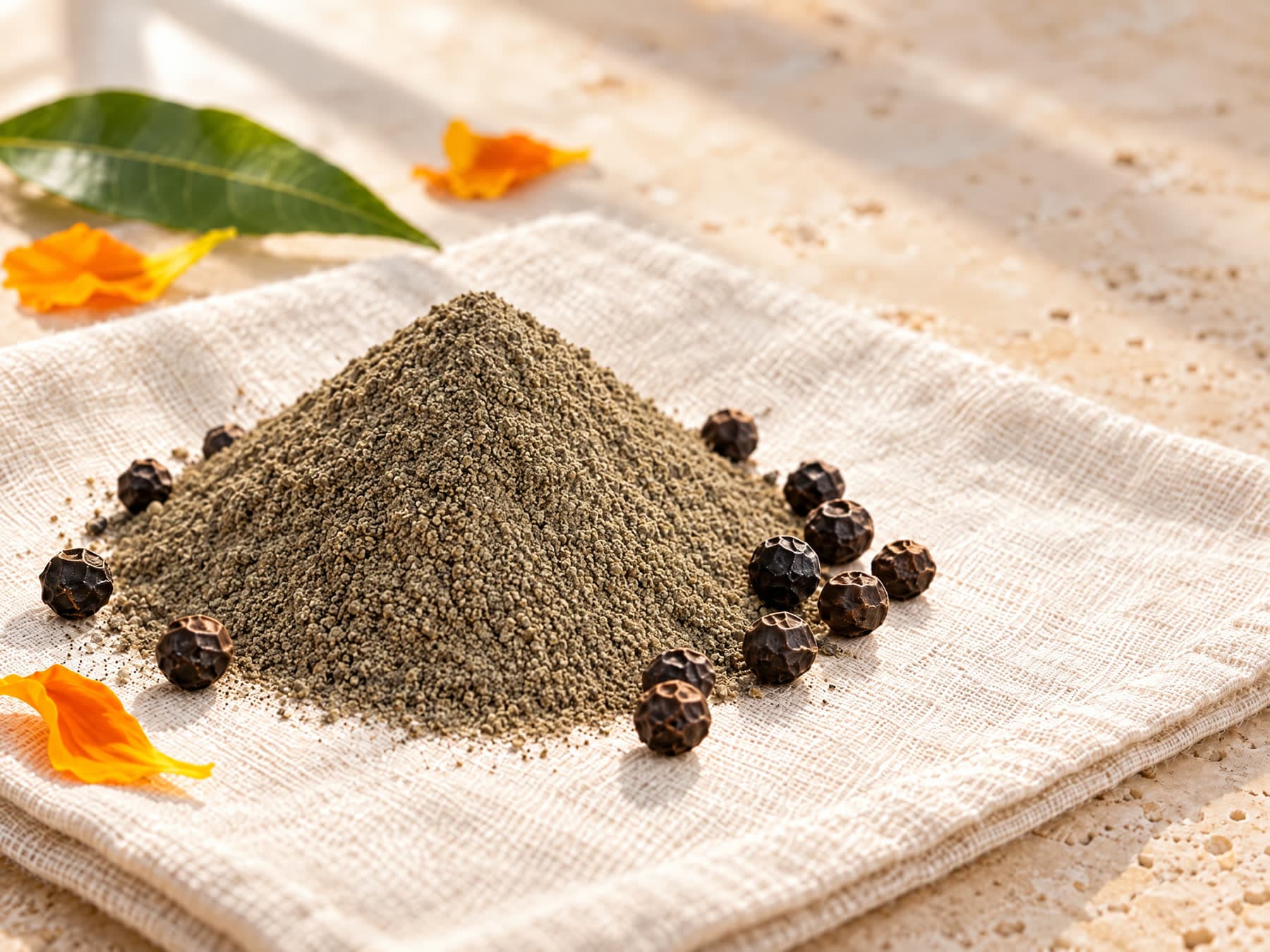
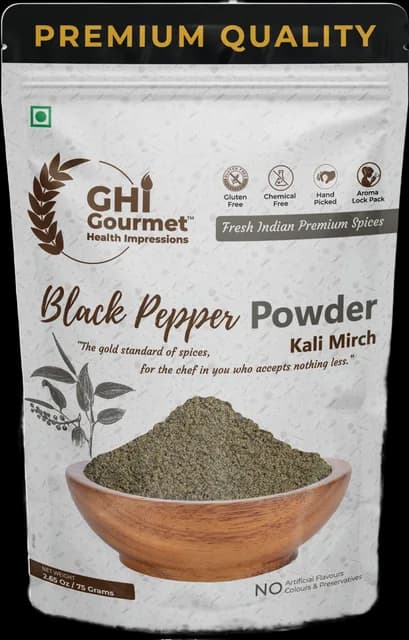
Powder has its uses too. For marinades, batters, soups, eggs and quick everyday seasoning, a good black pepper powder is convenient. Keep it sealed, away from the stove, and use it within a few months of opening so it does not go flat.
Winter dishes where pepper shines
December is peak pepper season in many Indian kitchens. About 1 teaspoon of freshly crushed peppercorns flavours a pot of rasam serving four. Pepper chicken or pepper mushroom fry needs around 1 to 1.5 teaspoons coarsely crushed for 500 g. A pinch of fresh-cracked pepper finishes tomato soup, and 3 or 4 lightly crushed peppercorns go into a pot of masala chai. For more on pepper's place in the kitchen, our piece on the essence of black pepper is a good next read.
Many families also add pepper to winter kadhas and home remedies. These are traditional practices rather than treatments, so if you are pregnant, on medication or managing a health condition, check with your doctor before taking pepper in larger amounts.
Frequently asked questions
What is the difference between Tellicherry and Malabar pepper?
Both names come from Kerala's pepper coast, but in the trade they mostly indicate grade. Tellicherry grades are larger, bold berries selected by size, while Malabar grades such as MG1 describe standard cleaned pepper of good density.
What does bold black pepper mean?
Bold pepper consists of larger berries retained on bigger sieves during grading. Larger berries are usually more mature, which tends to mean fuller aroma and heat.
How can I check if black pepper is pure?
Put a teaspoon in water: dense peppercorns sink, while light berries and papaya seeds tend to float. Also look for uniform, deeply wrinkled dark berries and a sharp aroma when crushed.
Why does my black pepper have no smell?
The aroma comes from volatile oils that fade with time, heat and air, especially once pepper is ground. Old powder and poorly stored peppercorns lose fragrance even if they still taste hot.
Is whole black pepper better than powder?
For flavour, yes. Whole peppercorns hold their aroma much longer and give a brighter result when ground fresh. Powder is handy for everyday cooking if it is kept sealed and used within a few months.
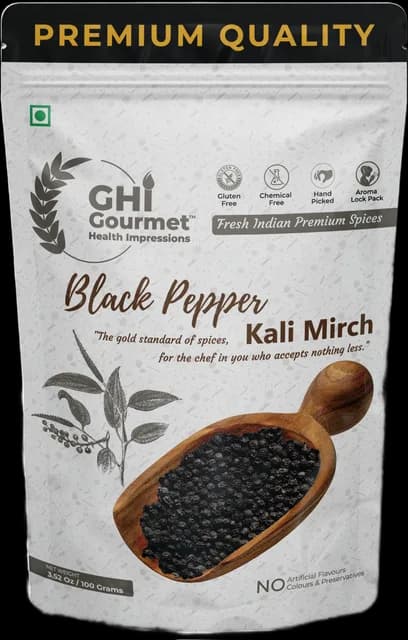
Whichever grade you choose, the best test is always your nose. GHI's peppercorns are graded, non-GMO and packed without additives in resealable packs, so they can be one more jar to put through the water test and the crush test before your next pot of rasam.