8 November 2025
How to Grind Spices at Home: Tools, Roasting and Tips
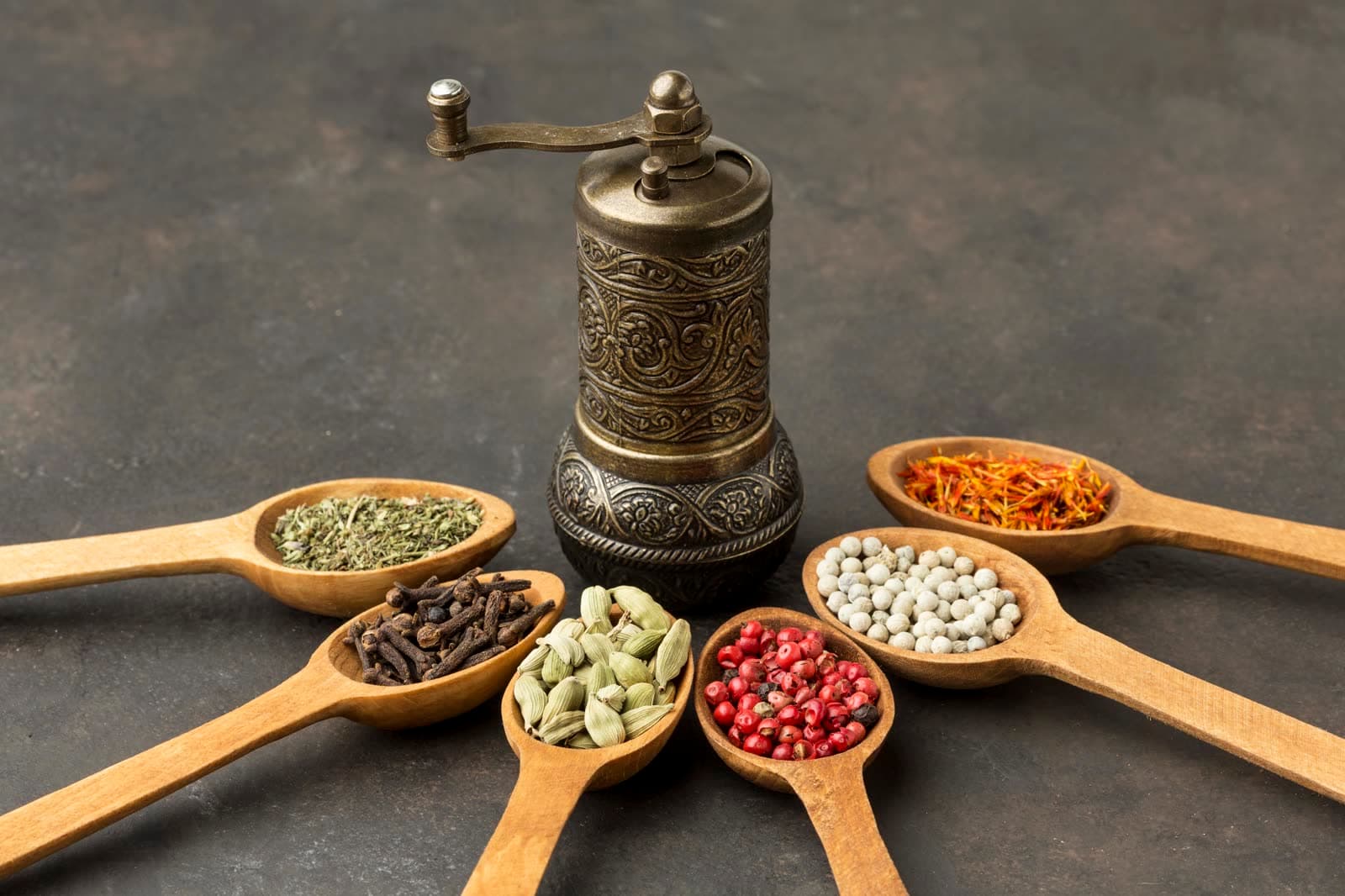
Nothing fills a kitchen quite like the smell of spices being ground fresh. If you want to grind spices at home, the right tool, a little dry roasting and a clean routine make all the difference between a fragrant masala and a dull, gritty one. This guide covers the practical side: which tool to use, how much to grind and how to keep flavours from mixing.
Why grind spices at home in the first place
Most of a spice's aroma sits in its essential oils, locked inside the seed, pod or bark. Grinding breaks those cells open, and from that moment the oils begin to escape into the air. That is why a spoon of freshly ground cardamom smells so much stronger than powder that has been open on a shelf for months.
Grinding at home also gives you control. You choose the coarseness, you decide whether to roast, and you know exactly what went into the jar. It is especially worth doing for spices whose aroma fades fastest once ground, such as cardamom and black pepper.
That said, you do not need to grind everything. A good ground spice from a fresh, sealed and certified pack is perfectly sensible for daily cooking. Home grinding is best kept for small batches of the spices you care about most.
Mortar and pestle vs electric grinder vs mixer jar
Each tool suits a different job, and most well-run kitchens end up using two of the three. Here is how they compare.
| Tool | Best for | Ideal batch | Watch out for |
|---|---|---|---|
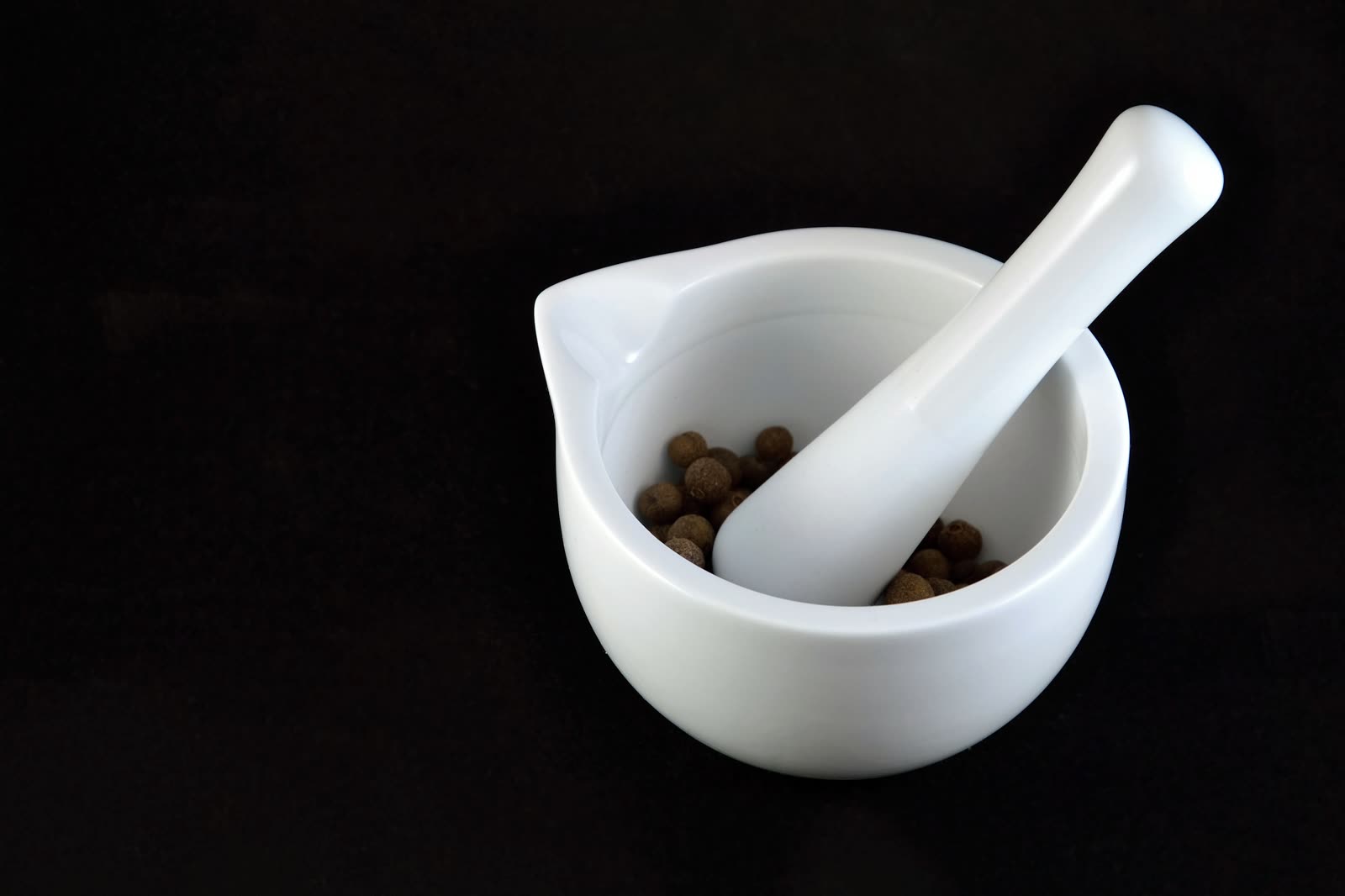
| Mortar and pestle (stone or iron) | Cracked pepper, a few cardamom pods, garlic-pepper pastes | 1-3 tsp | Slow for fine powders; porous stone holds smells |
| Electric spice or coffee grinder | Fine powders, small masala blends | 2-6 tbsp | Heat build-up if run too long |
| Mixer grinder dry jar | Larger masala batches, roasted blends | 1/2 to 1 cup | Too little spice just spins and does not grind |
Mortar and pestle
Pounding crushes rather than slices, which releases oils gently and gives a pleasantly uneven texture. It is the best choice for rasam pepper, a quick cardamom crush for chai, or a garlic-pepper paste. A heavy stone or iron set works far better than a light ceramic one. Add a pinch of coarse salt or sugar for grip if the spice keeps jumping out of the bowl.
Electric spice grinder
A small blade grinder is the quickest route to a fine powder. Grind in short pulses of 5-10 seconds, shaking between pulses, rather than one long run. Continuous running heats the blades and the spice, and heat drives off the very aroma you are trying to capture.
Mixer grinder dry jar
The small dry jar of an Indian mixer handles bigger batches, like a month's supply of sambar or chole masala. It needs enough volume to work: at least 1/2 cup of whole spices, or the blades simply spin over the top. Pulse, open, stir with a dry spoon, and pulse again.
How much spice to grind at once
The honest answer is less than you think. Ground spices lose aroma steadily, so grind only what you will use in the next two to four weeks.
- Cardamom: 10-15 g at a time (roughly 2 tbsp of pods) is plenty for a household that makes chai and sweets often.
- Black pepper: 2-3 tbsp for a fine powder, or crush a teaspoon fresh as needed.
- Cloves: grind only a teaspoon or two at a time. Their oil is strong and ground clove turns harsh quickly.
- Mixed masalas: enough to fill one small jar, usually 50-100 g.
Keeping whole spices in stock and grinding in small lots is the simplest way to always have fresh powder. A shelf of whole spices in airtight packs holds its aroma far longer than the same spices already ground.
Dry roasting and cooling spices before grinding
Dry roasting deepens flavour, drives off surface moisture and makes spices brittle, so they grind more finely. Not every spice needs it, though.
When to roast
- Roast for savoury masalas where you want toasty depth: cumin, coriander, pepper and dry chillies.
- Skip roasting, or just warm gently, for cardamom meant for sweets and chai. Heavy roasting flattens its floral, fresh notes.
- Give cloves only a few seconds; they scorch fast and turn bitter.
How to roast
- Use a heavy, completely dry kadai or tawa on low to medium heat.
- Roast each spice separately if sizes differ. Small seeds burn before large ones are ready.
- Stir constantly. Stop when the spices smell fragrant and darken by a shade, usually 1-3 minutes.
- Tip them onto a plate immediately. Left in the hot pan, they keep cooking.
Why cooling matters
Let roasted spices cool completely, about 10-15 minutes, before grinding. Warm spices release oil that turns the powder clumpy and pasty, and any trapped steam carries moisture into the jar, which invites mould. Cool, dry spices give a free-flowing powder that stores better.
Cleaning the grinder between spices
Spice oils cling to blades and jars. Grind cloves, then cardamom, and your cardamom will taste of clove. A simple routine prevents that.
- Tap out every bit of powder and brush the blades with a dry pastry brush.
- Grind 1-2 tbsp of raw rice or a torn slice of dry bread for 15-20 seconds. It scrubs away the oil and absorbs the smell. Discard it.
- Wipe with a dry cloth. If you must wash the jar, let it dry fully before the next use. Even slight dampness makes spices cake.
Many cooks keep one small grinder only for sweet spices, so cardamom never picks up garlic or chilli notes. Stone mortars absorb smells too, so rinse them with hot water and dry them well in the air.
Sieving cardamom powder for sweets and chai
Cardamom is the one spice where a sieve really earns its place. Home-ground cardamom often has fibrous bits of husk that feel papery in kheer or on top of a barfi.
- Peel the pods and use only the black seeds for the finest powder. Keep the husks to drop into your chai pot.
- If grinding whole pods, add 1 tsp of sugar per 10 g of cardamom. It helps the blades catch and absorbs some of the oil, so the powder does not clump.
- Grind in short pulses, then pass through a fine tea strainer. Return whatever stays behind to the grinder once more.
- Store in a small airtight glass jar and use within a month for the strongest aroma.
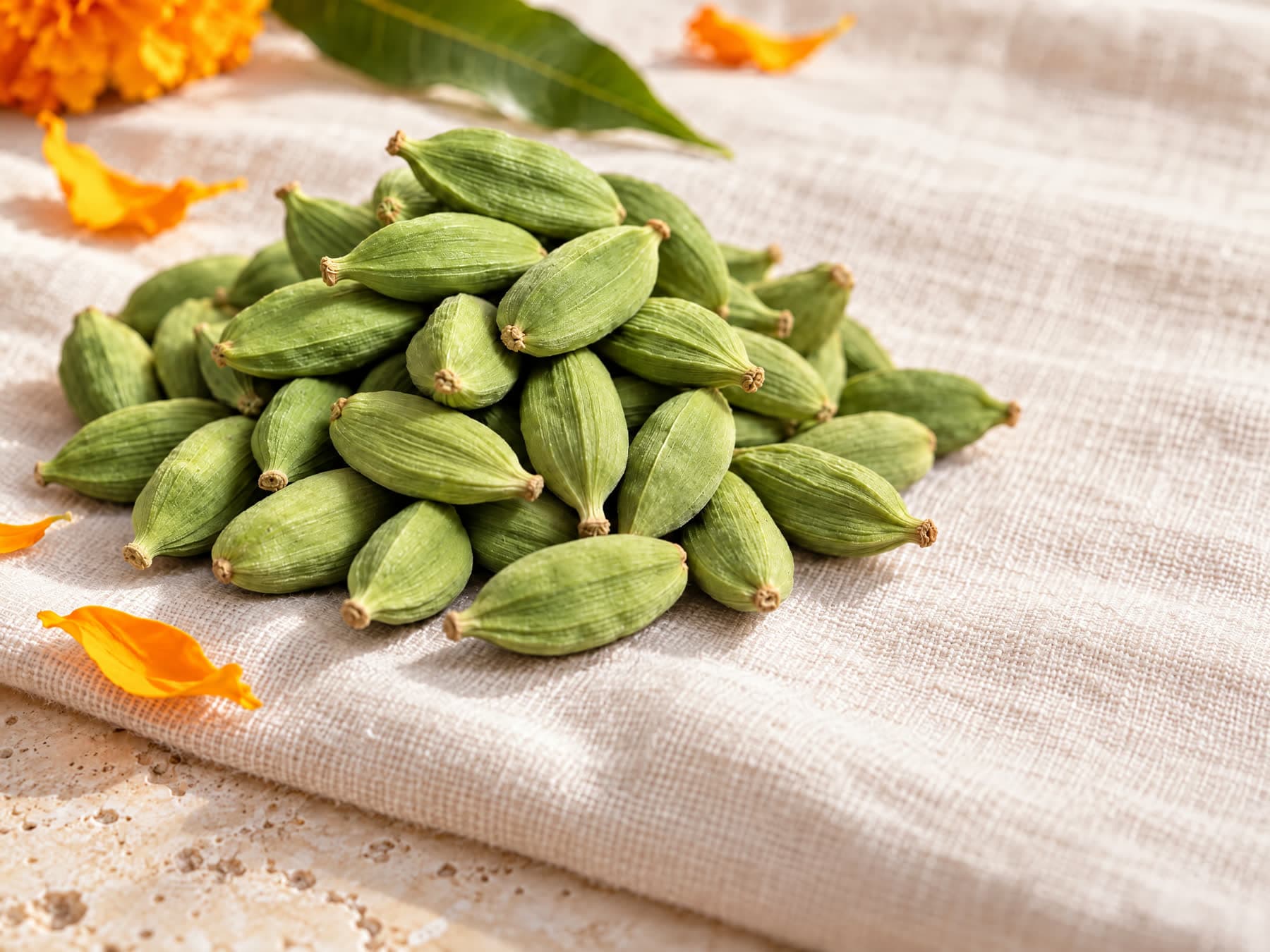
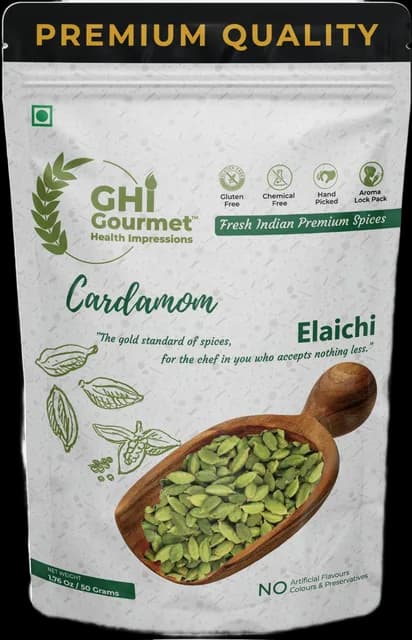
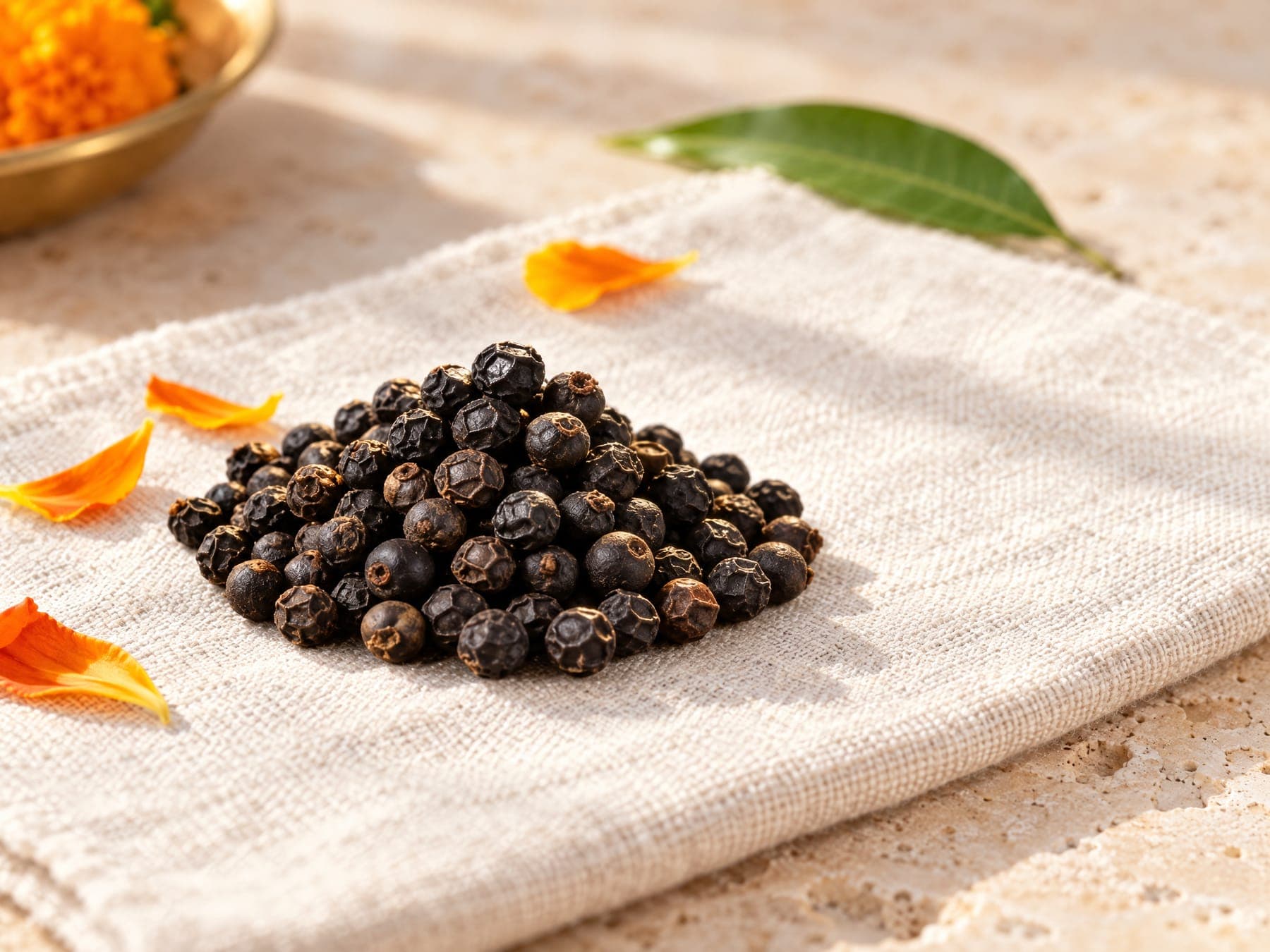
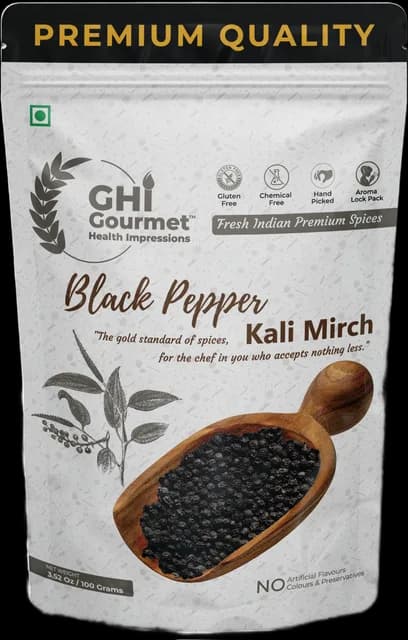
Uniform, well-graded pods make this far easier. Evenly sized 8 mm whole green cardamom has plump seeds and less husk for the weight, so you get more powder and less waste. For pepper, bold whole black peppercorns grind evenly and rarely need sieving at all.
Frequently asked questions
Can I grind spices in a normal mixer grinder?
Yes. Use the small dry jar and grind at least 1/2 cup at a time so the blades can work properly. Pulse in short bursts and make sure the jar is completely dry.
Should I roast spices before grinding them?
Roast for savoury masalas where you want depth. Skip heavy roasting for cardamom used in sweets and chai, and give cloves only a few seconds, since too much heat dulls cardamom and makes cloves bitter.
How do I get the smell of spices out of my grinder?
Grind a spoonful of raw rice or dry bread for 15-20 seconds, discard it and wipe the jar dry. Repeat once more after strong spices like cloves.
Why is my home-ground spice powder clumpy?
Usually the spices were still warm, the jar was damp, or the grinder ran too long and heated the oils. Cool roasted spices fully, use a dry jar and grind in short pulses.
How long does home-ground spice powder last?
For the best aroma, use it within two to four weeks. It stays usable for longer if stored airtight away from heat and light, but the flavour fades steadily.
Start small: a heavy mortar, a fine sieve and a handful of good whole spices are all you need. When you restock, GHI's graded whole spices come in resealable packs, which makes grinding little and often an easy habit to keep.