29 April 2026
Cheap Cardamom: What Unusually Low Prices Can Hide
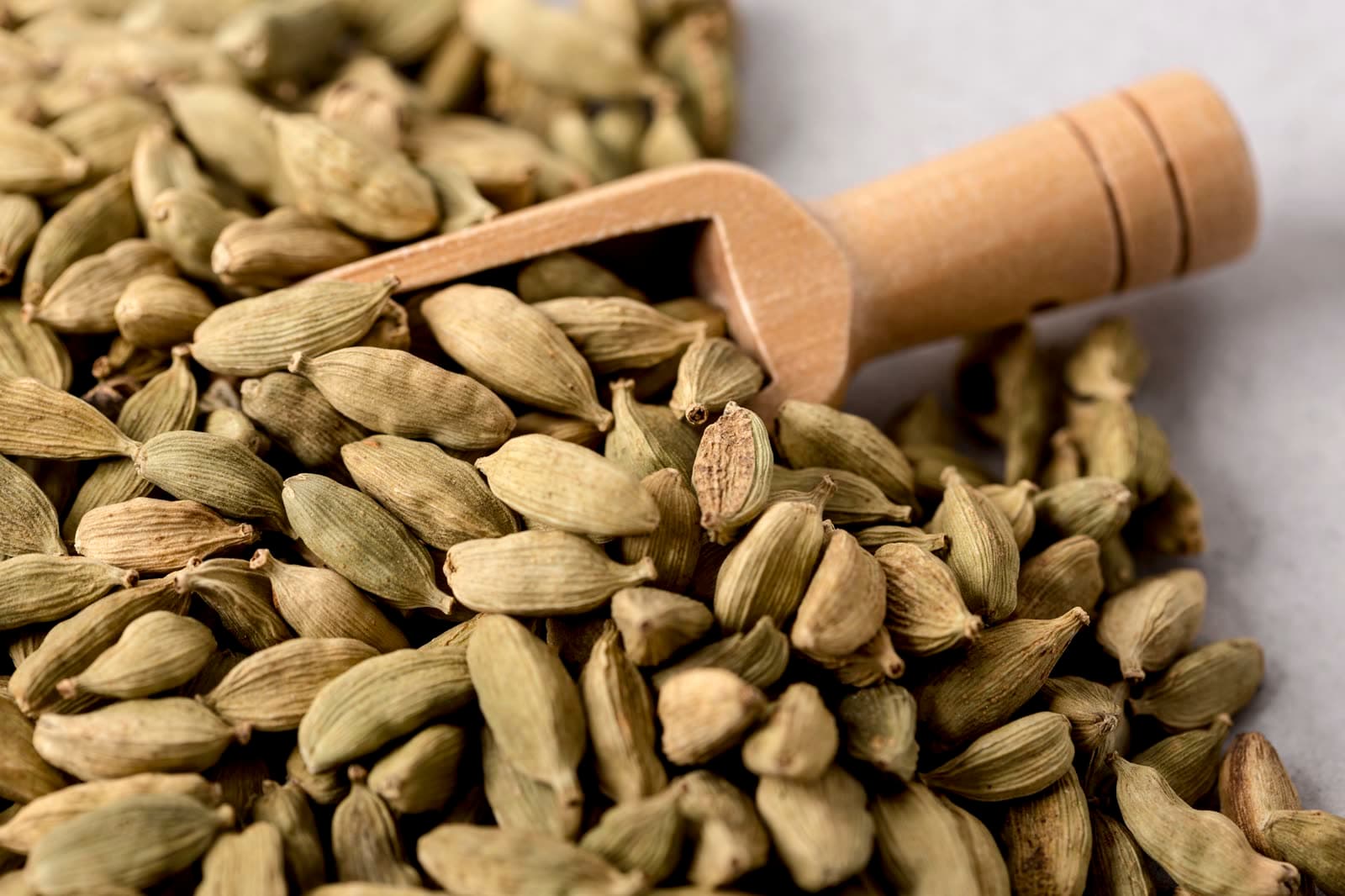
Cardamom is one of the most expensive spices in the Indian kitchen, so a pack that costs far less than everything around it naturally catches the eye. Sometimes cheap cardamom is simply a smaller grade sold honestly. Often, though, a price that seems too good is paying for something you cannot see in a product photo, and if you are stocking up for summer weddings and family gatherings, it is worth knowing what that might be.
Why cheap cardamom deserves a second look
Green cardamom takes careful work to produce. The capsules are usually picked by hand in several rounds as they ripen, then cured with controlled heat to hold their green colour and aroma. Pods are sorted by size and quality, and the best ones command the highest price. When a pack sells far below the usual range, the difference has to come from somewhere.
That does not mean every affordable pack is bad. Lower grades exist for good reasons, and smaller pods are perfectly usable in everyday cooking. The problem starts when a lower grade is passed off as a premium one, or when pods have been altered in ways that reduce the one thing you are really paying for: aroma.
Immature and undersized pods
Cardamom picked before it is fully mature can look deceptively neat: small, tightly closed and sometimes quite green. But immature pods have not finished developing their seeds or their essential oil, which is where all the flavour sits.
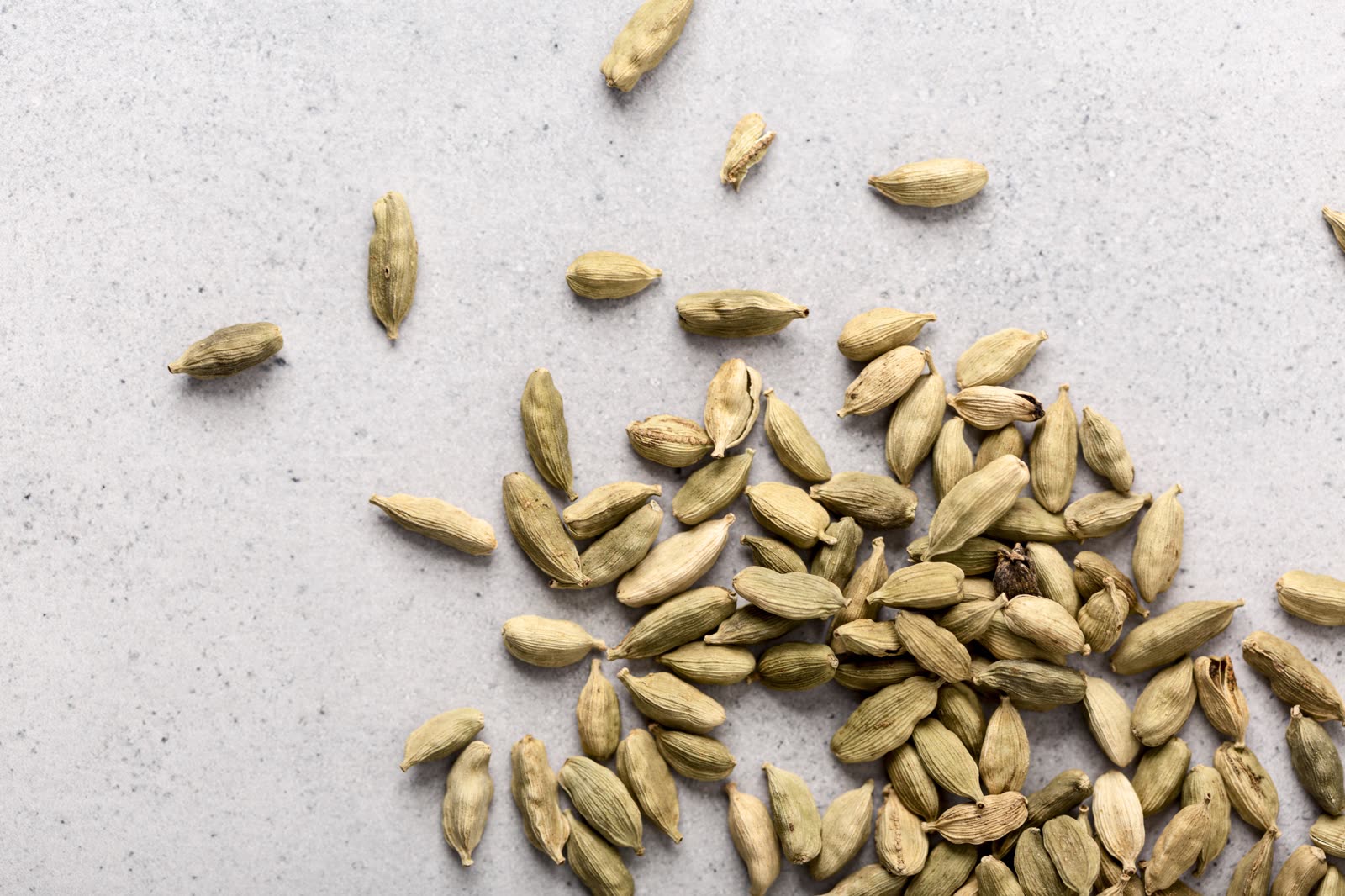
How to spot immature pods
- Shrivelled or wrinkled skins that look deflated rather than plump.
- Pale, whitish or light brown seeds inside, instead of dark brown to almost black, slightly sticky seeds.
- Few seeds rattling loosely in a mostly empty husk.
- A weak aroma even when you crush a pod firmly.
The trouble with undersized pods
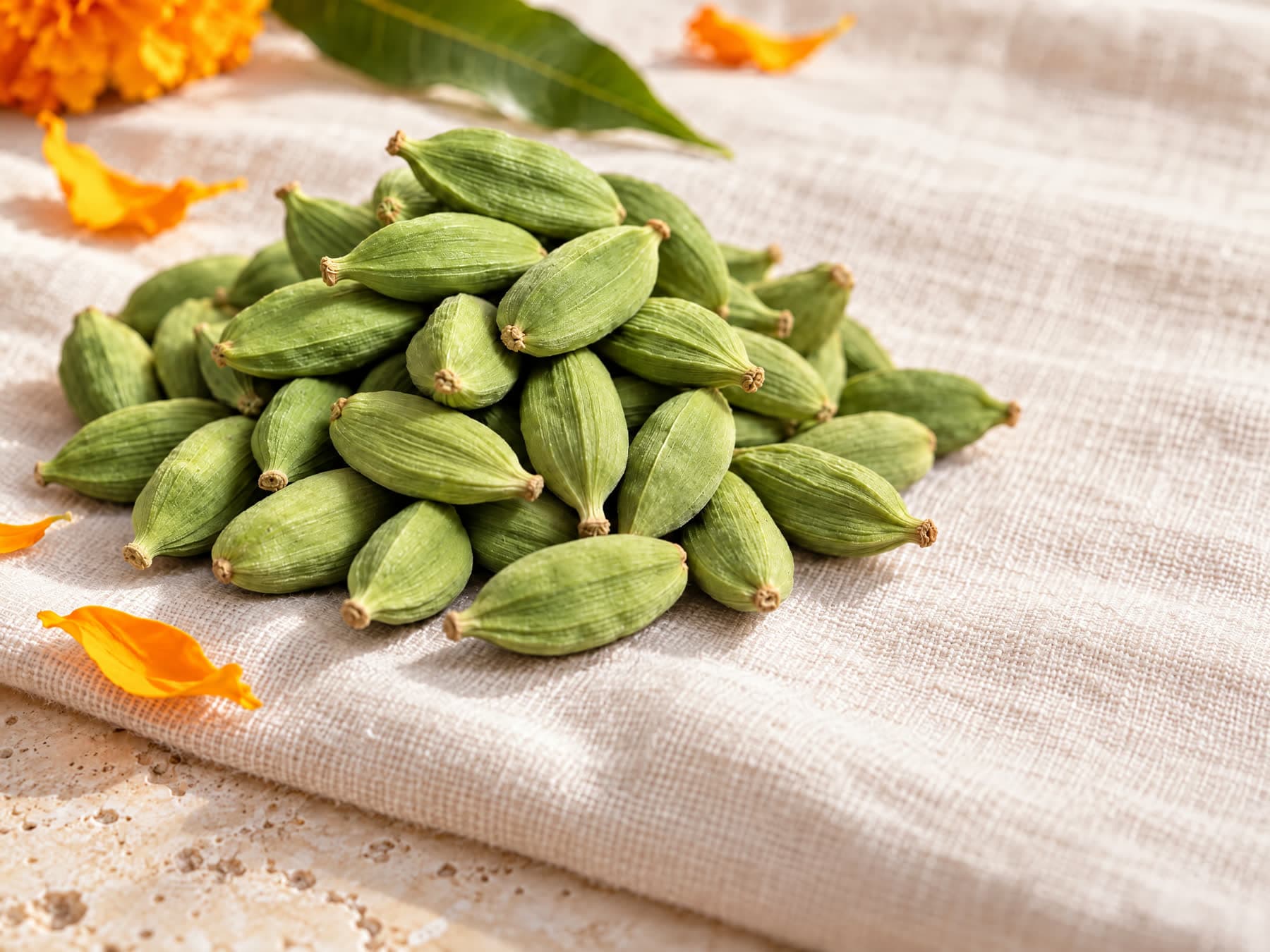
Undersized pods are a slightly different issue. Small pods can be mature and aromatic, but they carry more husk relative to seed, so you get less flavour per gram. A mixed pack in which large, well-formed pods sit on top while tiny ones fill the bottom is a common trick. Pour a handful onto a white plate and look at the spread of sizes. Properly graded cardamom looks uniform.
Split, open and pale pods
A cardamom pod is a natural seal. As long as it stays closed, the seeds inside keep their oils for a long time. Once it splits, aroma escapes, moisture gets in and insects have an easy way in.
Split pods are normally sorted out during grading and sold separately at a lower price. That is fine when the pack says so, and many cooks happily buy splits for immediate use in chai or for grinding. It becomes a concern when splits are mixed into a pack sold as whole, bold pods.
Pale, yellowish or bleached pods tell another story. Well-cured green cardamom holds a fresh green colour. Pods that have faded to straw or beige have usually been stored too long, dried poorly or left in sunlight, and their aroma tends to fade along with the colour. A few slightly lighter pods are normal in any natural product. A pack dominated by them is not.
Pods with the essential oil taken out
This is the hardest shortcut to catch by eye. Cardamom oil and extracts are valuable ingredients in the flavour and fragrance trade. Spent pods, left over after the oil has been drawn out, can look fairly ordinary once dried, and they sometimes find their way back into the market mixed with genuine pods.
Clues that pods may be exhausted
- They feel unusually light and papery for their size.
- The seeds look dry, dull and brownish rather than glossy and dark.
- Crushing a pod releases only a faint, flat smell, with none of the sweet, camphor-like lift of fresh cardamom.
- The seeds do not feel slightly oily or tacky when rubbed between your fingers.
- In a cup of chai, you need many more pods than usual to taste anything at all.
The crush-and-smell check is your best defence. Fresh, full-oil cardamom smells strongly the moment the husk breaks, and the scent lingers on your fingers for a while afterwards.
Added colour and other cosmetic tricks
Because buyers link a bright green colour with freshness, pale or old pods are sometimes treated with added colour to make them look better than they are. The result can be a green that looks almost too even, too bright or slightly artificial.
A quick check: rub a few pods firmly between slightly damp fingers or on a white tissue. Natural cardamom should not leave a green stain. You can also drop a few pods into a glass of water and watch whether the water takes on a green tint over several minutes. Detailed home tests are a subject of their own, but these two simple checks catch the most obvious cases.
Occasionally pods are also polished or coated with oil to add shine. A slight natural sheen is fine. A greasy feel, or a smell that does not belong to cardamom, is not.
A buyer's checklist for cardamom
Whether you are buying loose from a market or a sealed pack online, run through these points before you decide a price is a bargain.
| Check | What good looks like | Warning sign |
|---|---|---|
| Size | Uniform, plump pods | Big pods on top, tiny ones below |
| Colour | Natural, fresh green | Faded beige, or unnaturally bright |
| Shape | Closed, full and rounded | Shrivelled, flat or split |
| Seeds | Dark brown to black, slightly sticky | Pale, dry or few in number |
| Aroma | Strong and sweet when crushed | Faint, dusty or musty |
| Feel | Substantial in the hand | Light and papery |
What to look for on the pack
- A stated size or grade, such as a millimetre size, rather than vague words like "premium" on their own.
- Food safety registration, such as an FSSAI licence number, and recognised certifications for processing and export where relevant.
- A packing or best-before date, so you know how fresh the stock is.
- Airtight, resealable packaging that protects the pods after you open them.
When buying online, where you cannot smell the product, these label details and consistent reviews matter more. Once the pack arrives, do the crush check on a few pods straight away.
Is cardamom powder easier to fake?
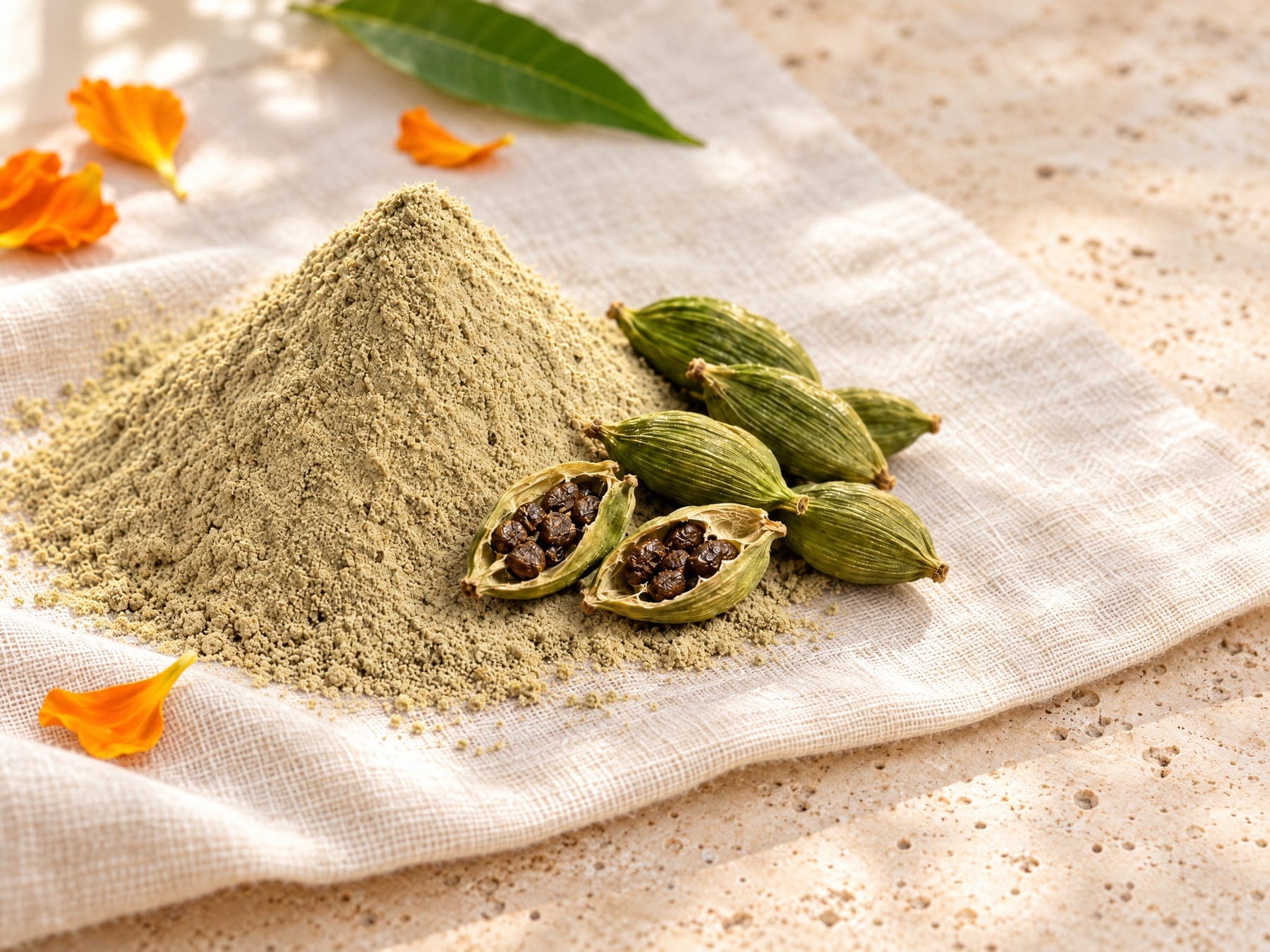
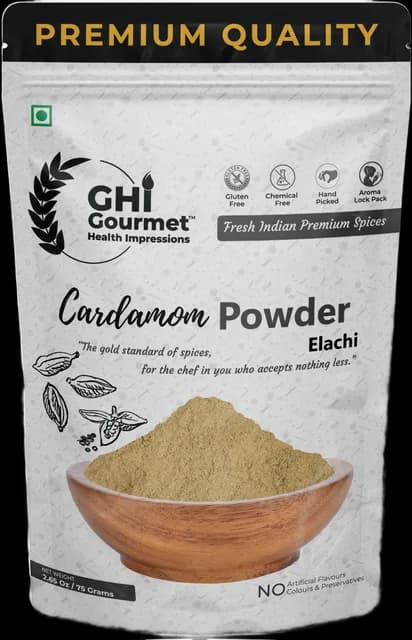
Ground cardamom hides far more than whole pods, because you cannot see size, colour or seed quality. Powder made from husks, exhausted pods or low-grade material can look much like the real thing. If you buy cardamom powder, choose a brand with clear certifications and no additives, and use it within a few weeks of opening. For recipes where aroma is the star, many cooks prefer to grind whole pods at home just before use. To understand the spice itself better, read our piece on cardamom, India's fragrant treasure.
Frequently asked questions
Why is some cardamom so cheap?
It may be a smaller or lower grade sold honestly, or it may contain immature, split, old or oil-extracted pods. Check size, colour, seeds and aroma before judging value.
How can I tell if cardamom has had its oil removed?
Exhausted pods feel light, have dull, dry seeds and smell faint when crushed. Fresh pods release a strong, sweet aroma the moment you break them.
Is bright green cardamom always better?
Not always. A natural fresh green is a good sign, but a very bright, even colour that stains damp fingers may point to added colour.
Are small cardamom pods bad quality?
No. Small pods can be mature and aromatic. They simply have more husk per gram, so they should be labelled and priced as a smaller grade.
What colour should cardamom seeds be?
Mature seeds are dark brown to nearly black and slightly sticky. Pale or whitish seeds usually mean the pods were picked too early.
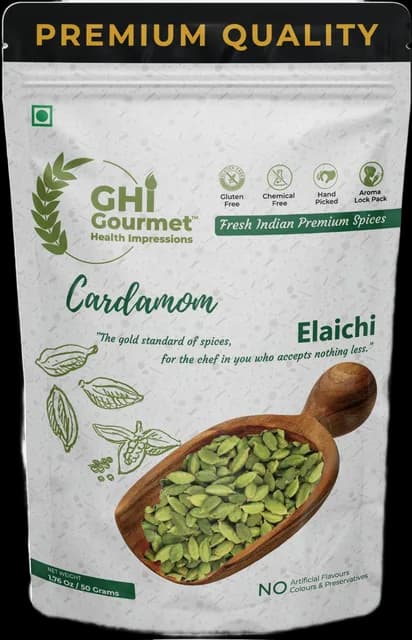
Good cardamom costs what it does because of careful picking, curing and sorting, and a fair price usually reflects that work. If you want a benchmark to compare against, GHI's whole green cardamom is hand-selected at 8 mm and packed without additives in a resealable pouch.