27 September 2026
Dussehra 2026 Feast Menu: Dishes and the Whole Spices Behind Them
Dussehra 2026 falls on Tuesday, 20 October, the day after nine nights of Navratri. For many families it is also the day the fast ends and the kitchen opens up again, which makes a Dussehra feast menu one of the most anticipated meals of the year. Here are the dishes India cooks on Vijayadashami, region by region, the whole spices that make each of them work, and two recipes to anchor your own table.
When is Dussehra 2026?
Vijayadashami, or Dussehra, is on Tuesday, 20 October 2026, according to Drik Panchang and most Indian calendars. It marks the victory of good over evil, remembered as Lord Rama's win over Ravana and Goddess Durga's over Mahishasura. Some calendars in the East mark Bijoya Dashami a day later, and the exact muhurat changes from city to city, so check your local panchang for timings.
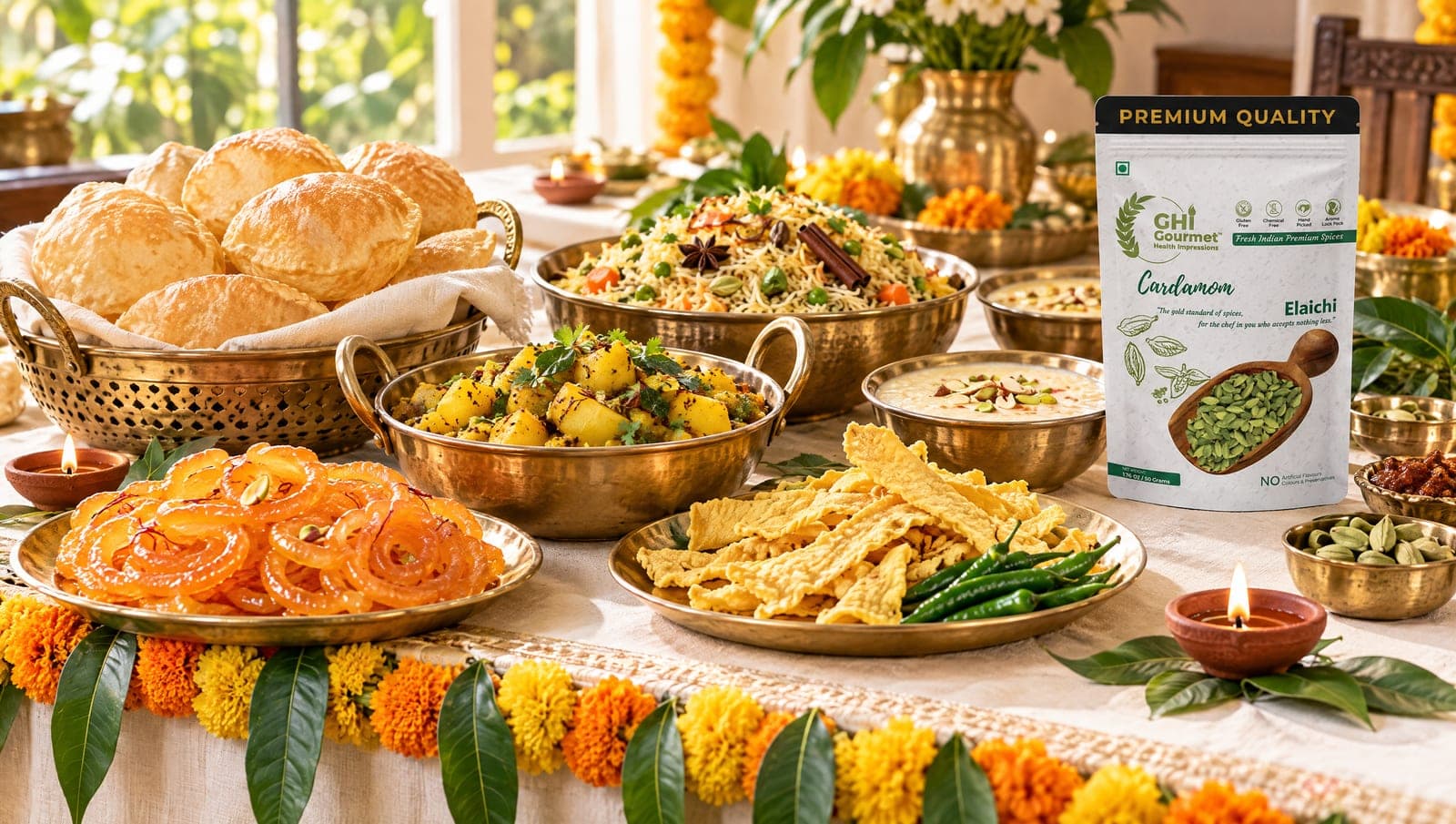
A Dussehra feast menu from across India
There is no single Dussehra menu. What lands on the table depends on where your family comes from, and that variety is half the fun. Food writers at Slurrp and Veg Recipes of India describe a few pairings that come up again and again.
Gujarat: fafda and jalebi
In Gujarat, Dussehra morning means queues outside farsan shops for fafda and jalebi. Fafda is a crisp gram flour strip seasoned with ajwain and black pepper, served with fried green chillies and a papaya sambharo. Jalebi, soaked in syrup, is often scented with saffron and green cardamom.
North India: puri, aloo and kheer
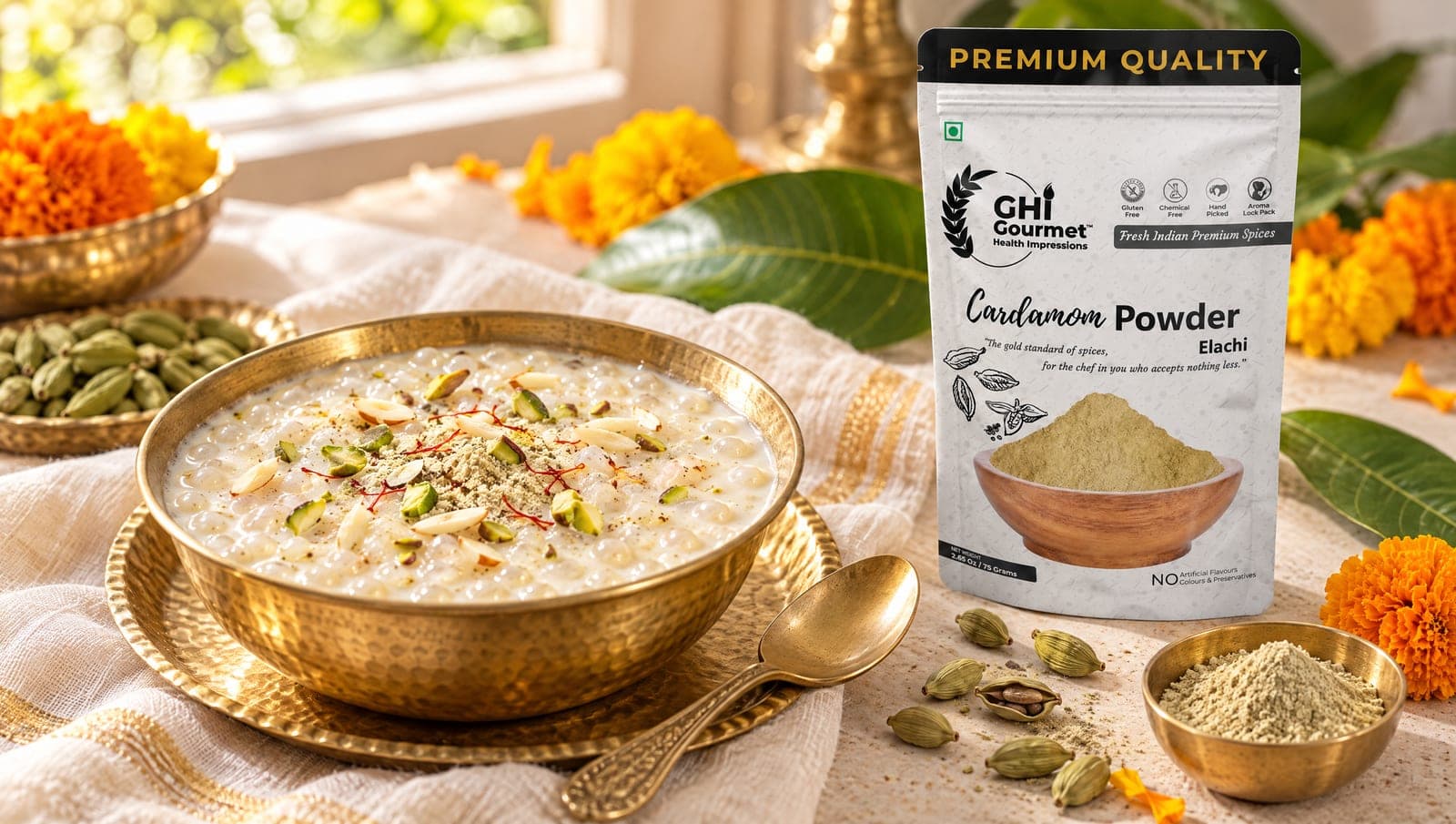
In Uttar Pradesh, Bihar, Madhya Pradesh and across much of the North, the feast is often puri with aloo sabzi, a bowl of kheer and something sweet from the halwai. The kheer is where green cardamom does its quiet work.
Bengal: bhog khichuri and labra
For Bengali families, Bijoya Dashami closes Durga Puja. Bhog khichuri, made with rice and moong dal, is tempered with bay leaf, cinnamon, cardamom and cloves and served with labra, a mixed vegetable dish, followed by sandesh or rasgulla.
Karnataka: obbattu
In Karnataka, where the Mysuru Dasara is famous, many homes make obbattu (holige), a flatbread stuffed with chana dal and jaggery and flavoured with cardamom, eaten with ghee.
The celebration pulao or biryani
For families who do not follow a vegetarian rule after Navratri, Dussehra is often biryani day. Vegetarian homes make a festive pulao instead. Either way, the aroma comes from the same handful of whole spices bloomed in ghee.
The whole spices behind the feast
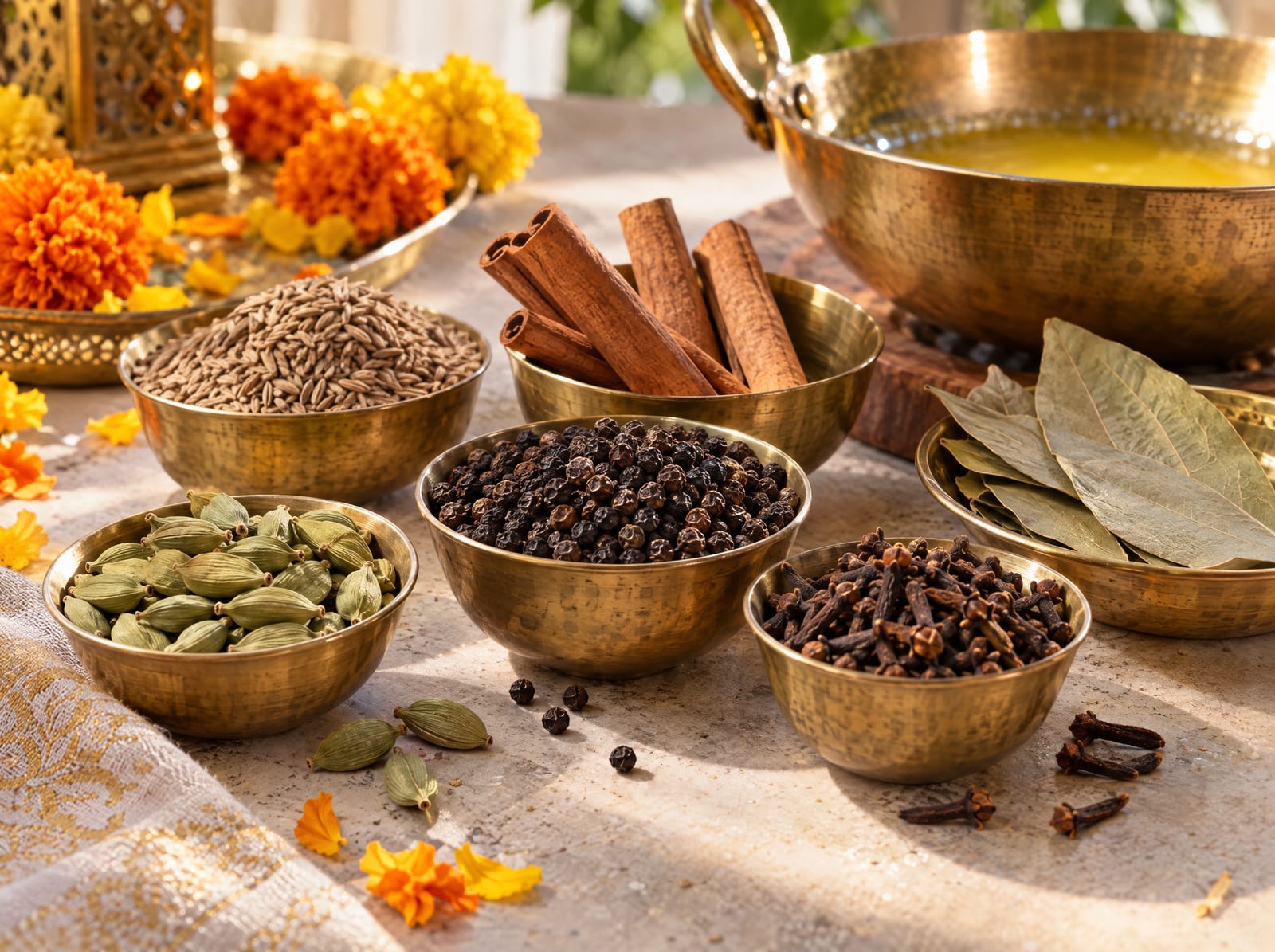
Look closely at these dishes and a pattern appears. The same few whole spices carry almost every one of them.
| Whole spice | What it brings | Where you will find it |
|---|---|---|
| Green cardamom | Sweet, floral perfume | Kheer, jalebi, obbattu, pulao, biryani |
| Cloves | Warm, deep, slightly sweet | Pulao, biryani, bhog khichuri, chai |
| Black pepper | Clean heat and bite | Fafda, pulao, biryani, aloo sabzi |
| Cinnamon | Sweet woody warmth | Bhog khichuri, pulao, biryani |
| Bay leaf and cumin | Earthy base notes | Tempering for khichuri and pulao |
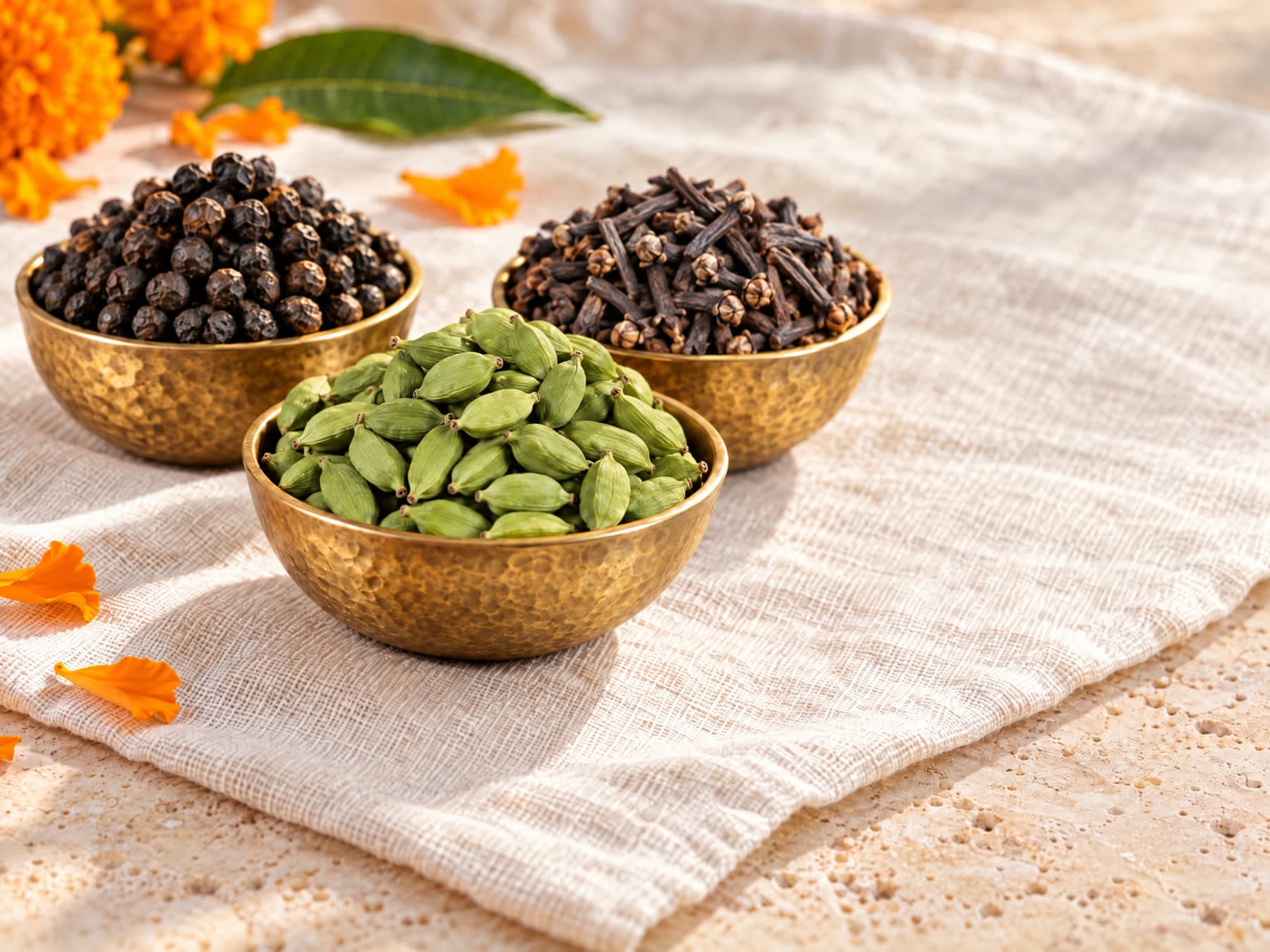
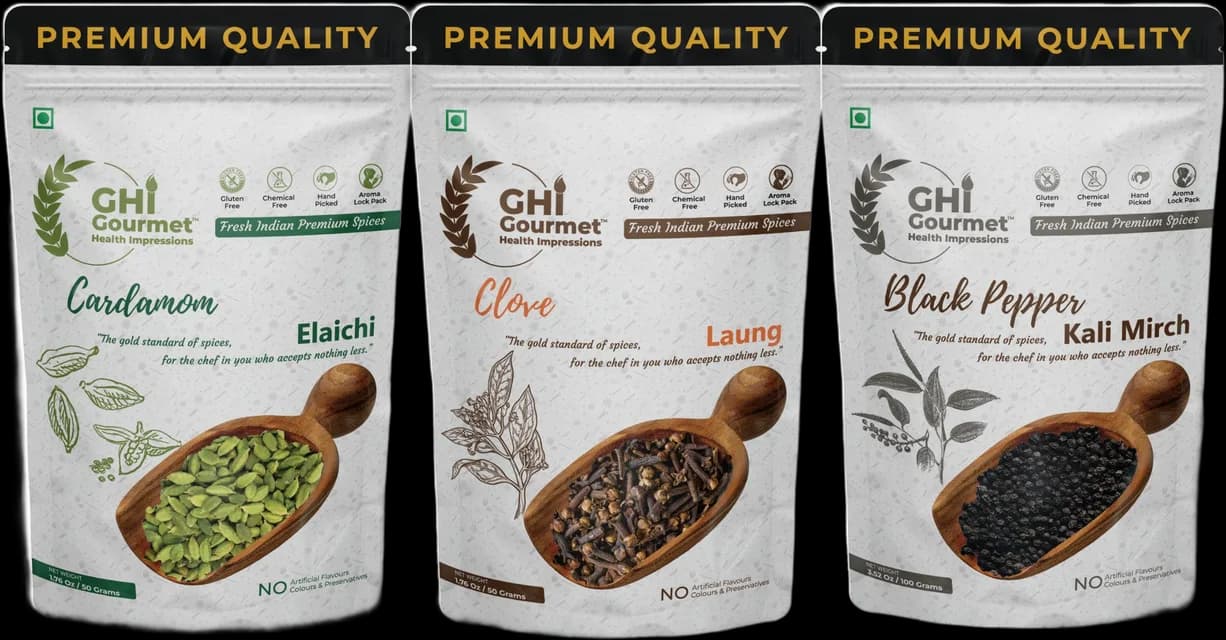
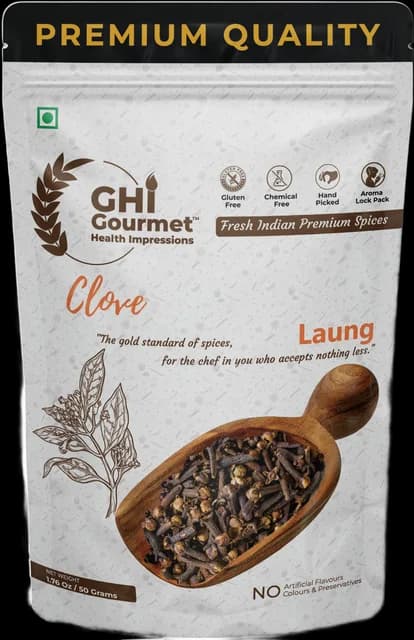
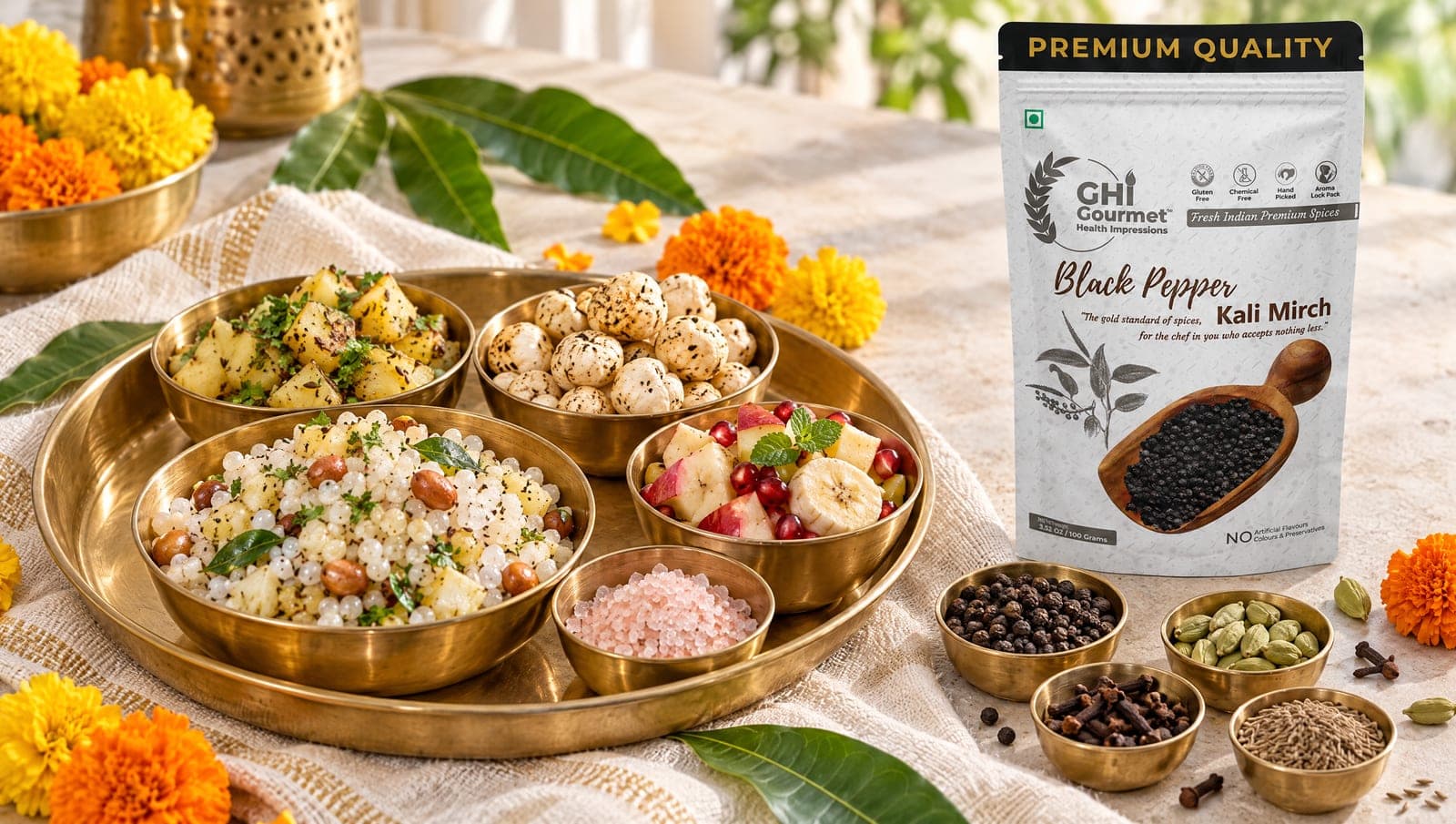
Whole spices hold their aroma much longer than ground ones, because the oils stay sealed inside until the heat opens them. That is why festive rice dishes start with whole spices in hot ghee rather than a spoon of powder. If your spice box has run low after Navratri, our Whole Spice Trio brings whole black pepper (100 g), 8 mm green cardamom (50 g) and whole cloves (50 g) together in one pack. You can also browse all our whole spices.
Keeping whole spices fresh between festivals
Dussehra and Diwali are less than three weeks apart, so a little care now keeps your spices at their best for both.
- Keep each spice in its own airtight jar or a well-sealed pouch, away from the stove and direct sunlight.
- Use a dry spoon every time. Moisture is what dulls whole spices fastest.
- Buy in sizes you will finish in a few months rather than one very large pack.
- Crush or grind only what you need for the day.
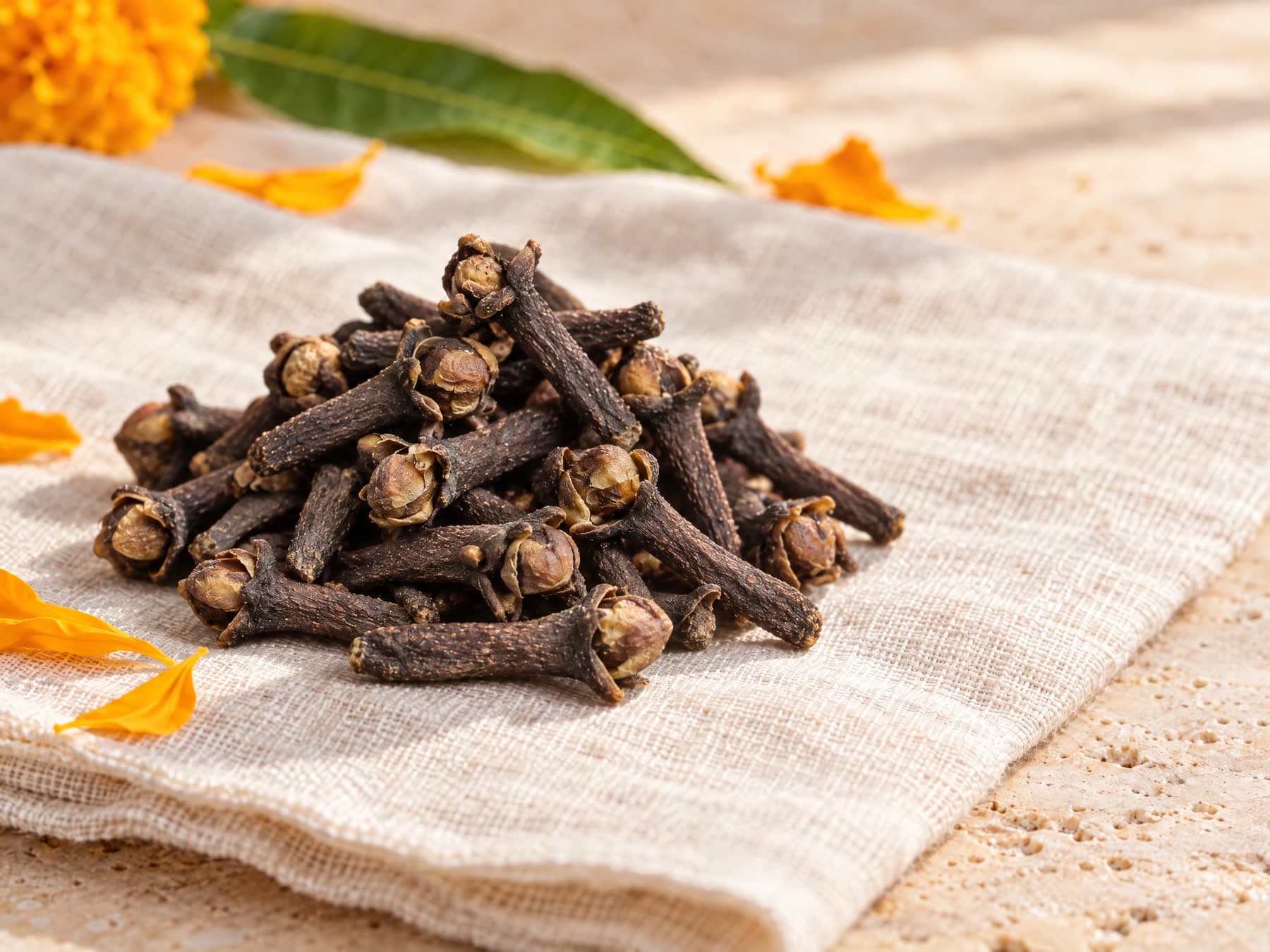
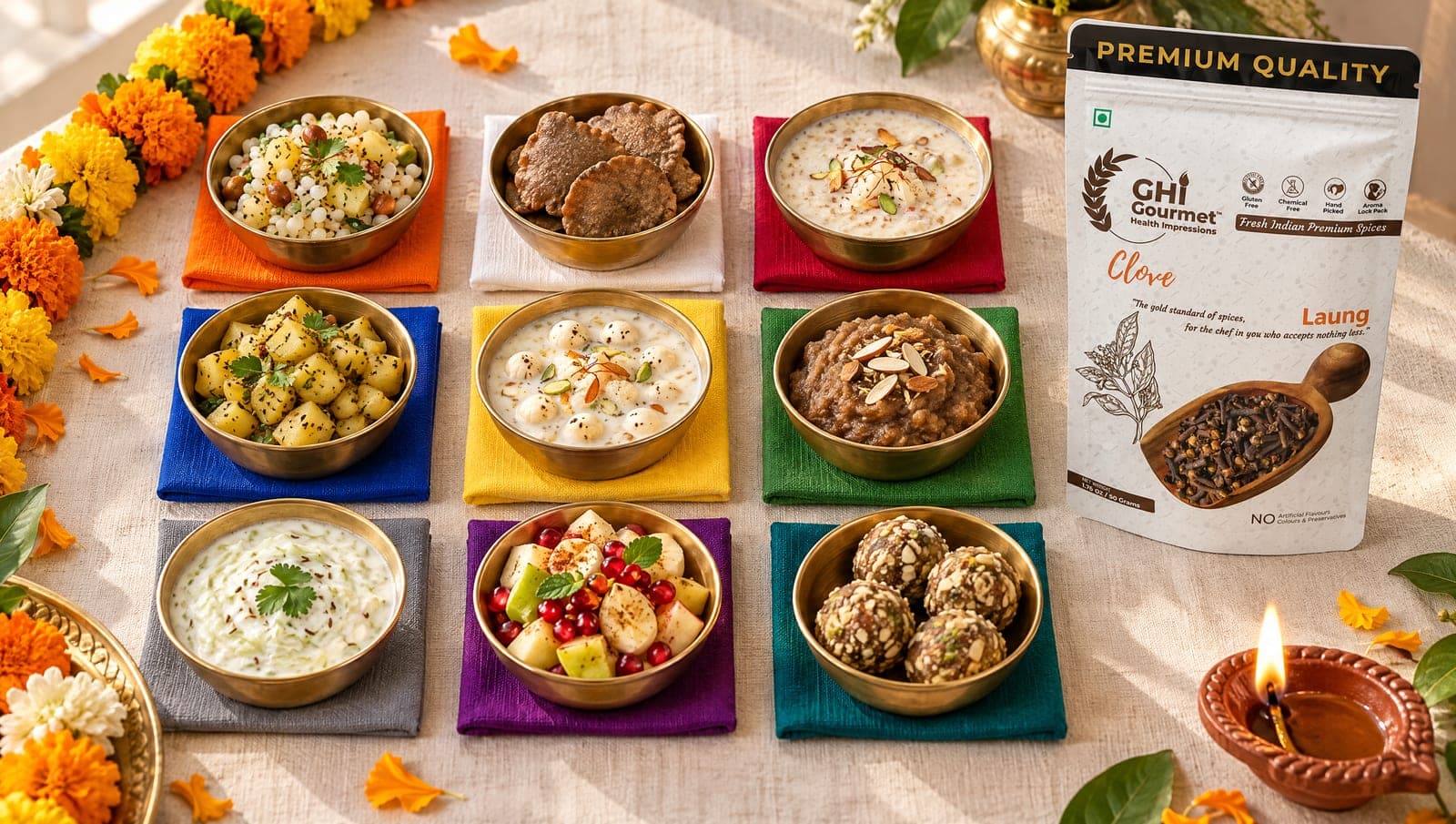
Cloves are a good test. A fresh whole clove has a plump head and releases a warm, sweet aroma the moment you press it with a fingernail.
Recipe: festive vegetable pulao with whole spices
Serves 4.
- 1 1/2 cups basmati rice, rinsed and soaked for 20 minutes
- 2 tablespoons ghee
- 4 green cardamom pods, lightly cracked
- 4 cloves
- 8 black peppercorns
- 1 small stick cinnamon
- 1 bay leaf
- 1 teaspoon cumin seeds
- 1 onion, thinly sliced (leave out if your family keeps the day sattvic)
- 1 1/2 cups mixed vegetables: carrot, beans, peas and cauliflower
- 2 3/4 cups hot water
- Salt to taste
- A handful of fried cashews and chopped mint to finish
- Heat the ghee in a heavy pot on medium heat. Add the cardamom, cloves, peppercorns, cinnamon, bay leaf and cumin. Stir for 30 to 40 seconds, until the cumin crackles and the cloves swell slightly.
- Add the onion, if using, and cook until light golden.
- Add the vegetables and saute for 2 minutes.
- Drain the rice and add it to the pot. Stir gently for a minute so every grain is coated in ghee.
- Pour in the hot water, add salt and bring to a boil.
- Cover, turn the heat to low and cook for 12 to 14 minutes, until the water is absorbed.
- Turn off the heat and rest, covered, for 10 minutes. Fluff with a fork, then top with cashews and mint.
Tell your guests about the whole spices before they dig in. Nobody enjoys biting into a clove by surprise.
Recipe: bhog-style khichuri
Serves 4.
- 1 cup gobindobhog or any short-grain rice
- 3/4 cup yellow moong dal
- 2 tablespoons ghee
- 1 bay leaf, 1 small stick cinnamon, 3 green cardamom pods and 3 cloves
- 1 teaspoon cumin seeds
- 1 tablespoon grated ginger
- 1/2 teaspoon turmeric
- 1 potato and 1 cup cauliflower florets, cut into chunks
- 1/2 cup green peas
- 5 cups hot water
- Salt and 1 teaspoon sugar
- Dry roast the moong dal in a pan for 4 to 5 minutes, until it smells nutty and turns light golden. Rinse the dal and rice together.
- Heat the ghee in a heavy pot. Add the bay leaf, cinnamon, cardamom, cloves and cumin and let them sizzle for 30 seconds.
- Add the ginger and turmeric, then the potato and cauliflower. Cook for 3 minutes.
- Add the rice and dal, stir for a minute, then pour in the hot water with salt and sugar.
- Simmer, partly covered, for about 25 minutes, stirring now and then, until the rice and dal are soft. Add the peas for the last 5 minutes.
- Finish with a spoon of ghee. It should be soft and flowing, not dry.
Planning your Dussehra table
- Start the rice last. Pulao and khichuri are best freshly made, while kheer can be made the night before.
- Buy jalebi and fafda early. In Gujarat especially, the shops are busy from dawn.
- Keep it gentle after a fast. If you have fasted for nine days, a lighter first meal of khichuri or pulao with curd is easier on the stomach than a heavy fried spread.
- Stock up once. Diwali follows on 8 November, so buying whole spices now covers both festivals.
Frequently asked questions
When is Dussehra in 2026?
Dussehra (Vijayadashami) is on Tuesday, 20 October 2026. Some eastern calendars mark Bijoya Dashami a day later, so check your local panchang.
What food is traditionally eaten on Dussehra?
It depends on the region. Gujarat has fafda and jalebi, much of North India has puri, aloo sabzi and kheer, Bengal has bhog khichuri and sweets, and Karnataka has obbattu.
Which whole spices do I need for a festive pulao?
Green cardamom, cloves, black peppercorns, cinnamon, bay leaf and cumin cover almost every festive pulao and biryani.
Why use whole spices instead of garam masala powder?
Whole spices release their aroma slowly into the ghee and the rice, giving a cleaner, layered flavour. Ground spices lose their aroma faster once the pack is opened.