25 September 2026
Navratri 2026 Colours: A Nine-Day Vrat Menu and Its Spices
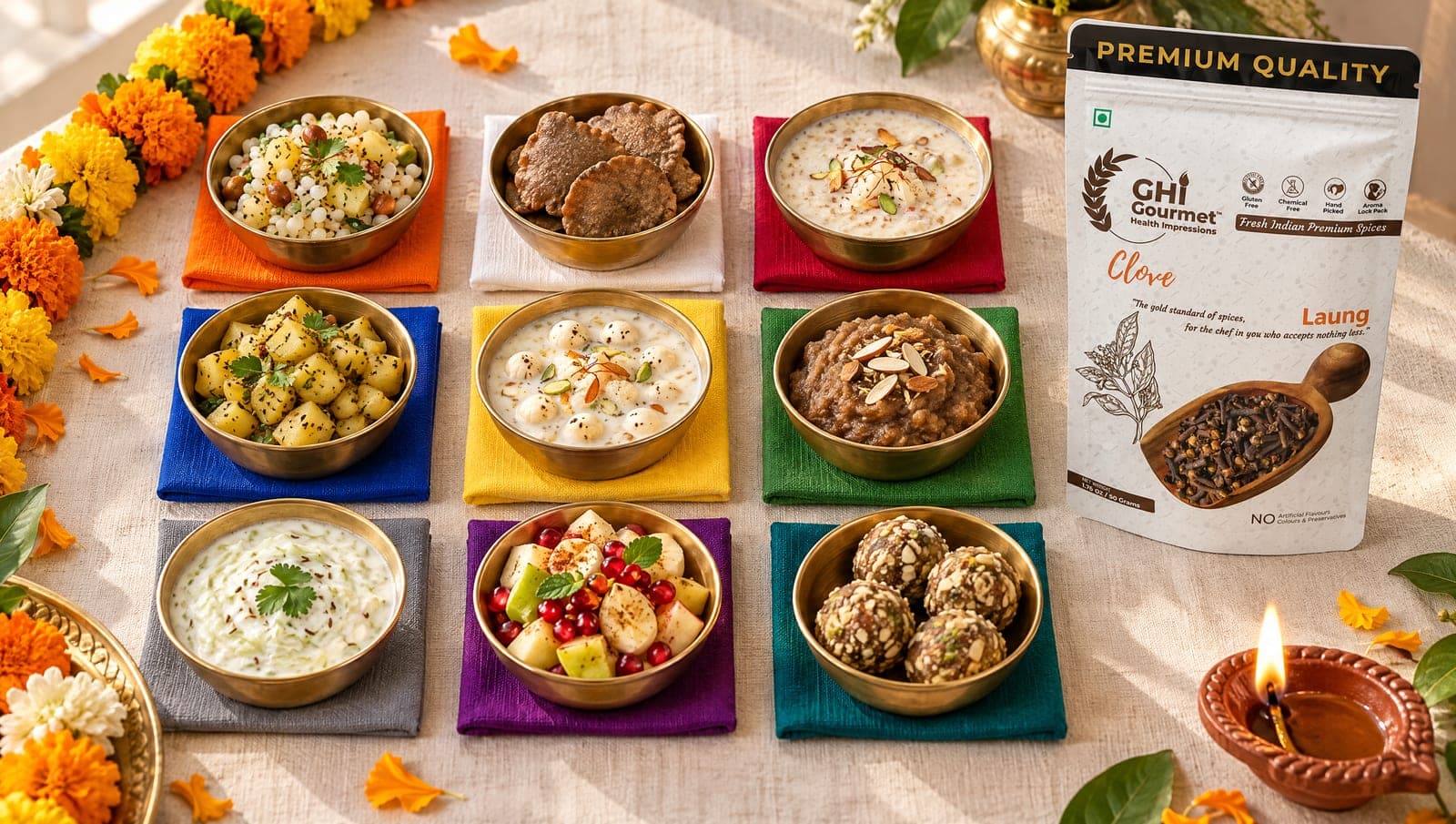
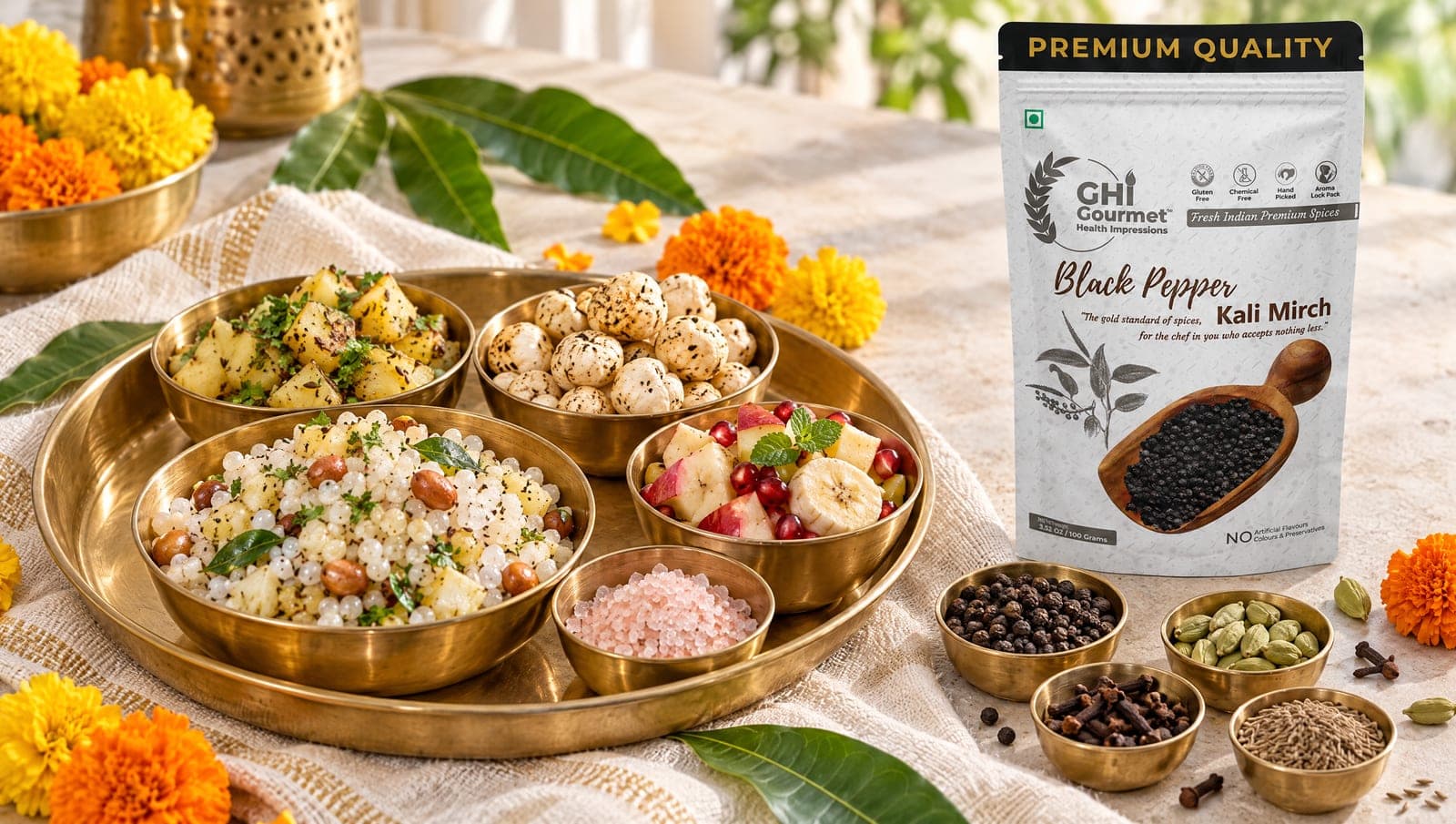
The Navratri 2026 colours start with orange on Sunday, 11 October, and end with peacock green on Monday, 19 October. Plenty of people plan their outfits around the nine colours of Navratri. We thought it would be fun to plan the kitchen the same way: one vrat dish for each day, matched to that day's colour, with the spice that makes it taste right.
A quick note before we begin. The colour tradition is a festive custom rather than a religious requirement, and fasting customs vary by family and region. Some homes eat one meal a day, some skip cumin or tea, some follow a completely different menu. Take this as a set of ideas, and adjust it to what your family does.
Navratri 2026 colours, day by day
Most 2026 lists we checked, including those from FlowerAura, Vedantu and Dev Aastha, agree on the order below. The sequence is tied to the weekday Navratri begins on, which is why it changes every year, and some communities follow their own list. Dussehra falls on Tuesday, 20 October.
| Day | Date | Colour | Vrat dish | Key spice |
|---|---|---|---|---|
| 1 | Sun, 11 Oct | Orange | Shakarkandi chaat | Black pepper |
| 2 | Mon, 12 Oct | White | Sabudana kheer | Green cardamom |
| 3 | Tue, 13 Oct | Red | Kuttu puri with tamatar aloo | Cumin |
| 4 | Wed, 14 Oct | Royal blue | Samak rice pulao | Cloves |
| 5 | Thu, 15 Oct | Yellow | Khatta meetha kaddu | Cumin and black pepper |
| 6 | Fri, 16 Oct | Green | Lauki raita with mint | Roasted cumin |
| 7 | Sat, 17 Oct | Grey | Kuttu pakoras | Black pepper |
| 8 | Sun, 18 Oct | Purple | Black grape fruit chaat | Black pepper powder |
| 9 | Mon, 19 Oct | Peacock green | Makhana kheer with pistachio | Cardamom powder |
Ashtami and Navami puja dates can shift with the tithi in your city, so check your local panchang for those.
The nine-day vrat menu
Day 1, orange: shakarkandi chaat
Roasted sweet potato, orange at the heart, tossed with lemon, sendha namak and a generous crush of black pepper. It is quick, filling and a gentle start to the fast.
Day 2, white: sabudana kheer
Creamy milk, soft tapioca pearls and green cardamom. This is the classic vrat dessert, and cardamom is what lifts it from plain to festive.
Day 3, red: kuttu puri with tamatar aloo
Buckwheat puris with potatoes simmered in a light tomato gravy tempered with cumin. Many families use tomatoes during the fast, though not all.
Day 4, royal blue: samak rice pulao
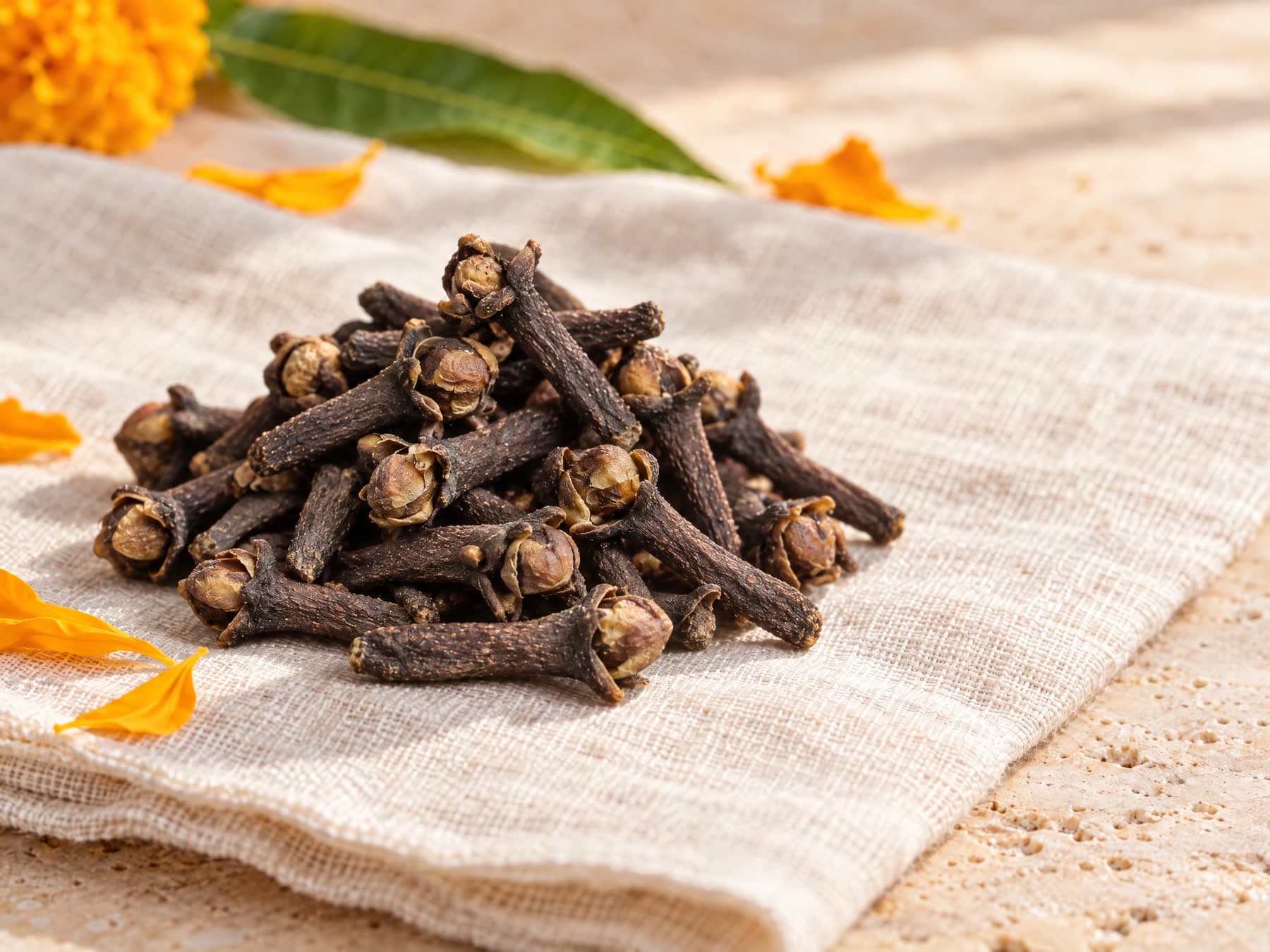
There is no blue food, so serve this one in your favourite blue bowl. Samak (barnyard millet) cooks like rice, and a couple of cloves with cumin in ghee give it a warm, pulao-like aroma.
Day 5, yellow: khatta meetha kaddu
Pumpkin cooked soft with cumin, a little jaggery, dry mango or lemon and black pepper. Sweet, sour and bright yellow.
Day 6, green: lauki raita with mint
Grated bottle gourd, lightly cooked and folded into curd with mint, roasted cumin powder and sendha namak. A cooling side for any meal.
Day 7, grey: kuttu pakoras
Buckwheat flour has a soft grey-brown colour. Potato slices dipped in kuttu batter seasoned with black pepper and fried until crisp make a proper evening treat.
Day 8, purple: black grape fruit chaat
Black grapes, pomegranate, apple and banana with lemon, sendha namak and a pinch of black pepper powder. Many homes also mark Ashtami or Navami with halwa, puri and chana for kanya pujan, so your menu may look different on this day.
Day 9, peacock green: makhana kheer with pistachio
Roasted fox nuts simmered in milk, finished with cardamom powder and a handful of pistachios for that peacock green.
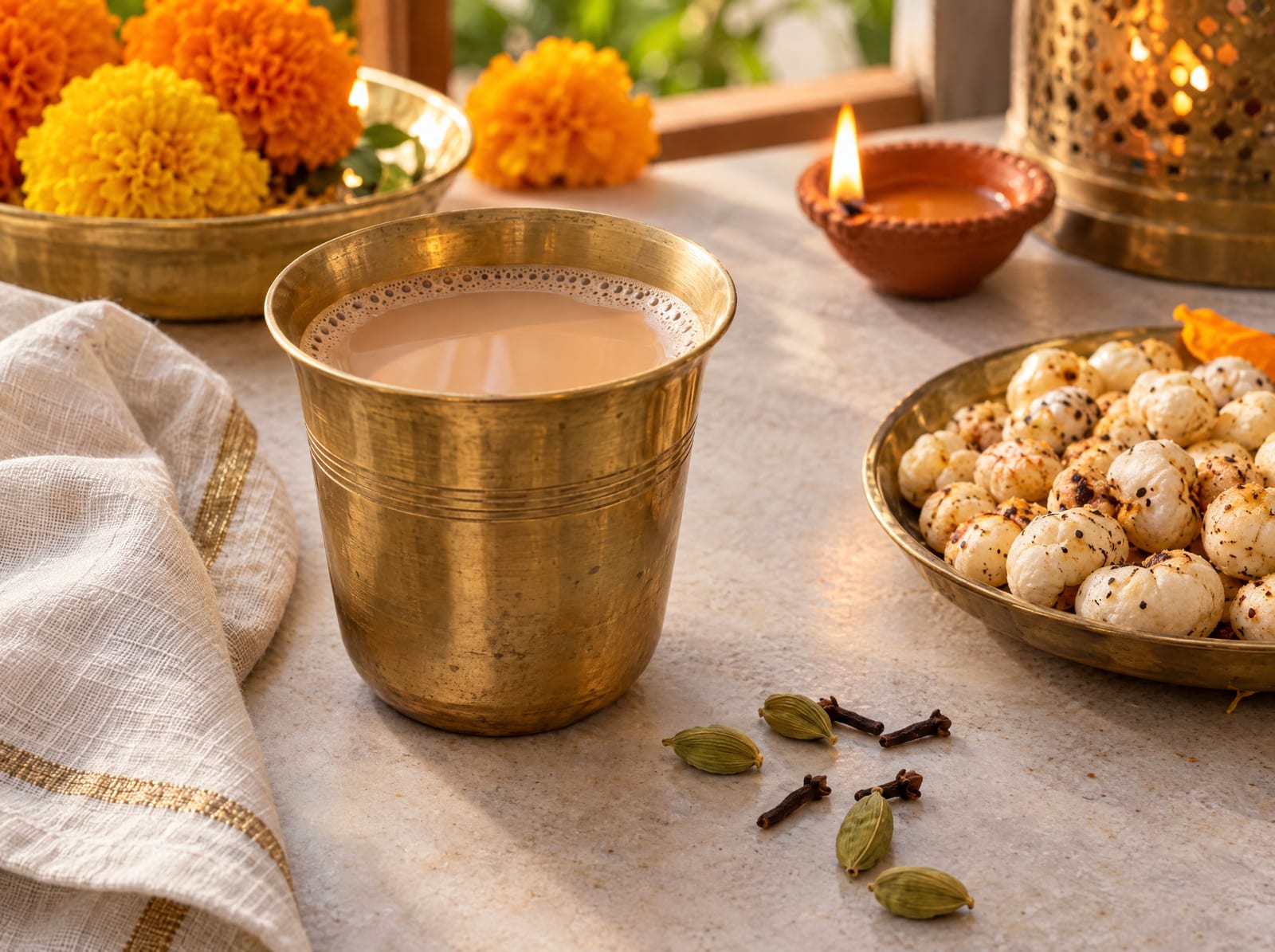
Two recipes from the menu
Shakarkandi chaat (Day 1)
Serves 2.
- 2 medium sweet potatoes (about 400 g)
- 1 teaspoon ghee
- 1/2 teaspoon freshly crushed black pepper
- 1/2 teaspoon roasted cumin powder (skip if your family avoids cumin)
- Sendha namak to taste
- 1 tablespoon lemon juice
- 1 tablespoon pomegranate seeds and a little chopped coriander
- Wash the sweet potatoes and pressure cook for 2 whistles, or roast whole at 200 degrees C for about 40 minutes, until a knife slides in easily.
- Peel and cut into bite-sized cubes.
- Warm the ghee in a pan and toss the cubes for 2 to 3 minutes until the edges catch a little colour.
- Take off the heat and add the pepper, cumin, sendha namak and lemon juice.
- Top with pomegranate and coriander and serve warm.
Kuttu pakoras (Day 7)
Makes about 16 pakoras.
- 1 cup kuttu atta (buckwheat flour)
- 2 medium potatoes, peeled and sliced thin
- 1 green chilli, finely chopped
- 1/2 teaspoon freshly crushed black pepper
- Sendha namak to taste
- About 1/2 cup water
- Oil or ghee for frying
- Mix the kuttu atta, green chilli, black pepper and sendha namak.
- Add water a little at a time to make a thick, smooth batter that coats a spoon.
- Heat the oil on medium. Dip each potato slice in the batter and slide it into the oil.
- Fry for 3 to 4 minutes, turning once, until crisp and cooked through.
- Drain on paper and eat hot with green chutney made with curd, mint and sendha namak.
The spices behind the nine days
Look at the table again and you will see the same few spices doing most of the work: black pepper, green cardamom, cloves and cumin. That is typical of vrat cooking in many homes, where turmeric, hing, mustard seeds and garam masala are usually kept aside. With so few spices in play, quality matters. Whole spices hold their aroma until you crush them, and a fresh pod of cardamom in a kheer is easy to tell from a stale one.
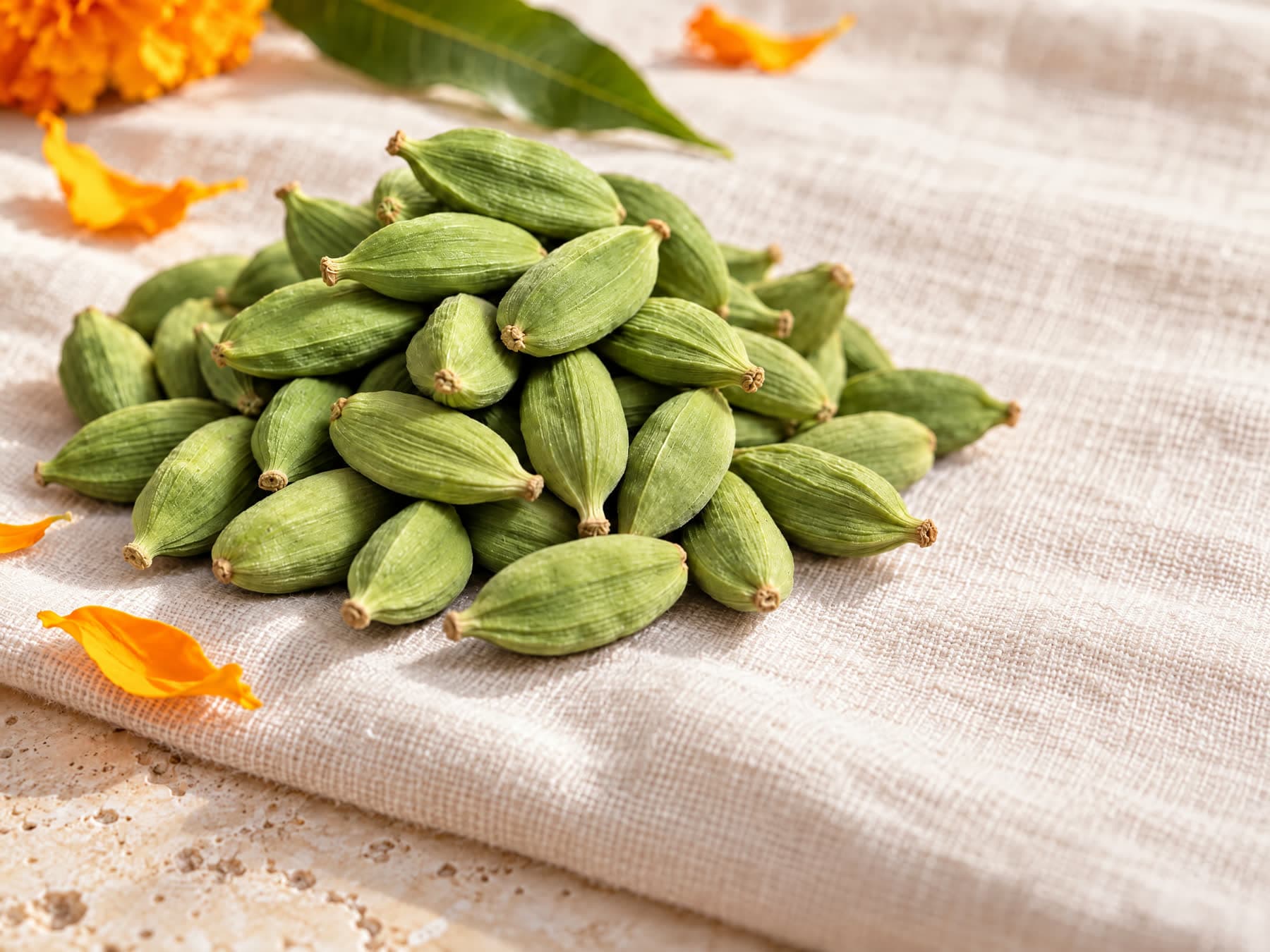
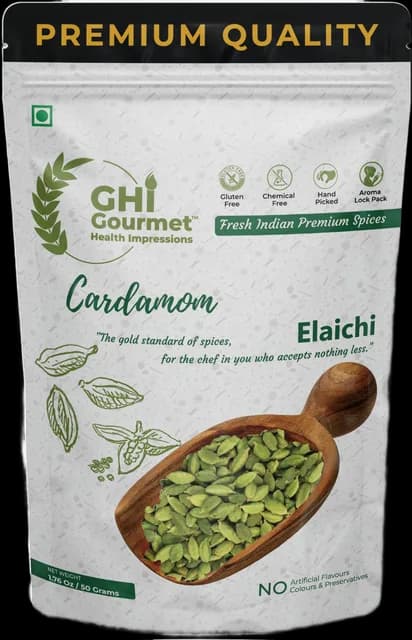
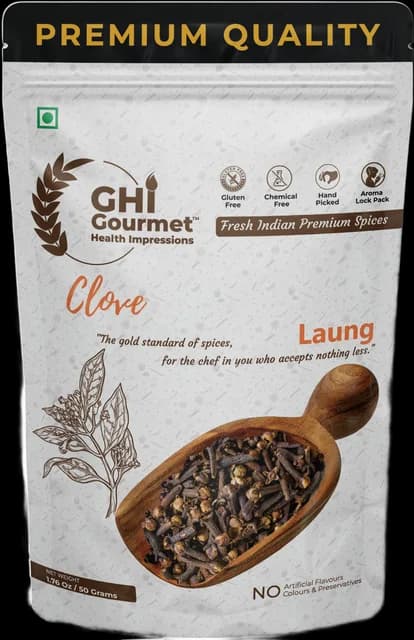
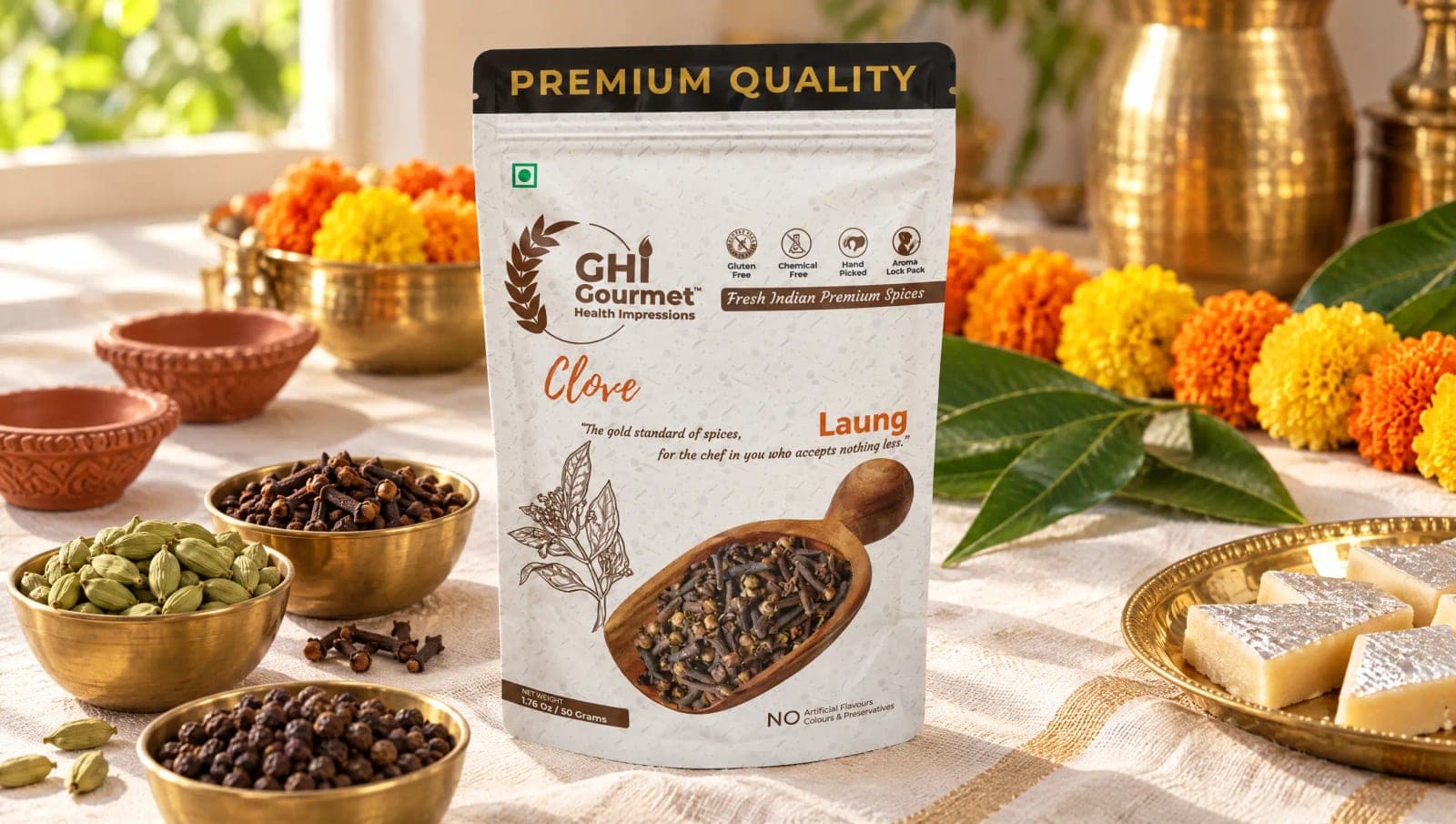
Our Whole Green Cardamom is hand-selected at 8 mm, and our Whole Clove is handpicked for size, warm and sweet in every bud. Both are in the Navratri Spice Box, which opens on 11 October on ghifoods.com with whole black pepper and cardamom powder too. Add or drop anything you like, and use NAVRATRI15 for 15% off (up to ₹250) until 20 October. The offer runs on our website only.
Why the colours and the food go well together
Part of the joy of Navratri is how it turns ordinary days into something to look forward to. The colour of the day gives the whole family, and often the whole office or society, a shared little ritual. Letting it guide the menu does the same for the kitchen. It is also a practical trick: when you already know that Thursday is yellow, deciding on khatta meetha kaddu takes a second, and the shopping list writes itself. Children especially enjoy guessing what the colour will bring to the table.
Planning tips for the nine days
- Shop for flours, sabudana, makhana and spices before 11 October so day one is calm.
- Soak sabudana the night before you need it.
- Cook kuttu and singhare dishes in small batches. These flours are best eaten fresh.
- Keep fruit, curd and roasted makhana ready for light snacks between meals.
- If you have a health condition or take medicines, talk to your doctor before a long fast.
Frequently asked questions
What are the Navratri 2026 colours?
Most lists give orange (11 October), white, red, royal blue, yellow, green, grey, purple and peacock green (19 October). The order depends on the weekday Navratri starts, and some communities follow a different list.
Is wearing the Navratri colour compulsory?
No. It is a popular festive custom, especially in Maharashtra and Gujarat, not a required part of worship.
Which spices are used in a Navratri vrat menu?
Many homes use black pepper, green cardamom, cloves, cumin and sendha namak, and avoid turmeric, hing, mustard seeds and garam masala. Customs vary, so follow your family's practice.
Can I prepare vrat dishes in advance?
Kheer keeps in the fridge for a day or two, and makhana can be roasted a few days ahead. Kuttu puris and pakoras are best made fresh.