6 September 2026
FSSAI License Number Check: How to Read a Spice Pack Label
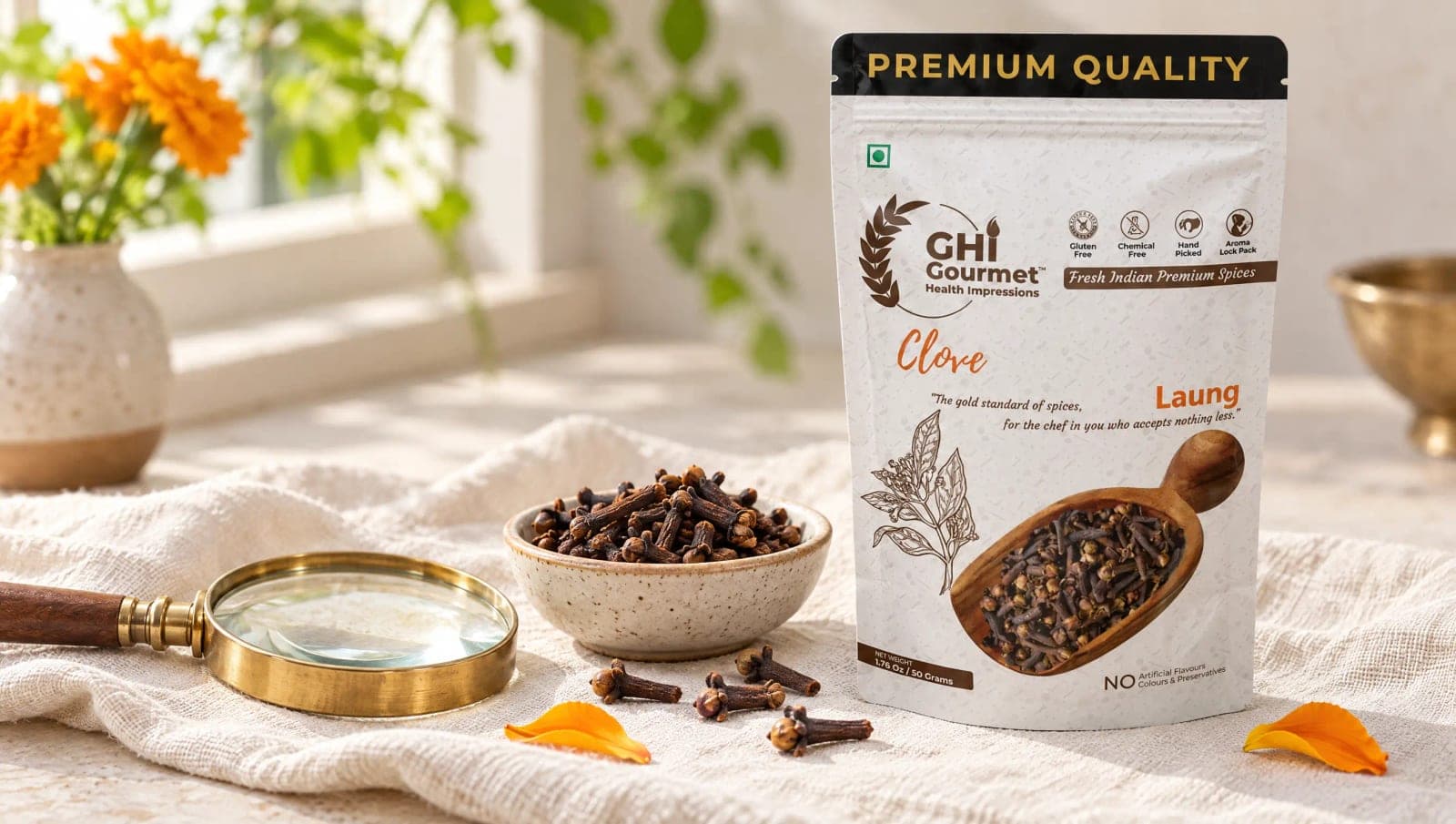
You pick up a pack of cloves or cardamom, turn it over, and there it is: a small FSSAI logo with a long string of digits beside it. Most of us never look twice. But that FSSAI license number is the quickest way to know who actually made or packed your spices, and a two-minute FSSAI license number check can tell you whether that business is really registered with the food regulator. This guide shows you how to read the 14 digits, how to verify them on FoSCoS, and what else on a spice label deserves a second look.
What the FSSAI license number is
FSSAI is the Food Safety and Standards Authority of India, the national food regulator. Under the Food Safety and Standards Act, 2006, every food business, from a large packer to a small home seller, needs either a basic registration or a licence to operate. The number printed on the pack is the identity of that business in FSSAI's records.
Two things are worth knowing straight away:
- It identifies the business, not the batch. The same number appears on every product that business makes or packs. It does not certify the particular pack in your hand.
- There can be more than one. According to the Food Safety and Standards (Labelling and Display) Regulations, 2020, the label must show the licence number of the brand owner, and also the licence number of the manufacturer, packer or marketer if that is a different company. Two numbers on one pack is normal, not suspicious.
How to decode the 14-digit FSSAI number
The FSSAI number always has 14 digits. Compliance guides such as ClearTax and RegisterKaro commonly describe it in five parts:
| Digits | What they stand for |
|---|---|
| 1st digit | Type: 1 usually means a licence (state or central), 2 means a basic registration for a small business |
| 2nd and 3rd | The state code where the business is registered (a central licence may show 00 here) |
| 4th and 5th | The year the licence or registration was first issued |
| 6th to 8th | The code of the authority that enrolled the business |
| 9th to 14th | The unique serial number of that business |
This breakdown is a helpful rule of thumb, not an official test. A number can look perfectly formatted and still be fake or expired. The only reliable check is the regulator's own portal.
How to do an FSSAI license number check on FoSCoS
FoSCoS (Food Safety Compliance System) is FSSAI's official online portal, at foscos.fssai.gov.in. Checking a number takes about two minutes:
- Open foscos.fssai.gov.in on your phone or computer.
- Find the FBO Search option (FBO means Food Business Operator).
- Type the 14-digit number exactly as printed on the pack, fill in the captcha and submit.
- Read the result carefully. Look at the business name, address, whether the licence is active, and its validity date.
- Compare the name with the one printed on the pack. It should match the brand owner, or the manufacturer or packer named on the label.
Red flags to watch for
- No result at all, even after re-typing the number carefully.
- A licence shown as expired or cancelled.
- A business name and address that have nothing to do with the name on the pack.
- A number with fewer or more than 14 digits, or no FSSAI logo beside it.
One mismatch is not always fraud. Brands often use a contract packer, and licences get renewed. But if the pack gives you no clear answer, it is fair to write to the brand and ask.
What else to check on a spice pack label
The Labelling and Display Regulations, 2020 list the details every pre-packaged food must carry. For a pack of spices, these are the ones that matter most in your kitchen:
- Name of the food. "Whole Black Pepper" or "Cardamom Powder", clearly stated.
- List of ingredients. A single spice should list just that spice. If a plain pepper powder lists starch, colour or anything else, ask why.
- Veg or non-veg mark. The green square with a green dot for vegetarian food.
- Net quantity. The weight you are paying for. A 50 g pack should say 50 g.
- Batch or lot number. This is what a brand needs to trace a problem back to one production run.
- Date of manufacture or packing, and an expiry or use by date. Many packs also show a best before date.
- Name and full address of the brand owner, and of the manufacturer or packer if different.
- FSSAI logo and licence number, as described above.
- Country of origin for imported food.
Under separate Legal Metrology rules for packaged goods, you should also find the MRP inclusive of all taxes and a consumer care contact, such as a phone number or email address.
Reading the dates on a spice pack
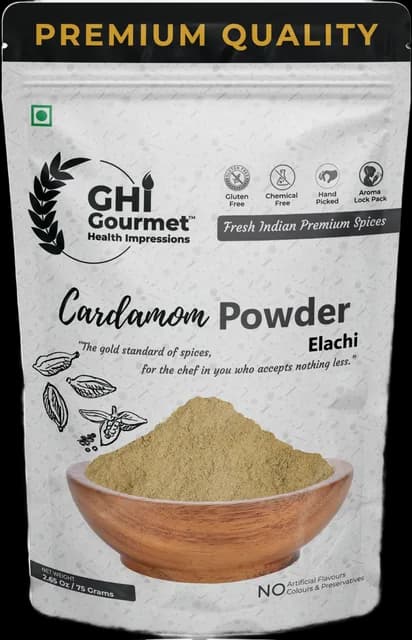
Spices rarely become unsafe quickly, but they do lose aroma. The packing date tells you more about freshness than the expiry date does. Whole spices hold their essential oils far longer than ground ones, so for pepper, cloves and cardamom a recent packing date on whole spice is the best combination. If you use a powder often, like cardamom powder for chai and sweets, buy a pack size you will finish in a few months.
Storage instructions
Many spice labels add a line such as "store in a cool, dry place" or "close tightly after use". Take it seriously. Heat, light and humidity are the main reasons a good spice goes flat in your cupboard.
Label claims that need a closer look
Words like "pure", "premium" and "farm fresh" are marketing language. They may be true, but no regulator checks them the way it checks an FSSAI number. Certifications are different, because they can be traced back to an issuing body:
- ISO 22000 is an international food safety management standard, audited by a certification body.
- APEDA registration relates to agricultural and processed food exports.
- Spices Board registration is issued by the Spices Board of India, which works under the Ministry of Commerce and Industry.
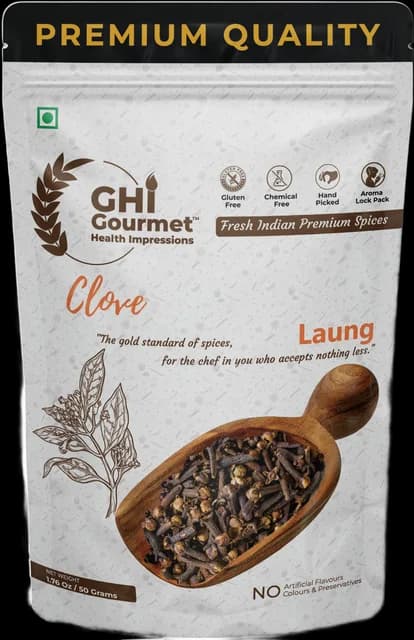
At GHI Foods, our spices come from a certified exporter: FSSAI, APEDA, ISO 22000 and Spices Board, and we are US FDA registered. The same graded spices go into our resealable pouches for home kitchens, like our whole cloves, handpicked for size. You can see every whole spice we pack in our whole spices collection.
What to do if something does not add up
If a number does not show up on FoSCoS, or you have a genuine food safety concern about a product, FSSAI runs a consumer grievance system called Food Safety Connect. You can reach it through its web portal and app, or through FSSAI's toll-free helpline, 1800112100. Keep the pack, note the batch number and take clear photos of the label before you complain. It also helps to write to the brand first; a responsible brand will want to know.
Frequently asked questions
Is an FSSAI registration number the same as an FSSAI licence number?
Both are 14 digits and both are checked the same way on FoSCoS. A basic registration is meant for small food businesses, while larger businesses need a state or central licence. The first digit usually tells you which one it is: 2 for a registration, 1 for a licence.
Does a valid FSSAI number mean the spice is pure?
No. It means the business is registered or licensed with the regulator. It does not test the pack in your hand. Purity depends on how the brand sources, cleans and packs its spices, which is why the batch number, dates and simple home checks still matter.
Why does my spice pack show two FSSAI numbers?
The labelling rules require the brand owner's licence number, and also the manufacturer's or packer's number when that is a different business. Two numbers simply mean two businesses were involved.
What if the FSSAI number does not show up on FoSCoS?
First re-type it slowly, since a single wrong digit returns nothing. If it still does not appear, write to the brand and ask for their licence details. If you do not get a clear answer, you can raise the issue through Food Safety Connect.
Where is the FSSAI number usually printed?
Usually on the back or bottom of the pack, next to the FSSAI logo and close to the manufacturer's name and address.