4 September 2024
Cardamom in Sweets: A Ganesh Chaturthi Guide
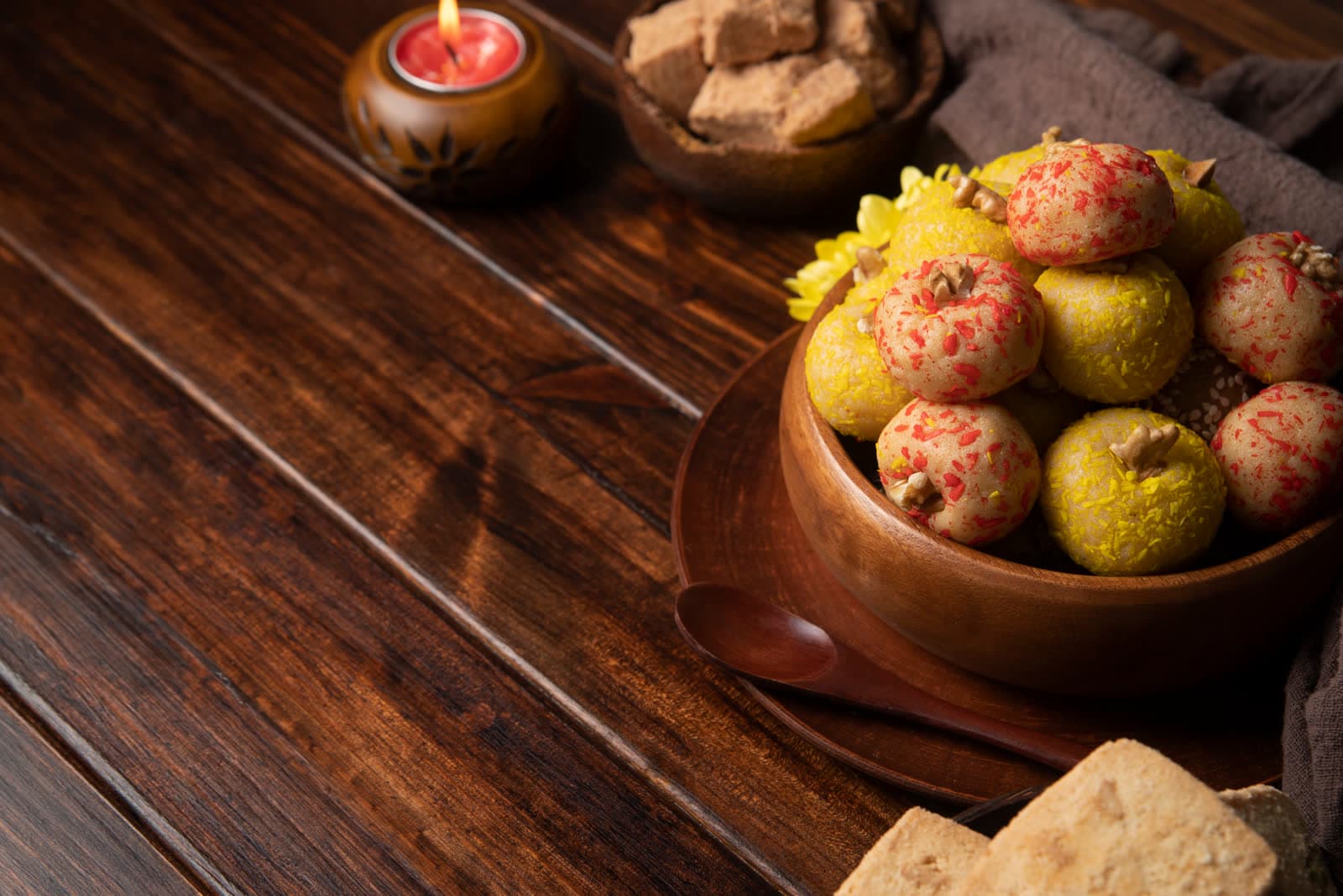
With Ganesh Chaturthi this Saturday, kitchens across Maharashtra and beyond are already filling with the smell of coconut, jaggery and ghee. The one aroma that ties every festive sweet together is elaichi, and using cardamom in sweets well comes down to three things: how much you add, when you add it, and whether you use whole pods or powder. Here is a practical guide for modak, kheer, peda and shrikhand, so each one tastes of cardamom rather than of too much of it.
Why Cardamom Is the Heart of Ganesh Chaturthi Sweets
Almost every sweet made for Bappa leans on the same small group of ingredients: milk, coconut, jaggery or sugar, ghee and rice flour. These are rich, mellow flavours, and cardamom is what lifts them. Its sweet, floral, slightly cooling aroma cuts through the richness and makes a heavy sweet feel lighter on the palate.
Cardamom also works as a flavour bridge. In ukadiche modak it links the caramel notes of jaggery with fresh coconut. In kheer and shrikhand it softens the dairy and pairs beautifully with saffron. That is why so many family recipes list it simply as "elaichi, as needed", a phrase that has left many new cooks guessing. Let us put some numbers to it.
Whole Cardamom vs Cardamom Powder: Which to Use and When
Both forms have a place in the festive kitchen. The difference is in how quickly they release flavour and how long that flavour lasts. Whole pods release aroma slowly, which suits long simmering. Powder releases aroma instantly, which suits sweets that are mixed rather than cooked.
| Form | Best for | When to add | Aroma and shelf life |
|---|---|---|---|
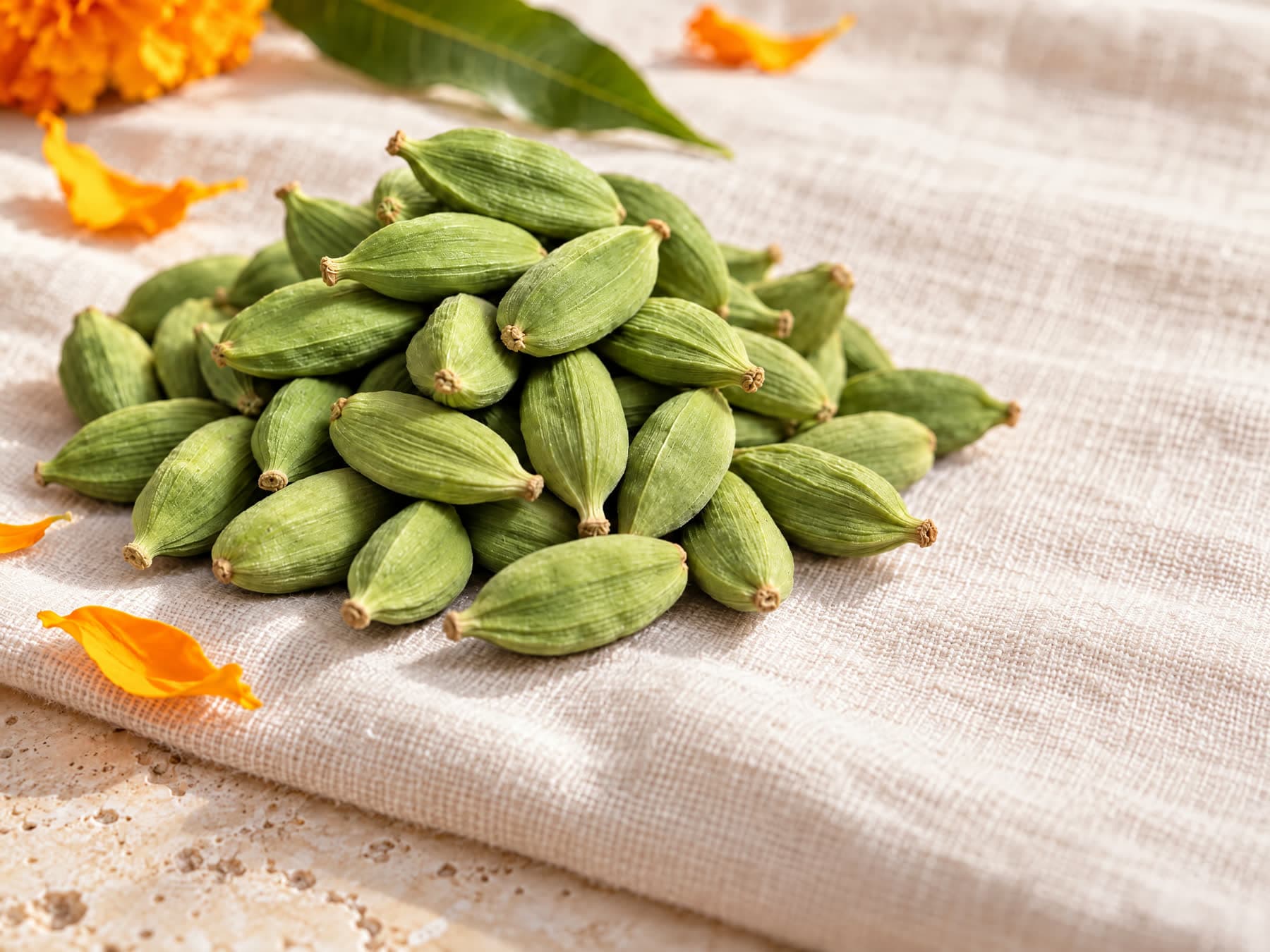
| Whole pods, lightly crushed | Kheer, sugar syrups, payasam | During simmering, remove before serving if you like | Aroma held inside the pod for months |
| Freshly ground seeds | Modak filling, peda, ladoo, shrikhand | At the end of cooking, or stirred into cold sweets | Strongest aroma, best used the same day |
| Ready cardamom powder | Quick sweets, large batches, baking | Same as freshly ground | Convenient; keep sealed and use within a few weeks of opening |
How to grind cardamom at home
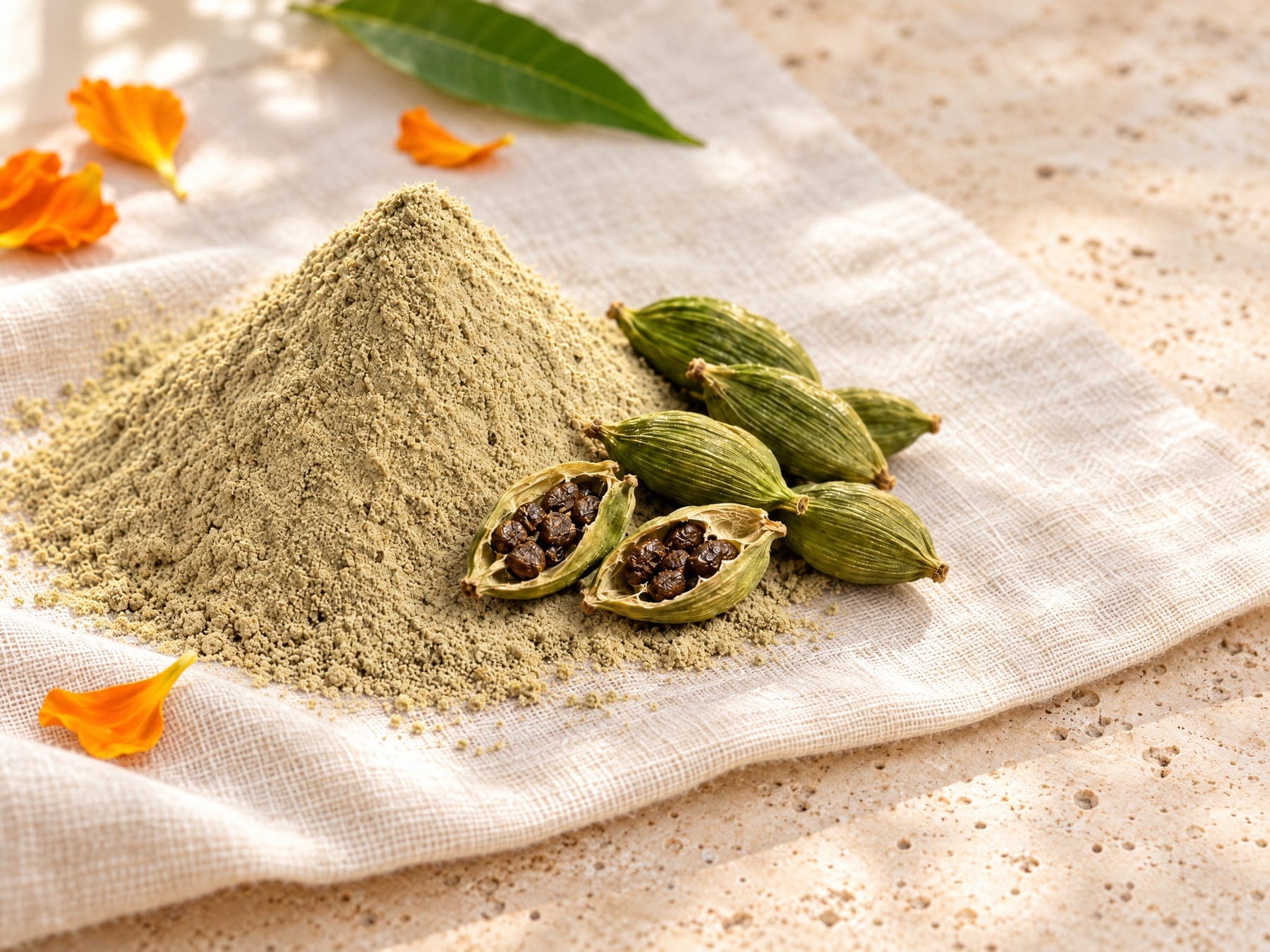
Crack open the pods and tip out the seeds. Fresh seeds are dark brown to black and slightly sticky. Put them in a mortar with a pinch of sugar, which acts like sandpaper and helps the seeds break down into a fine powder. Keep the empty husks and drop them into your next pot of chai rather than throwing them away.
As a rough kitchen guide, 8 to 10 green pods give about 1/2 teaspoon of freshly ground seeds, depending on pod size. Larger, well-graded pods carry more seeds, so you will need fewer of them.
How Much Cardamom for Modak, Kheer, Peda and Shrikhand
These quantities are for typical home batches and give a clear but gentle cardamom flavour. Start here, taste, and adjust by a pinch at a time.
| Sweet | Batch size | Cardamom | When to add |
|---|---|---|---|
| Ukadiche modak (filling) | 2 cups fresh grated coconut and 1 cup grated jaggery | 1/2 tsp freshly ground (8 to 10 pods) | After the jaggery melts and the filling thickens, just before taking it off the heat |
| Rice kheer | 1 litre full-fat milk and 1/4 cup rice | 4 to 5 crushed pods or 1/2 tsp powder | Pods in the last 10 minutes; powder off the heat |
| Peda | 250 g khoya and 1/2 cup powdered sugar | 1/4 to 1/2 tsp powder | Once the mixture is off the heat and slightly cooled |
| Shrikhand | 500 g hung curd and 1/2 to 3/4 cup powdered sugar | 1/2 tsp powder | Stirred in cold, then rested in the fridge |
Ukadiche modak
The coconut and jaggery filling, called saran or churan, is where cardamom does its work. Cook the coconut and jaggery together on a low flame for 8 to 10 minutes until the mixture is moist but no longer runny. Stir in the freshly ground cardamom in the last minute, along with a pinch of nutmeg if your family likes it. Adding it earlier means much of the aroma cooks away before the modak are even shaped and steamed.
Kheer
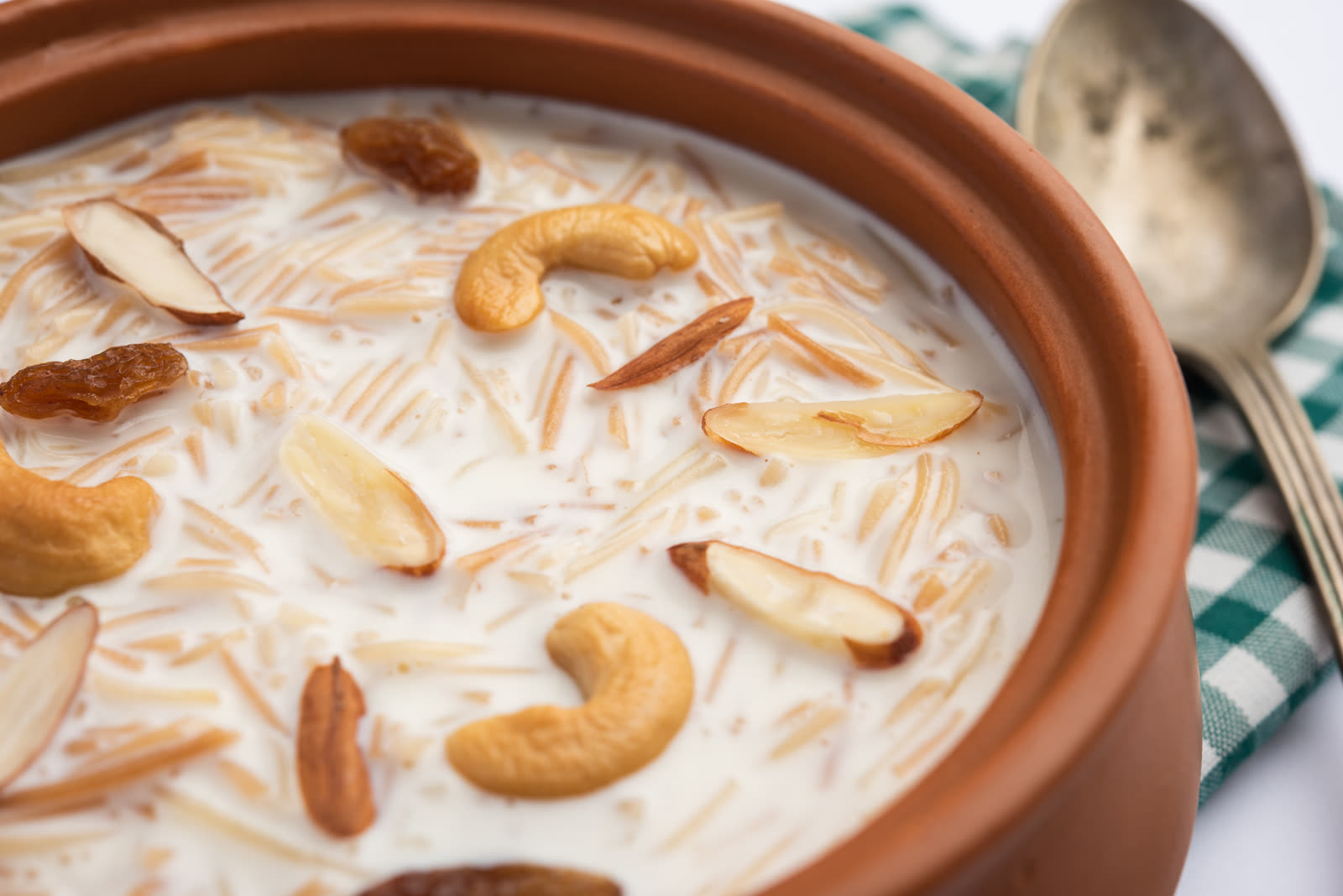
Kheer is the one sweet where whole pods shine. Drop 4 to 5 lightly crushed pods into the milk once the rice is almost soft. They will infuse gently for the last 10 minutes. If you prefer a smooth kheer with no pods to fish out, stir in 1/2 teaspoon of powder after switching off the flame.
Peda
Peda mixtures are cooked until they come together, and cardamom added too early can turn slightly bitter against the hot pan. Take the khoya off the heat, let it cool for 3 to 4 minutes until warm but still soft, then knead in the sugar and cardamom powder before shaping.
Shrikhand
Because shrikhand is never cooked, there is no heat to drive off the aroma. Soak a few strands of saffron in 1 tablespoon of warm milk, then whisk it into the hung curd with the sugar and cardamom powder. Rest it in the fridge for 1 to 2 hours. The resting time lets the cardamom spread evenly, so do not be tempted to add more after the first taste.
When to Add Cardamom: Why Timing Changes the Flavour
The fragrance of cardamom comes from delicate essential oils that begin to escape as soon as they meet heat. This leads to a simple rule for festive cooking:
- Hot sweets: add powder at the very end, ideally off the heat. Whole pods can go in a little earlier because the husk protects the seeds.
- Cold sweets: add cardamom at the start of resting, not at the moment of serving, so the flavour has time to spread.
- Sweets cooked in ghee: for sheera or ladoo, a pinch of powder stirred into the warm ghee right at the end carries the aroma through the whole batch, because fat holds on to flavour.
Too much cardamom is a common festive mistake. Past a point it tastes soapy and slightly bitter, and it drowns the subtle flavours of coconut and jaggery. When in doubt, use less and let the aroma, not the taste, do the work.
Choosing Cardamom That Actually Smells Like Cardamom
For festive sweets, cardamom is the headline flavour, so the quality of the pod shows immediately. A few things to look for:
- Size and grading: larger, uniformly graded pods, such as 8 mm whole green cardamom, are usually fully mature and packed with seeds.
- Natural colour: a natural green, not an unusually bright or glossy shade.
- Seeds: dark and slightly sticky inside, not pale, dry or crumbly.
- Aroma: a strong, sweet smell the moment you crack a pod.
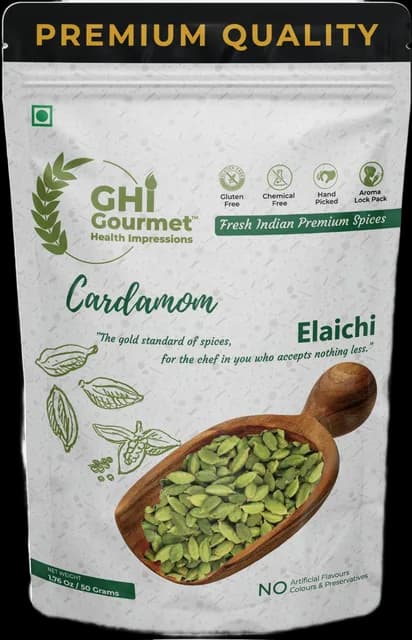
- Clean handling: sealed, labelled packs from certified brands, with no added colour or preservatives.
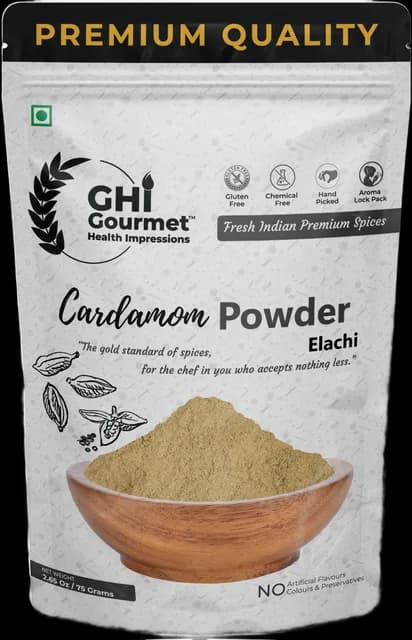
If you are cooking in large quantities for guests and aarti prasad, a good cardamom powder saves a lot of pounding. Keep the pack tightly sealed between uses, since powder loses aroma faster than whole pods. For a closer look at why this little pod is so prized, read our piece on the aromatic journey of cardamom.
Frequently asked questions
How much cardamom powder do I need for 1 litre of kheer?
About 1/2 teaspoon of cardamom powder, or 4 to 5 lightly crushed pods, is enough for 1 litre of milk. Add pods in the last 10 minutes of simmering, or stir in the powder after turning off the heat.
Should I use whole cardamom or powder in modak?
Use freshly ground cardamom seeds for modak filling. Whole pods are hard to remove from a thick coconut and jaggery mixture, and fresh powder spreads evenly through every modak.
How many cardamom pods make 1 teaspoon of powder?
Roughly 15 to 20 green pods make about 1 teaspoon of ground cardamom, depending on their size. Bold, well-graded pods contain more seeds, so you may need fewer.
Can I add cardamom to shrikhand without cooking it?
Yes. Shrikhand is never cooked, so simply whisk the cardamom powder into the hung curd with the sugar and saffron milk, then rest it in the fridge for 1 to 2 hours for the flavour to spread.
Why does my sweet taste bitter after adding cardamom?
Bitterness usually comes from using too much, from adding powder to a very hot pan, or from grinding the fibrous husks along with the seeds. Use the seeds only, add them at the end of cooking, and start with less than you think.
However many modak you make this year, may your kitchen smell of ghee, jaggery and fresh elaichi. At GHI, our hand-selected 8 mm cardamom pods and cardamom powder come in resealable packs, so the aroma lasts well beyond the festive days. Ganpati Bappa Morya!