9 September 2026
Green Cardamom Grades Explained: 8 mm, Bold and Extra Bold
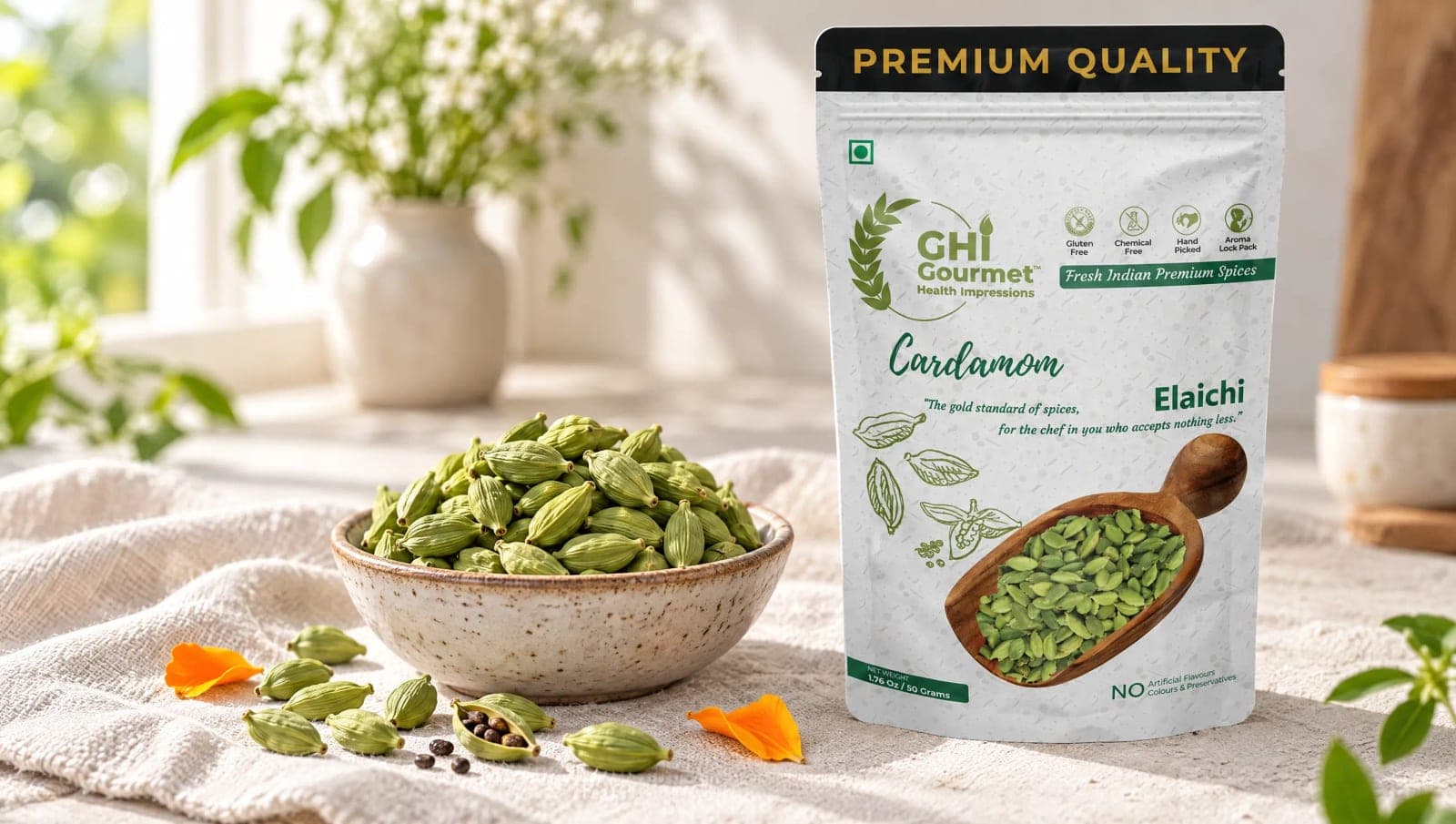
Walk into any spice market in India and ask for elaichi, and the first question back is often "kaunsa size?" Green cardamom is sold by size and colour more than almost any other spice, and prices can vary a lot between one heap and the next. If you have seen words like 8 mm, bold, extra bold or Alleppey Green on a pack and wondered what they mean, this guide explains green cardamom grades in plain words, and how to use them to buy better elaichi for your chai, biryani and mithai.
Why cardamom is graded at all
Cardamom pods from the same plant are not all equal. Some fill out fully, some stay small and thin, and some split or lose colour while drying. Grading sorts this mixed harvest into even lots, so a buyer knows what they are getting. For you at home, grading matters for three simple reasons:
- Bigger, fuller pods usually hold more seeds. The seeds carry most of cardamom's aromatic oils, so a well-filled pod gives more flavour for its weight.
- Even size cooks evenly. Pods of one size release flavour at the same pace in a pot of chai or a pan of biryani.
- Colour tells you about handling. Good drying keeps the pods green. Poor drying or long storage turns them pale, yellow or brown.
Green cardamom grades explained
India's traditional export grades for small cardamom combine two measures: the minimum pod size (checked through sieves) and the weight of one litre of pods. A heavier litre means denser, fuller pods. The standard Indian export grades, as set out in the Technology of Spices and Condiments course material published on INFLIBNET, are:
| Grade | Pod size | Weight per litre |
|---|---|---|
| AGEB | 7 mm and above | 435 g |
| AGB | 6 mm and above | 415 g |
| AGS | 5 mm and above | 385 g |
| AGS-1 | 4 mm and above | 350 g |
| AGS-2 | 4 mm and above | 320 g |
AGEB stands for Alleppey Green Extra Bold and AGB for Alleppey Green Bold. So "extra bold" and "bold" are not just marketing words. In the trade they refer to real size and density bands.
What 8 mm cardamom means
You will often see packs labelled 8 mm, and sometimes 7 to 8 mm or 6 to 7 mm. These are sieve sizes used in the domestic trade. An 8 mm pod is too big to pass through an 8 mm sieve. That puts it at the top end of the market, above the 7 mm minimum for the Extra Bold export grade. Traders sometimes call these the jumbo or "bold 8" lots.
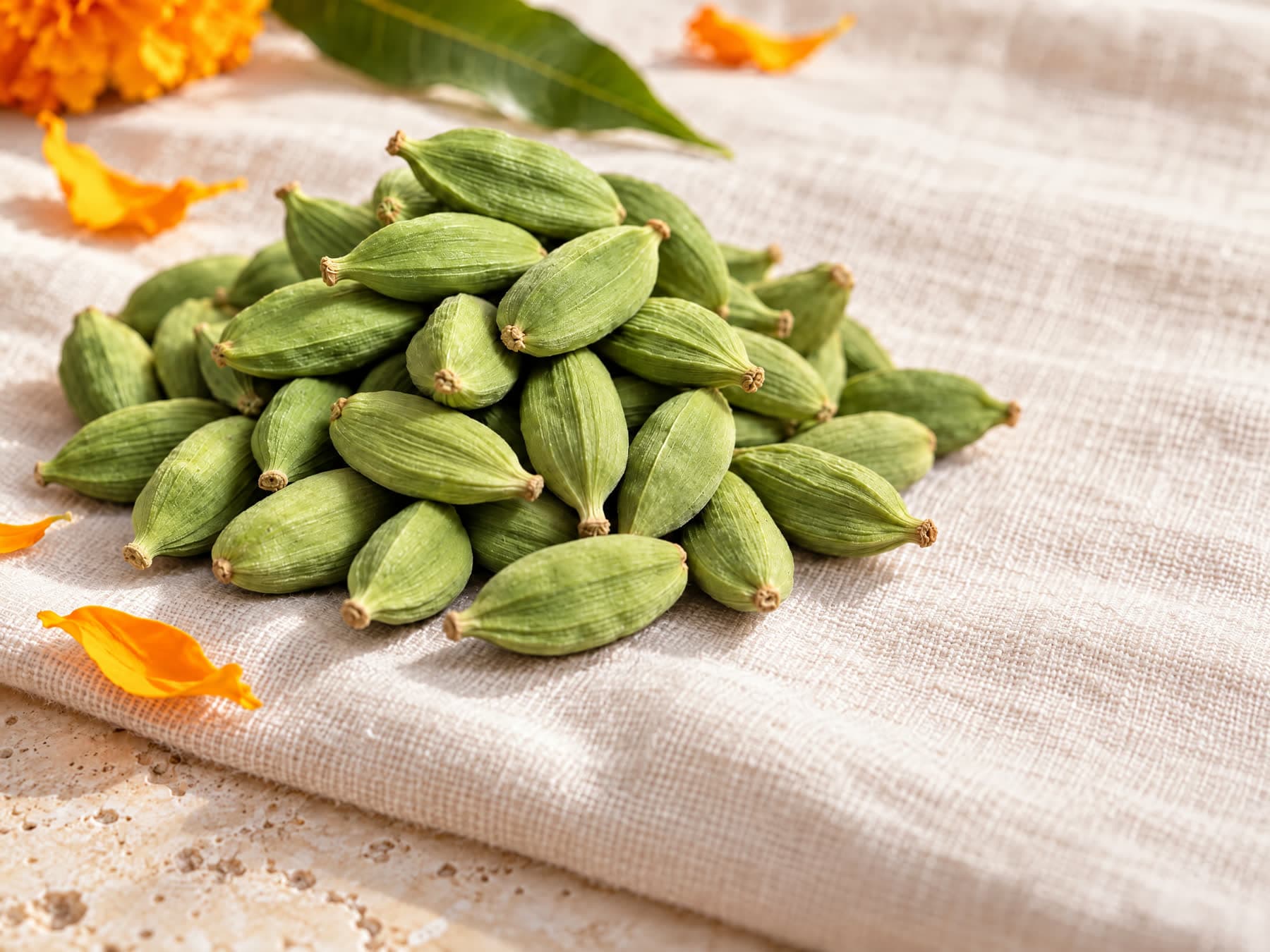
A quick way to picture it: 8 mm is a little wider than an ordinary pencil. A handful of 8 mm pods looks noticeably plump and even next to a mixed grade.
Bold vs extra bold: which should you buy?
- Extra bold or 8 mm suits chai, kheer, biryani and any dish where you use whole pods and want strong aroma from each one. It is also the grade people prefer for gifting.
- Bold (6 to 7 mm) is a sound everyday grade and costs less.
- Smaller grades are fine when you are going to grind the seeds anyway, though they are more often mixed and uneven.
Colour: what green really tells you
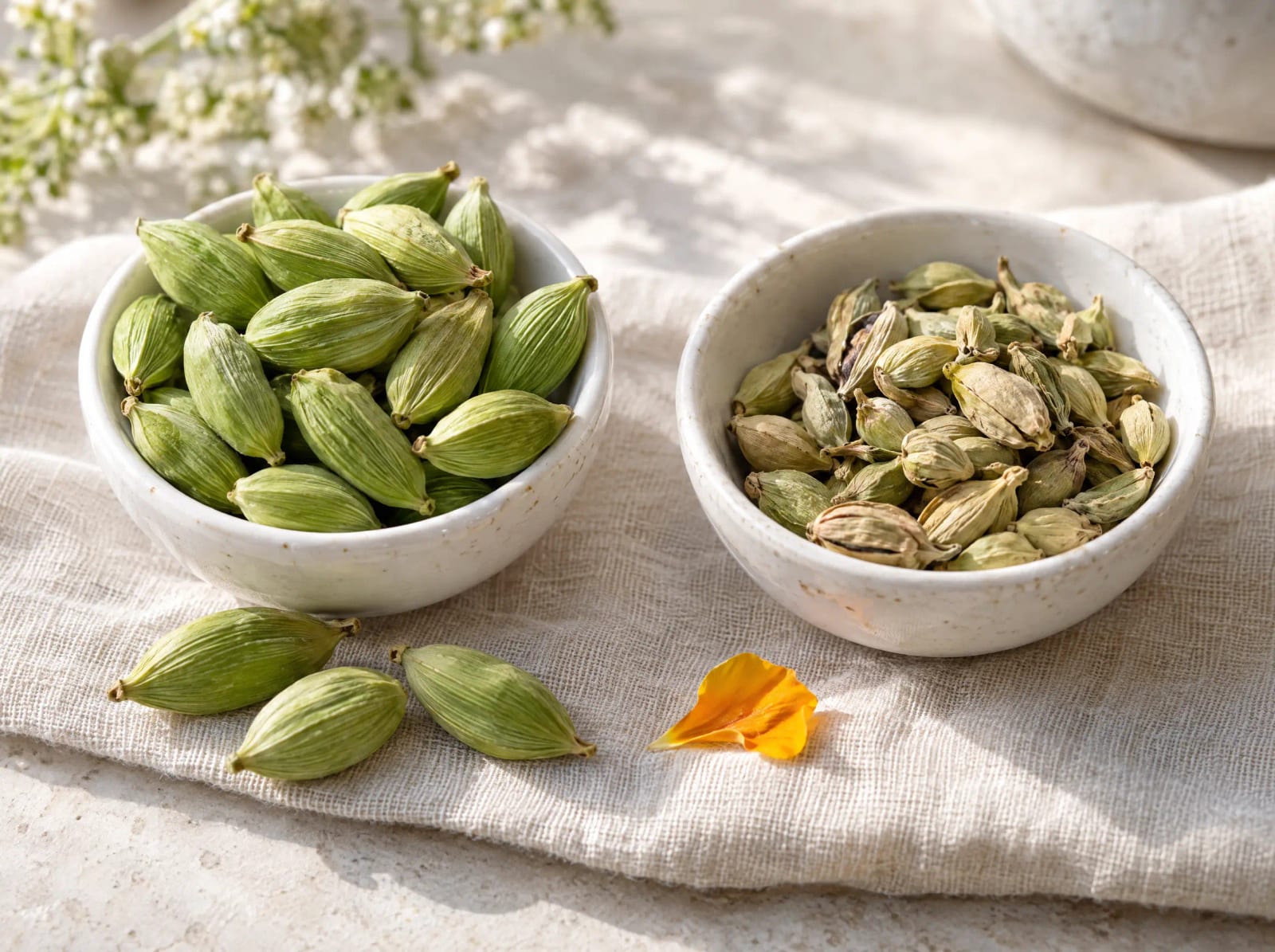
A fresh, well-dried cardamom pod is an even, lively green. Growers dry freshly picked capsules in curing houses with controlled heat, and careful drying is what holds the colour. Here is how to read it:
- Even, natural green: well dried and reasonably fresh.
- Pale, yellowish or brownish: older stock, sun exposure or rushed drying. Still usable, but the aroma is usually weaker.
- Unnaturally bright, glossy green that feels coated: be careful. A simple check many buyers use is to rub a few pods firmly on a damp white tissue. Natural pods should not leave a green stain.
Alleppey Green and Idukki: what the names mean
"Alleppey Green" began as a trade name. Cardamom from the hills was brought to the port town of Alleppey (now Alappuzha) in Kerala for auction and shipping, and the name stuck to the grade. Today, Alleppey Green Cardamom is a registered Geographical Indication (GI), listed by the Spices Board of India as registered in 2008.
Much of India's small cardamom grows in the Cardamom Hills of Idukki district in Kerala, with further growing areas in Tamil Nadu and Karnataka. Coorg Green Cardamom from Karnataka is also a registered GI. When you see "Idukki" or "Alleppey Green" on a pack, it is a claim about origin. The size grade is a separate claim, so a good pack tells you both, or at least the grade.
How to buy green cardamom: a quick checklist
- Look for a stated size. "8 mm" or "7 to 8 mm" tells you far more than "premium".
- Check the colour and evenness. Pods should be uniformly green and similar in size, with very few split or empty pods.
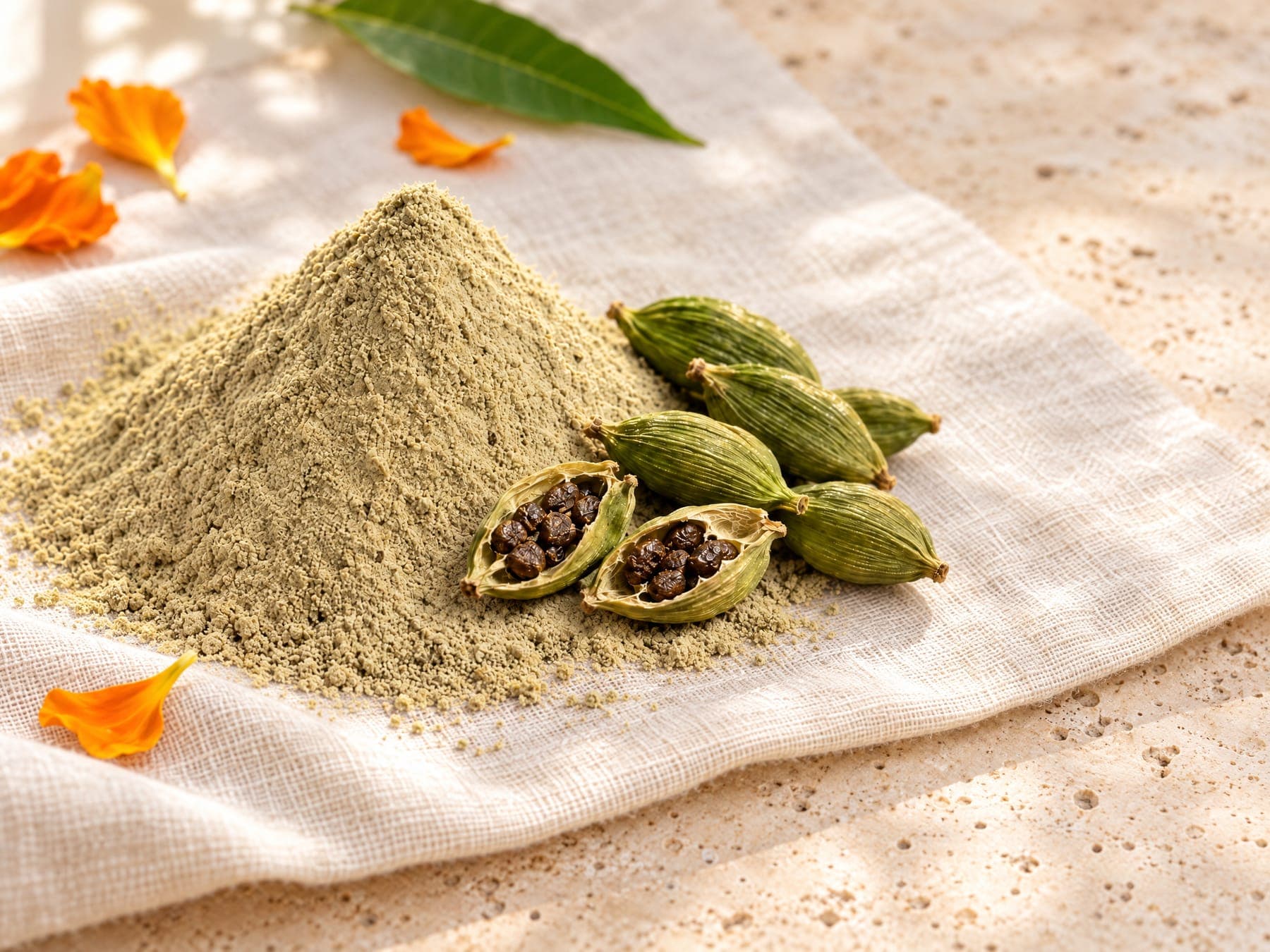
- Press a pod. It should feel firm and full, not hollow. Split it and the seeds should be dark, sticky and strongly fragrant.
- Smell the pack. Good cardamom smells sweet, cool and slightly camphor-like the moment you open it.
- Read the label. Check the FSSAI licence number, the packing date and the net weight.
- Choose a resealable pack. Cardamom's aroma fades once it meets air and heat.
How to store cardamom so it stays green
Keep whole pods in an airtight container or a tightly resealed pouch, away from the stove and sunlight. Crush or grind only what you need, just before cooking. Ground cardamom loses its aroma much faster than whole pods, so if you like the convenience of powder for sweets, buy small packs and finish them quickly.
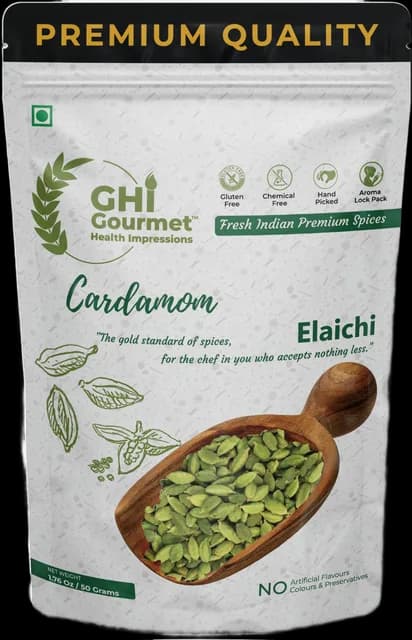
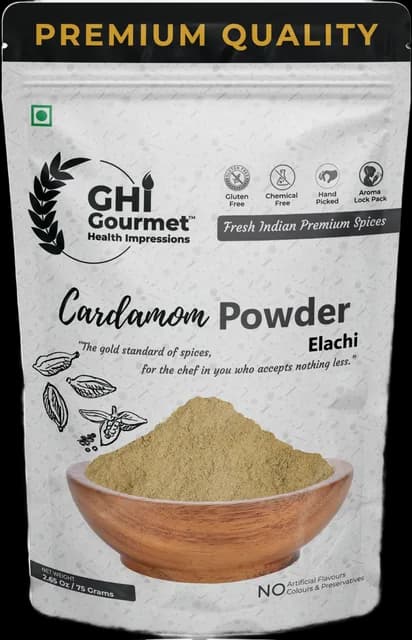
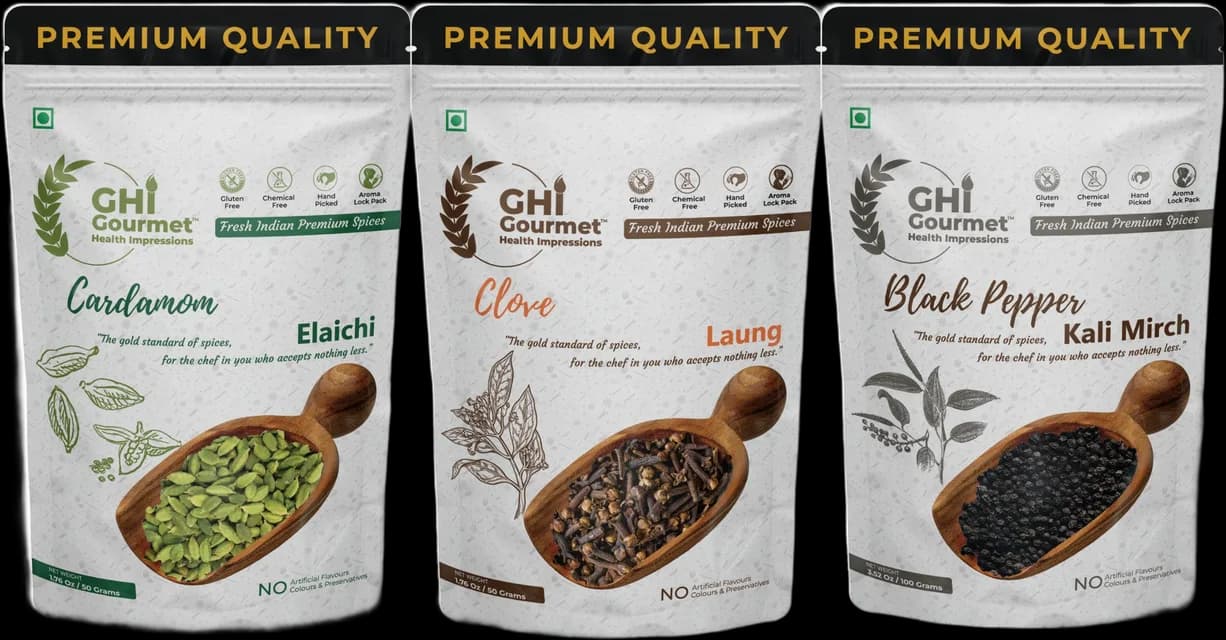
At GHI Foods, our Whole Green Cardamom is hand-selected at 8 mm, with nothing added and nothing taken out, and packed in a resealable aroma-lock pouch. For quick desserts and chai, our Cardamom Powder is finely ground from whole pods with no additives or preservatives. And if you want pepper and cloves alongside, the Whole Spice Trio includes our 8 mm cardamom.
Frequently asked questions
Is 8 mm cardamom better than 7 mm?
8 mm pods are larger and usually fuller, so each pod tends to give more aroma, and they look even and generous. 7 mm cardamom is still a good grade. The difference matters most when you use whole pods, and less when you grind them.
What does AGEB mean on cardamom?
AGEB stands for Alleppey Green Extra Bold. In the standard Indian export grades it means pods of 7 mm and above, with a litre of pods weighing at least 435 g.
Why is some cardamom pale or yellow?
Pale or yellow pods usually point to older stock, exposure to light, or drying that was not well controlled. They are not harmful, but they tend to have a weaker aroma than fresh, evenly green pods.
Is Alleppey cardamom grown in Alleppey?
Not mainly. Alleppey was the historic trading and shipping town. Much of the cardamom sold under this name grows in the hills of Idukki district in Kerala. Alleppey Green Cardamom is now a registered Geographical Indication.
How long does whole cardamom stay fresh?
Whole pods kept airtight, cool and dark hold their aroma for many months. Always go by the dates on the pack, and smell the pods: if the sweet aroma is faint, they are past their best.