8 September 2026
India's Spice Exports 2025-26: What the Numbers Mean for You
India is often called the spice bowl of the world, and the export numbers show why. Every year, lakhs of tonnes of Indian chilli, cumin, cardamom, turmeric and pepper leave our ports for kitchens and factories abroad. But India's spice exports are not just a trade story. What sells overseas, and at what price, shapes what reaches your local shop and what you pay for it. Here are the latest figures from the Spices Board of India, explained in plain words, and what they mean for the spices in your kitchen.
India's spice exports in 2025-26: the headline numbers
According to the Spices Board of India, the country exported 17.34 lakh tonnes of spices and spice products in 2025-26, valued at ₹39,140.11 crore (US$ 4,430.90 million).
That was slightly lower than the year before. In 2024-25, exports stood at 17.99 lakh tonnes worth ₹39,994.48 crore (US$ 4,722.65 million). The Spices Board records the change as a decline of 4% in volume, 2% in rupee value and 6% in dollar value.
So after years of steady growth, 2025-26 was a flatter year overall. But the total hides some very big moves inside the basket.
Which spices India exports the most
The Spices Board also publishes each spice's share of total export value. For 2025-26, the major contributors were:
| Spice or product | Share of export value, 2025-26 |
|---|---|
| Chilli | 27% |
| Cumin | 12% |
| Spice oils and oleoresins | 12% |
| Small (green) cardamom | 9% |
| Mint products | 8% |
| Turmeric | 7% |
| Curry powder and paste | 6% |
| Ginger | 3% |
| Pepper | 3% |
| Coriander | 2% |
Source: Spices Board of India, major item-wise export data for 2025-26.
Chilli still leads
Chilli has been India's biggest spice export by value for a long time, and it still earns more than a quarter of the total. Much of it goes into sauces, spice blends and colour extracts abroad.
Green cardamom is the big story
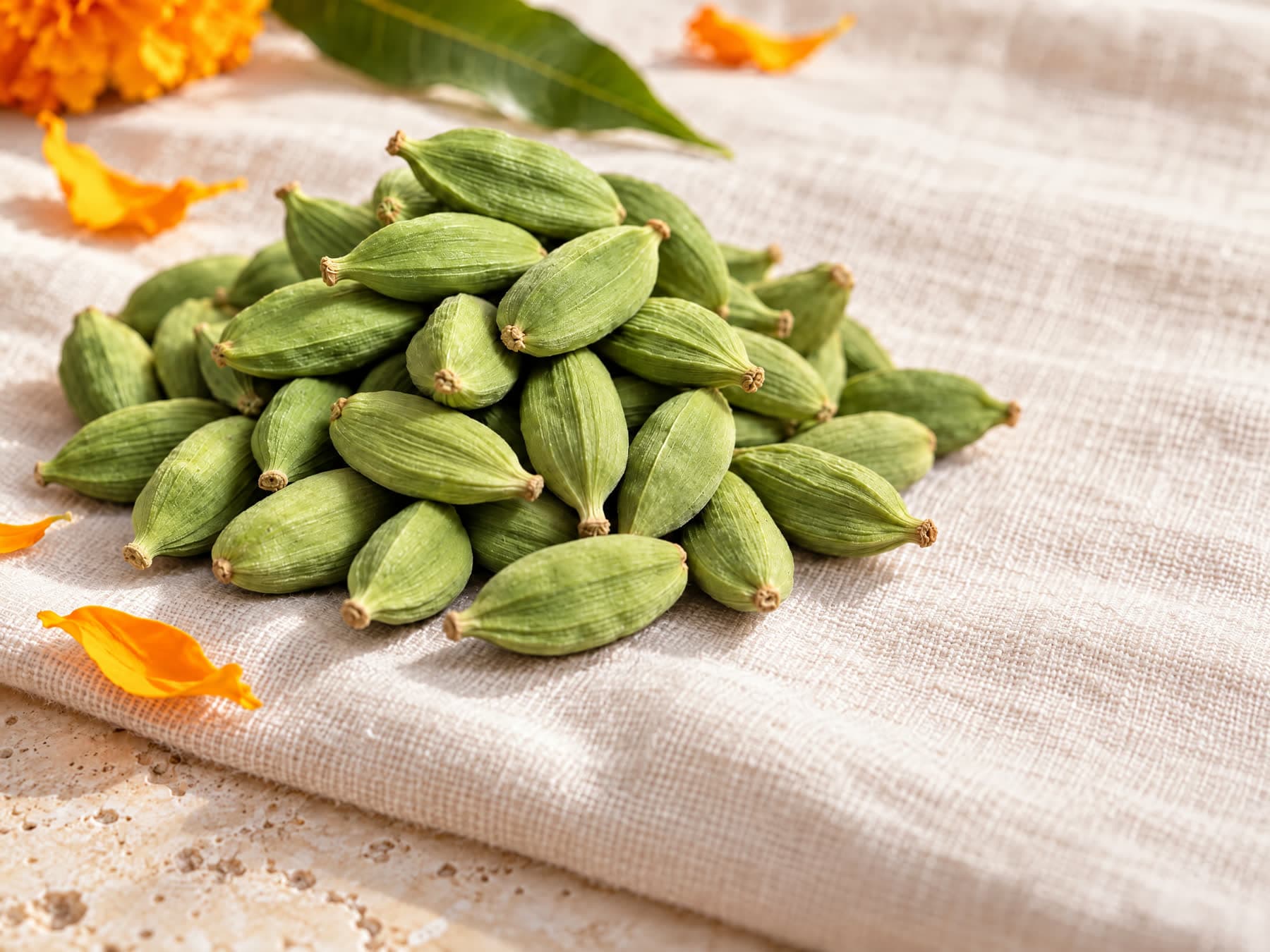
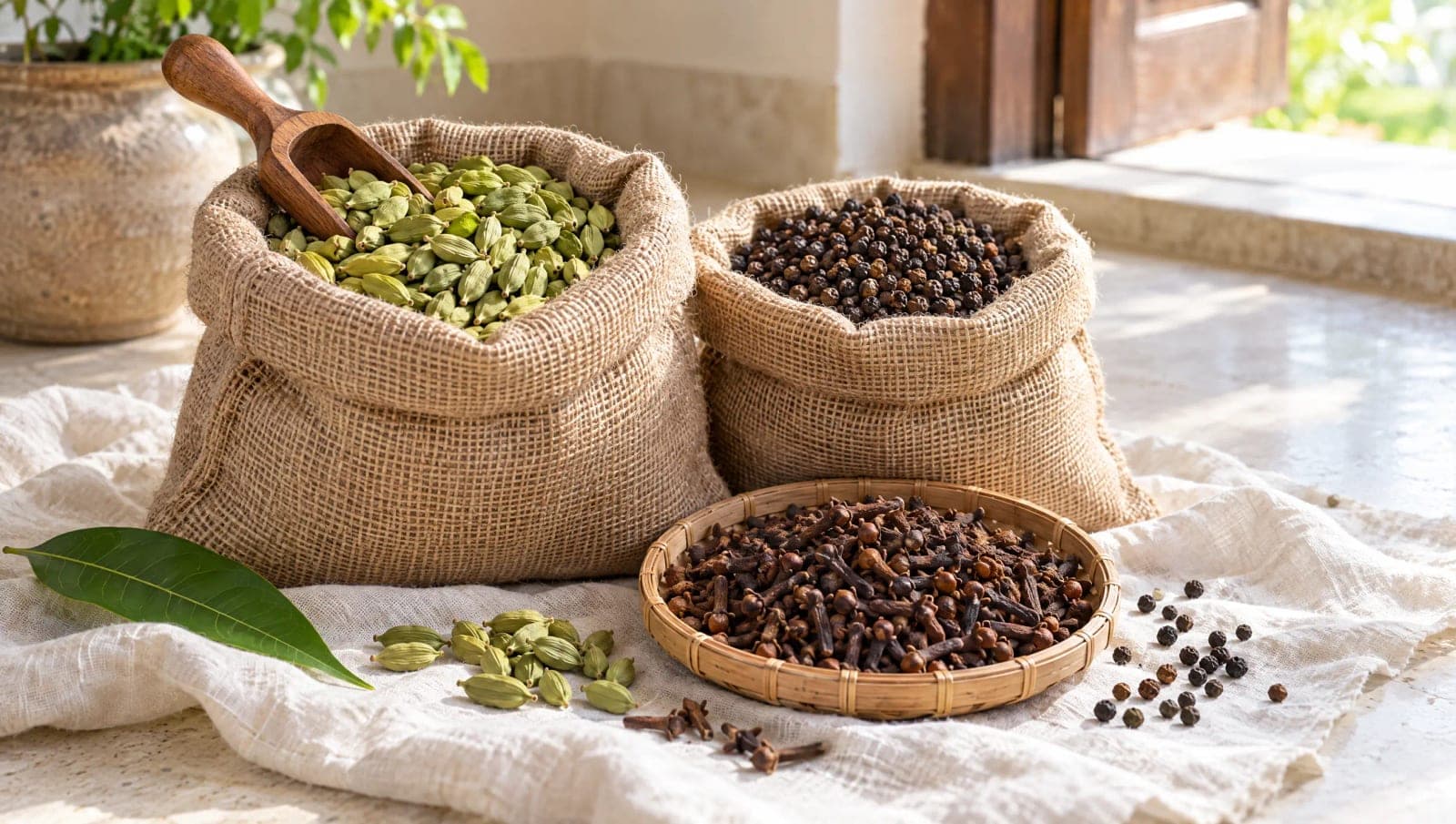
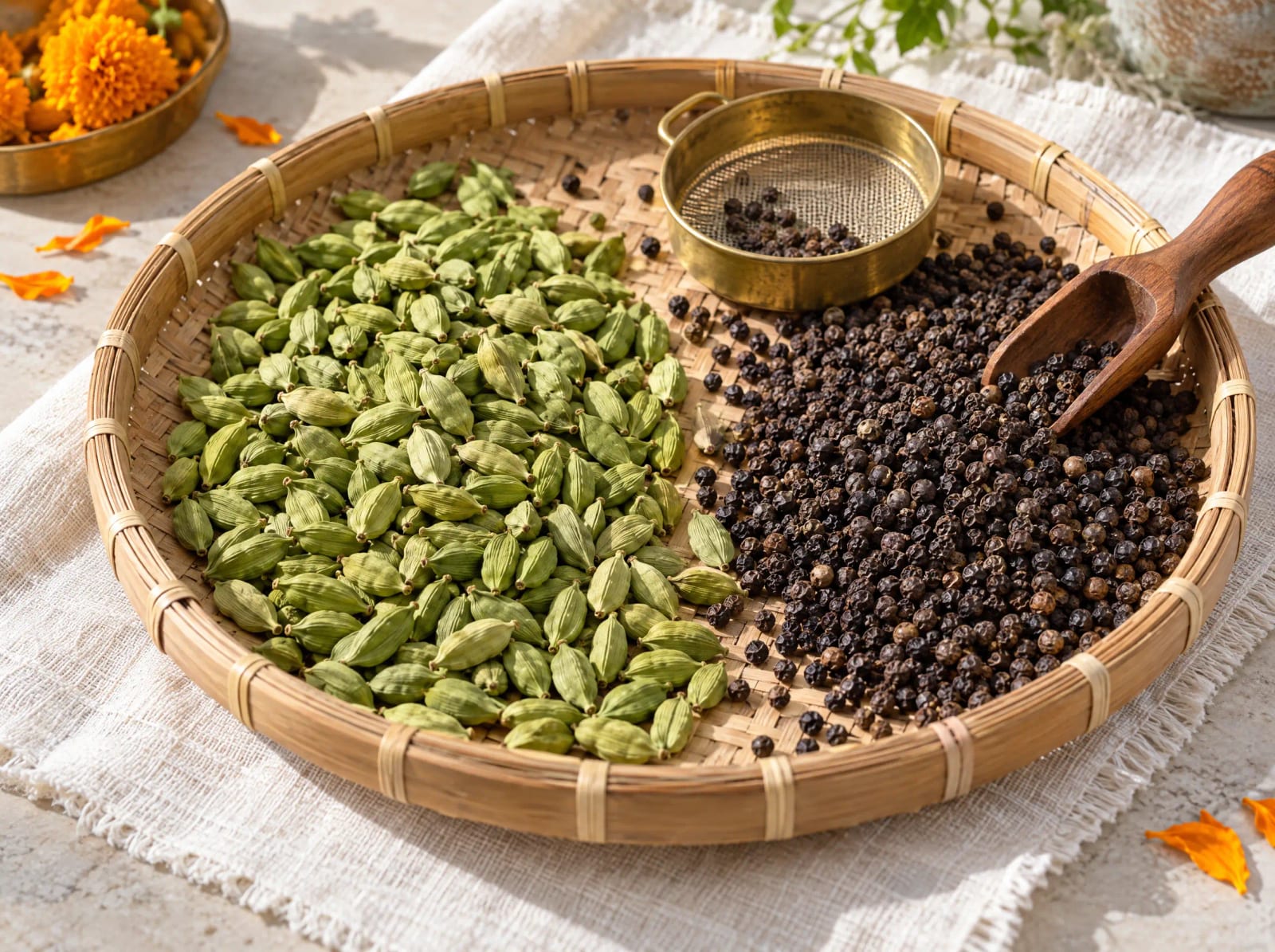
Small cardamom, the green elaichi we use in chai and mithai, now earns about 9% of India's spice export value. Commerce Ministry data reported in July 2026 showed whole cardamom exports more than doubling in value between 2024-25 and 2025-26, with the UAE and Saudi Arabia among the main buyers. Gulf households use cardamom generously in coffee and rice dishes, and demand for large, bright green pods has been strong.
Pepper is a smaller share than you might think
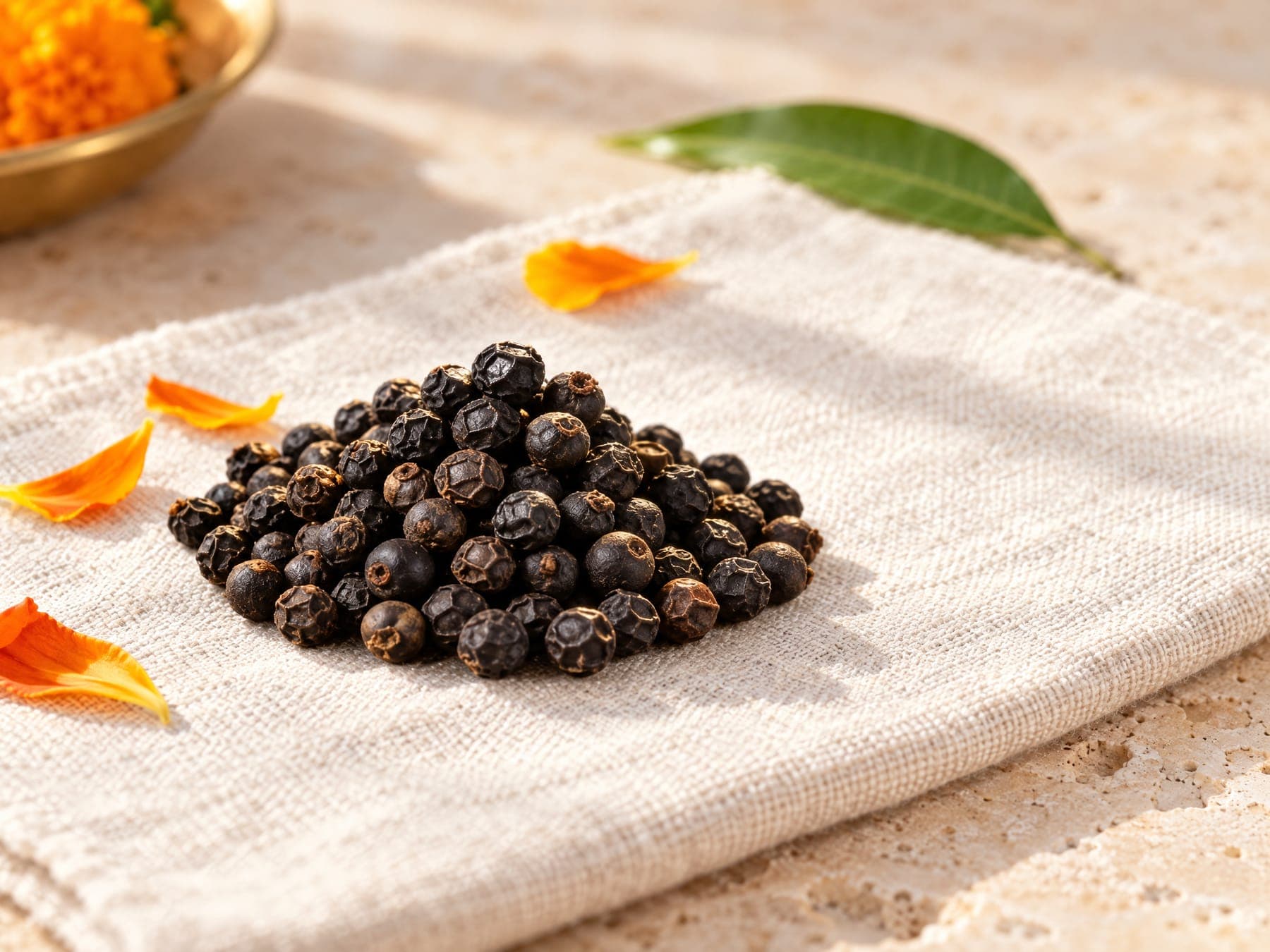
Black pepper was once the spice that brought traders to Kerala's coast. Today it contributes about 3% of India's spice export value. India grows a lot of pepper, but a large part of it is eaten at home, and other producing countries compete hard on price in the world market.
What spice exports mean for your kitchen
Export figures can feel far away from your masala dabba, but they touch it in a few real ways.
1. Prices move with overseas demand
When buyers abroad want more of a spice, growers and traders can get a better price selling to exporters. That often pulls up prices in the domestic market too. Weather, harvest size and stock levels also play a big part, so exports are one factor, not the only one. If cardamom felt costlier this year, strong export demand is part of the reason.
2. The best-graded lots are in demand
Export buyers usually pay for size and uniformity. Big, bright green cardamom pods and bold, dense peppercorns are exactly what they ask for. That competition is why well-graded spice costs more than an ungraded mix, whether you buy it in India or abroad.
3. Food safety standards keep rising
Importing countries set strict limits on pesticide residues, contaminants and moisture. In 2024, after food regulators in Hong Kong and Singapore flagged some Indian spice mixes for ethylene oxide, the Spices Board started mandatory pre-shipment testing for consignments to those two markets and issued contamination guidelines for all exporters. For you as a home buyer, this is one good reason to prefer brands that also work to export standards.
4. More spice leaves India as an ingredient
Spice oils, oleoresins and curry powders together made up about 18% of export value in 2025-26, according to the Spices Board. Oleoresins are concentrated extracts that food makers use for flavour and colour. So a growing share of Indian spice travels abroad inside someone else's sauce, snack or seasoning, rather than as whole spice on a shop shelf. It shows how much the world values the flavour and colour of Indian crops, well beyond the whole-spice market.
Export-grade vs domestic spices: is there a real difference?
You will often see "export quality" printed on spice packs. It is worth knowing what that can and cannot mean.
- The farms are often the same. Export and domestic spice usually come from the same growing regions. The difference is in how it is sorted, cleaned and checked.
- Grading is the real difference. Export lots are sorted by size, colour and density to meet a buyer's specification. Cardamom, for example, is sold abroad by grades based on pod size and weight per litre.
- Testing and paperwork. Exporters work with lab reports, traceable batches and registrations with bodies such as the Spices Board and APEDA.
- "Export quality" on a retail pack is not a regulated grade. Anyone can print it. Look for things you can check: a stated grade (like 8 mm for cardamom), a clean and even look, a recent packing date and real certifications.
How to buy export-grade spices at home
- Buy whole where you can. Whole pepper, cloves and cardamom keep their aroma far longer, and you can see the quality with your own eyes.
- Look for a stated grade. For green cardamom, a size such as 8 mm tells you far more than the word "premium".
- Check the certifications. FSSAI is the minimum. APEDA, Spices Board and ISO 22000 point to a business that works to export standards.
- Check the packing date and the pack. A resealable pouch helps the spice last after you open it.
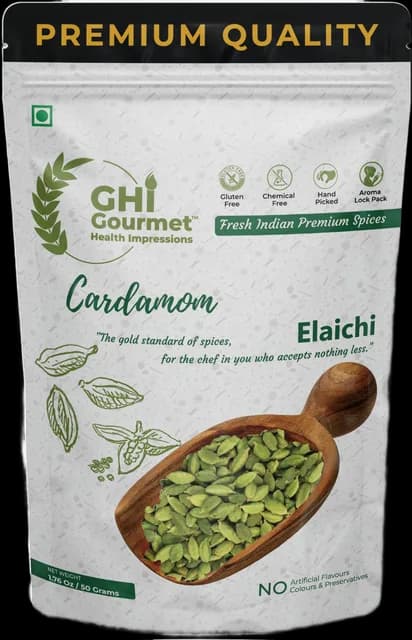
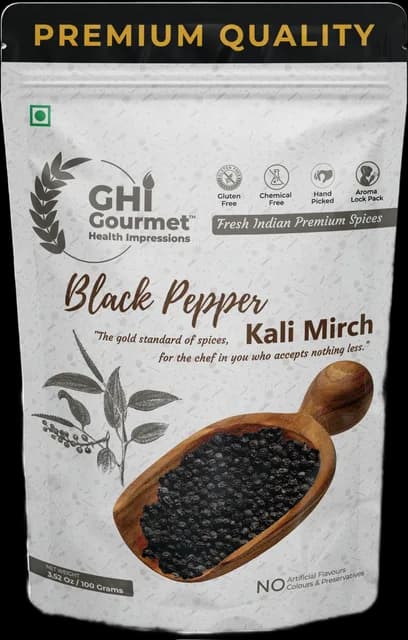
At GHI Foods we are a certified exporter (FSSAI, APEDA, ISO 22000, Spices Board, US FDA registered), and we pack the same graded spices for home kitchens. Our whole green cardamom is hand-selected at 8 mm, and our whole black pepper is picked for a robust aroma and a proper pungent bite. Both are sealed fresh in resealable pouches. If you are a business buyer looking for bulk spices, rice or peanuts for export, send us an enquiry on our export page.
Frequently asked questions
Which spice does India export the most?
By value, chilli is India's largest spice export. According to the Spices Board of India, it made up 27% of spice export value in 2025-26, followed by cumin and by spice oils and oleoresins at 12% each.
Did India's spice exports grow in 2025-26?
Not overall. The Spices Board reports 17.34 lakh tonnes worth ₹39,140.11 crore in 2025-26, down 4% in volume and 2% in rupee value from 2024-25. Some spices, especially green cardamom, still grew strongly.
Is export-quality spice better than what is sold in India?
Not automatically. Export lots are graded and tested to a buyer's specification, which usually means larger, cleaner and more uniform spice. Many good Indian brands sell the same grades at home. Judge a pack by its stated grade, look, packing date and certifications rather than by the words "export quality".
Why has cardamom become more expensive?
Strong overseas demand is one reason, since Commerce Ministry data shows cardamom exports more than doubled in value in 2025-26. Weather and the size of each harvest also affect prices from season to season.