25 February 2026
How to Read a Spice Label in India: FSSAI, ISO and More

Knowing how to read a spice label in India saves you from stale jars, mystery blends and the occasional nasty surprise. The small print on the back of a pack tells you who made it, when it was packed, what is actually inside and which regulators the business answers to. Here is a practical guide to what those numbers and logos mean, and just as importantly, what they do not mean.
Why the back of the pack matters more than the front
The front of a spice pack is marketing: a glossy photo, a promise of "rich aroma", perhaps a heritage-style font. The back is where the rules apply. Indian food law requires packaged food to carry certain information, and most of it is exactly what a careful cook wants to know.
At a minimum, a packaged spice in India should show:
- The name of the product, stating clearly what it is (for example "Black Pepper Powder", not just a brand name)
- A list of ingredients, if there is more than one
- Net quantity, usually in grams
- A date of manufacture or packing, and a best-before or use-by date
- The FSSAI logo with a licence or registration number
- The name and address of the manufacturer, packer or marketer
- A batch or lot number
- The maximum retail price (MRP) and consumer care details
- The green symbol for vegetarian food
If several of these are missing, that alone tells you something about how seriously the business takes compliance.
The FSSAI licence number: what it tells you
The Food Safety and Standards Authority of India (FSSAI) is the country's food regulator. Every food business, from a large processor to a small packer, has to be licensed or registered with it. On the pack you will see the FSSAI logo with a 14-digit number beside it.
That number means the business is licensed or registered with the regulator and can be traced. You can look it up on FSSAI's online licensing portal, FoSCoS, which should show the name of the business and whether the licence or registration is valid. It is worth a minute for any brand you are trying for the first time.
What the FSSAI number does not mean
An FSSAI number is a legal requirement, not a seal of excellence. It does not mean every batch has been tested by the regulator, and it says nothing about grade, aroma or freshness. Think of it as a floor: a pack without one should be avoided, but a pack with one still has to earn your trust in other ways.
APEDA, ISO 22000 and Spices Board registration explained
Many spice brands also print extra marks or registrations. Each points to something different, and none of them is a guarantee of purity on its own.
APEDA
APEDA is the Agricultural and Processed Food Products Export Development Authority, a body under the Ministry of Commerce that promotes the export of agricultural and processed food products. A business registered with APEDA is registered to trade in export markets. This generally suggests the business is used to the documentation and buyer requirements that export involves, but it is a registration, not a quality grade for the pack in your hand.
ISO 22000
ISO 22000 is an international standard for food safety management systems. A company certified to it has had its processes, such as hygiene controls, hazard analysis, traceability and handling, audited by an independent certification body. It is a sign of systematic, documented food safety practice, but it does not certify an individual product.
Spices Board registration
The Spices Board India is the government body, also under the Ministry of Commerce, responsible for the development and export promotion of Indian spices. Businesses that export spices register with it. Like APEDA, this indicates the business operates within an export framework with its own paperwork and oversight, not that the Board has tasted or graded the pack.
Other marks you may see
You may also spot AGMARK, a government grading mark used for many agricultural products including spices, or a line saying the facility is registered with the US FDA. FDA registration is required for facilities that supply food to the United States. It is a registration, and the FDA does not approve or certify food facilities through it.
| Mark | Generally indicates | Does not by itself guarantee |
|---|---|---|
| FSSAI number | Business is licensed or registered with India's food regulator | Grade, freshness or batch testing |
| APEDA | Business is registered for agricultural export | Quality of a specific pack |
| ISO 22000 | Food safety management system audited by a third party | Purity of every batch |
| Spices Board | Registered with the national spices body, usually for export | Aroma or grade |
| US FDA registration | Facility registered to supply food to the US | FDA approval of the product |
Several of these marks together suggest a business that has invested in formal systems and outside scrutiny: a reasonable signal, but not a promise.
Packed-on date vs best-before date on spices
The date of manufacture or packing tells you when the spice went into that pack. The best-before date is the manufacturer's estimate of how long the product keeps its expected quality if unopened and stored as directed. Spices are low-moisture foods, so "best before" is mostly about aroma and flavour rather than safety. A "use by" date, which you will rarely see on dry spices, is a firmer limit.
Which date should you look at first?
Look at the packed-on date. A spice's aroma comes from volatile essential oils that slowly escape over time, and ground spices lose them faster than whole ones because so much more surface is exposed. Two packs can share a similar best-before date and still differ by months in freshness if one has been sitting in a warehouse.
- For ground spices, prefer a packed-on date within the last few months.
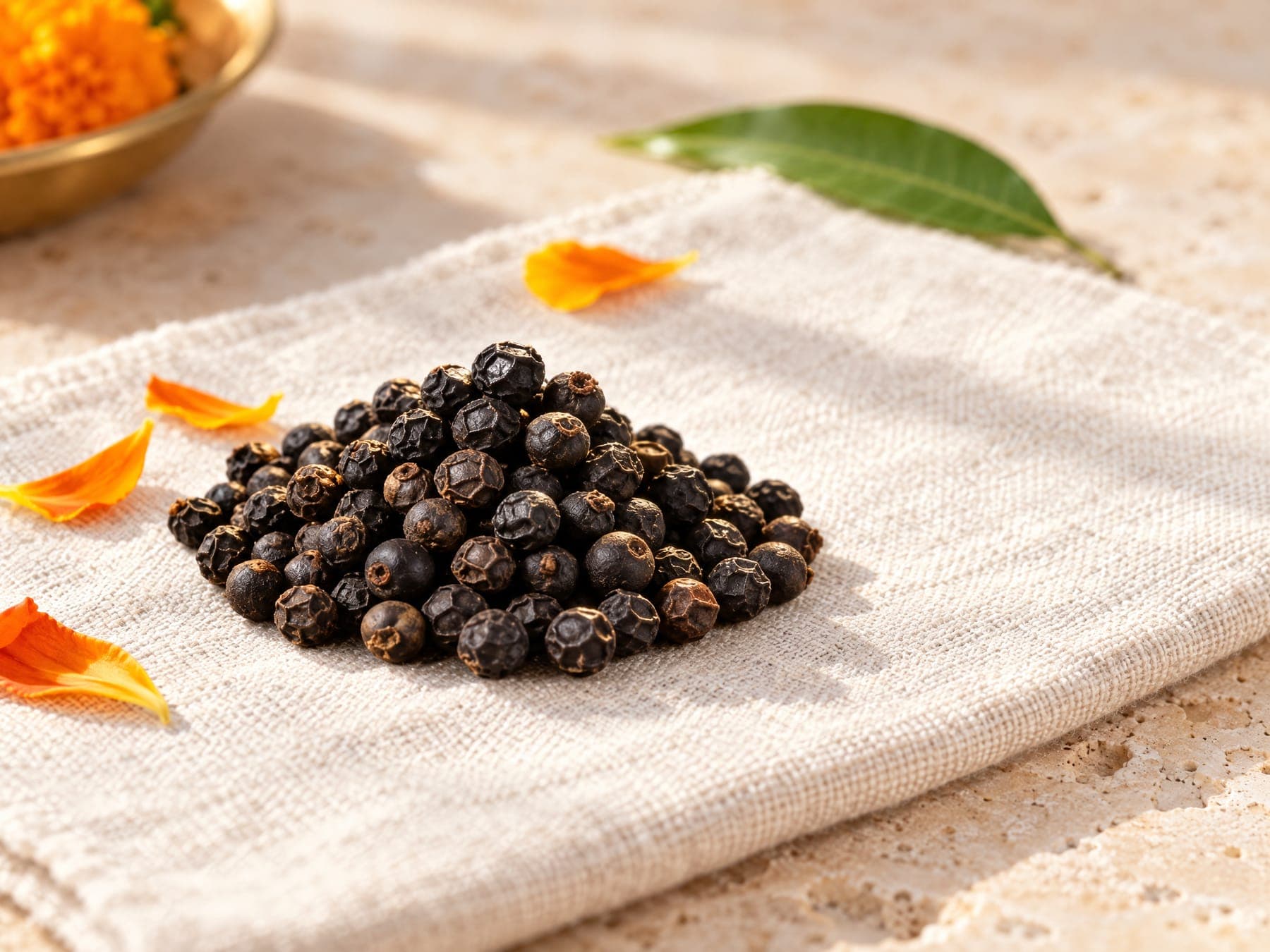
- For whole spices such as whole black pepper or cloves, a slightly older pack is fine if it has been well sealed.
- Remember that the best-before date stops meaning much once you open the pack. After that, storage decides everything.
Reading the ingredient list on single spices
For a single spice, the ideal ingredient list is one word. Cardamom powder should say cardamom. Cinnamon powder should say cinnamon, and ideally tell you which kind, since cassia and true cinnamon taste quite different.
Watch for these additions on what should be a single spice:
- Anti-caking agents, sometimes added to keep powders free-flowing. Any additive must be declared, and a well-packed single spice should not need one.
- Added colour in chilli or turmeric powder. These spices are expected to get their colour naturally, so any colour on the list is a clear reason to walk away.
- Starch, salt or other fillers, which dilute flavour and make a pack cheaper to produce.
- Vague wording such as "spices" or "natural flavours" on a pack that is supposed to be one spice.
Blends like garam masala will naturally list several spices, usually in descending order by weight. If salt or a filler sits near the top, you are paying spice prices for something else.
Red flags on a spice pack
- No FSSAI number, or one that does not check out on the licensing portal.
- Missing or smudged dates, or a sticker pasted over the original date.
- A torn, puffed or badly sealed pack. Air and moisture are what dull spices.
- Clear packs kept under bright shop lights. Light fades colour and aroma, particularly in powders.
- Clumps in powder, which usually point to moisture getting in.
- A price far below everyone else's. Good spices cost what they cost to grow, grade and pack.
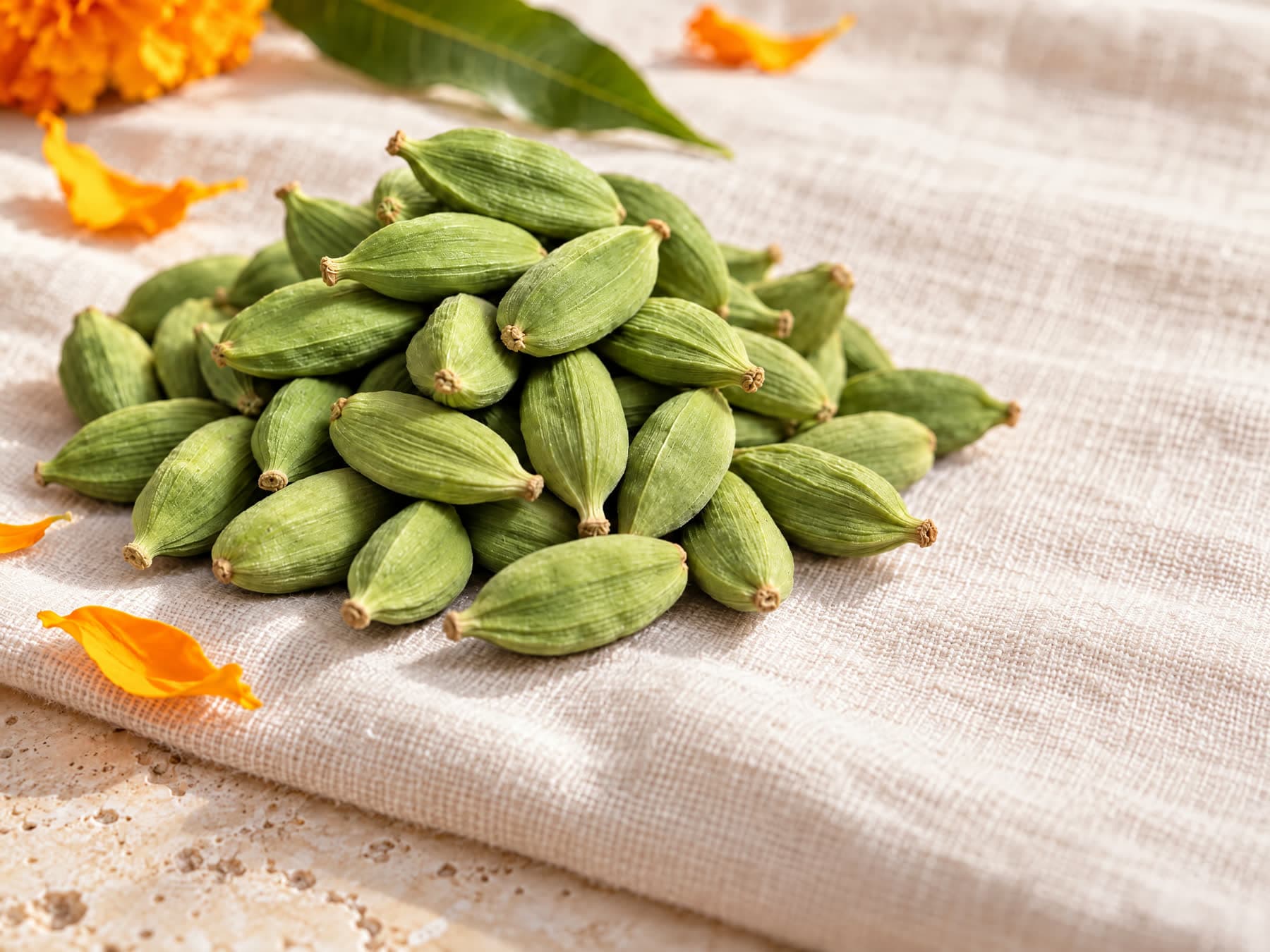
When the label passes, your nose is the final check. Open the pack and it should smell clearly of what it says it is, straight away. Graded whole spices, like whole green cardamom sorted by pod size, also let you see uniformity for yourself, something a powder cannot show you.
Frequently asked questions
How do I check if an FSSAI licence number is real?
Enter the 14-digit number on FSSAI's FoSCoS licensing portal. It should show the business name and whether the licence or registration is valid. If the details do not match the pack, be cautious.
Is it safe to use spices after the best-before date?
Dry spices stored well are not usually unsafe soon after the best-before date, but they will have lost aroma and flavour. If a spice smells faint, dusty or musty, or shows clumps or insects, throw it out.
Does ISO 22000 certification mean a spice is pure?
No. ISO 22000 means the company's food safety management system has been audited against an international standard. It is a good sign of process discipline, but it does not certify the purity of any single batch.
What should the ingredient list say on a single spice?
Ideally just the spice itself. Any added colour, starch, salt or anti-caking agent must be declared, so read the list and choose packs where the spice stands alone.
Which date matters more on a spice pack?
The packed-on date is the better guide to freshness, especially for ground spices. The best-before date only estimates quality while the pack is unopened.
With winter ending and pantries due for a pre-summer clear-out, it is a good moment to turn a few packs over and read them properly. GHI holds FSSAI, APEDA, ISO 22000 and Spices Board registrations, and we would still encourage you to read our labels as closely as anyone's when you browse our whole spices.