10 September 2026
GI Tagged Spices of India: Malabar Pepper, Alleppey Cardamom and More
Darjeeling tea, Basmati rice, Nagpur oranges: some foods are known by the place they come from. Spices are no different. India has registered several spices as Geographical Indications, from Malabar pepper and Alleppey green cardamom in the south to Lakadong turmeric in the north-east. But what does a GI tag actually protect, and does it change what you should buy? This guide walks through the best-known GI tagged spices of India and explains, simply, why origin matters for flavour and for the farmers who grow them.
What a GI tag means
A Geographical Indication, or GI, is a sign used on products that come from a specific place and have qualities or a reputation that are due to that place. In India, GIs are registered under the Geographical Indications of Goods (Registration and Protection) Act, 1999, by the Geographical Indications Registry in Chennai.
Three points are worth remembering:
- A GI protects a name, not a brand. It is usually held by an association of producers or a public body, and many growers and traders in the region can register as authorised users.
- It links a product to a place and a method. The registration describes the growing area, the variety and often the traditional way the crop is dried or processed.
- It is about origin, not size grade. A GI tells you where a spice comes from. How big, clean or fresh the lot is still depends on grading and handling.
GI tagged spices of India: the ones to know
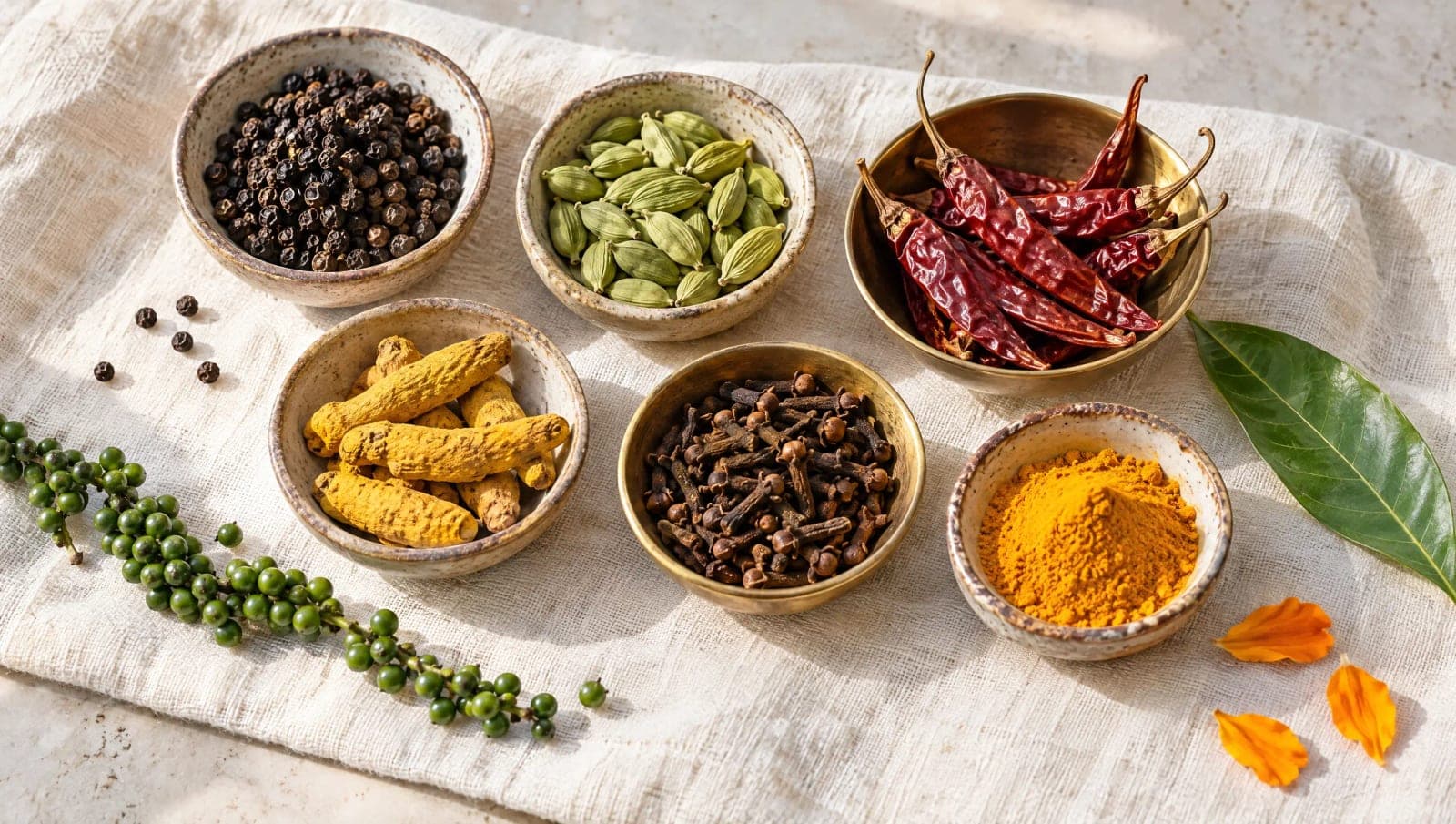
The Spices Board of India keeps a list of GI registrations for spices. Here are some of the most familiar names:
| Spice | Region | What it is known for |
|---|---|---|
| Malabar Pepper | Kerala (Malabar region) | Bold black pepper with a deep, pungent aroma; registered as a GI in 2008 |
| Alleppey Green Cardamom | Kerala | Large, green, aromatic small cardamom; registered in 2008 |
| Coorg Green Cardamom | Karnataka (Kodagu) | Green cardamom from the Coorg hills; registered in 2008 |
| Byadgi Chilli | Karnataka | Deep red colour with mild heat; registered in 2011 |
| Erode Turmeric | Tamil Nadu | Bright yellow turmeric from one of India's best-known turmeric markets |
| Kandhamal Haladi | Odisha | Turmeric grown by tribal farmers in Kandhamal; registered in 2019 |
| Lakadong Turmeric | Meghalaya | Turmeric known for its high curcumin content; registered in 2024 |
| Naga Mircha | Nagaland | One of the world's hottest chillies |
Malabar pepper
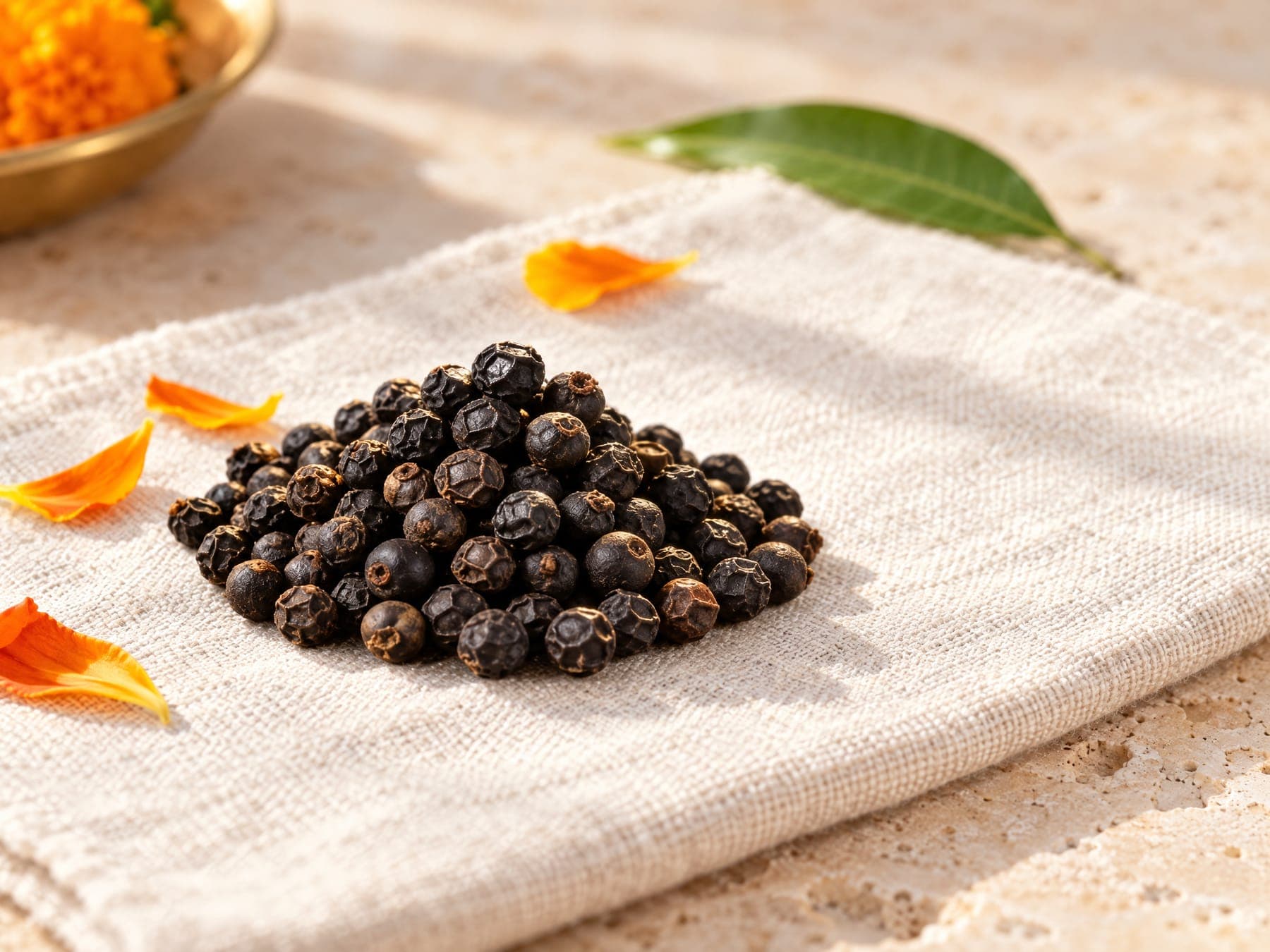
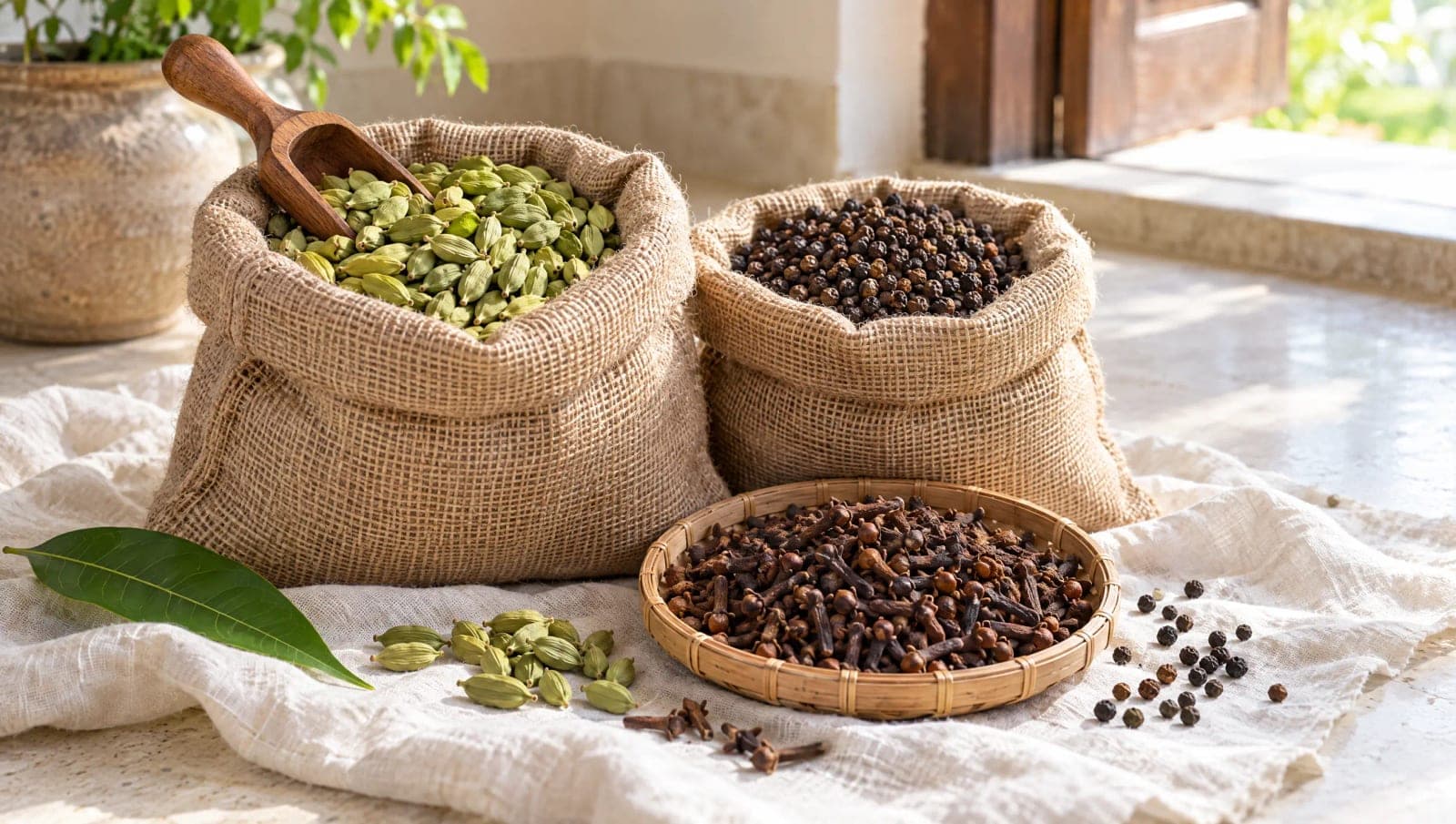
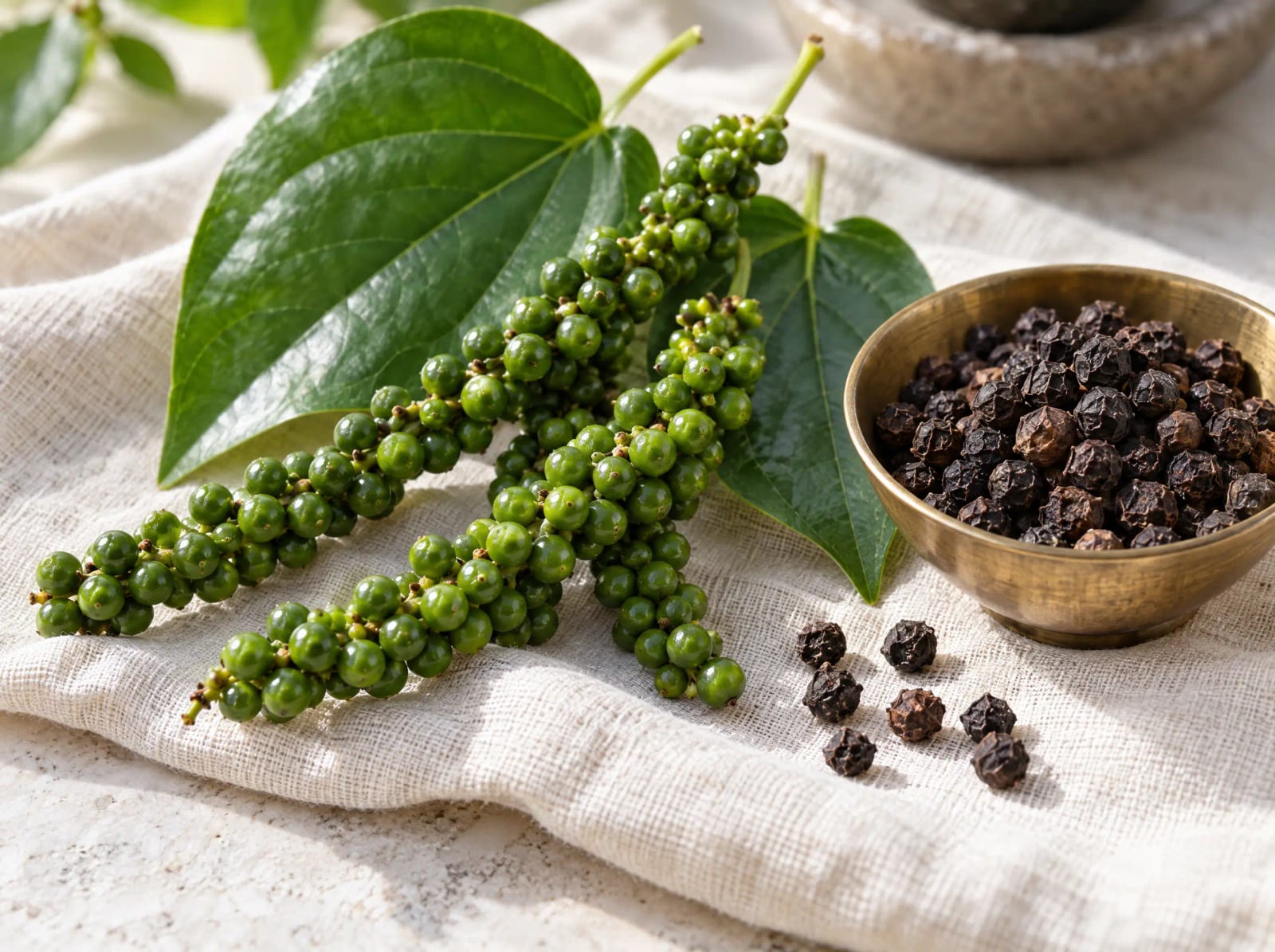
The Malabar coast of Kerala was the centre of the ancient pepper trade, and pepper from this region still carries that name. Malabar pepper is picked from vines, dried in the sun until the berries turn black and wrinkled, then cleaned and graded. You may also see "Tellicherry" on premium pepper. It is not a separate GI; it is a trade grade for the largest, boldest berries within Malabar pepper, named after the old port of Thalassery. Traders commonly describe Tellicherry Garbled Extra Bold (TGEB) as berries of about 4.25 mm and above.
Alleppey green cardamom
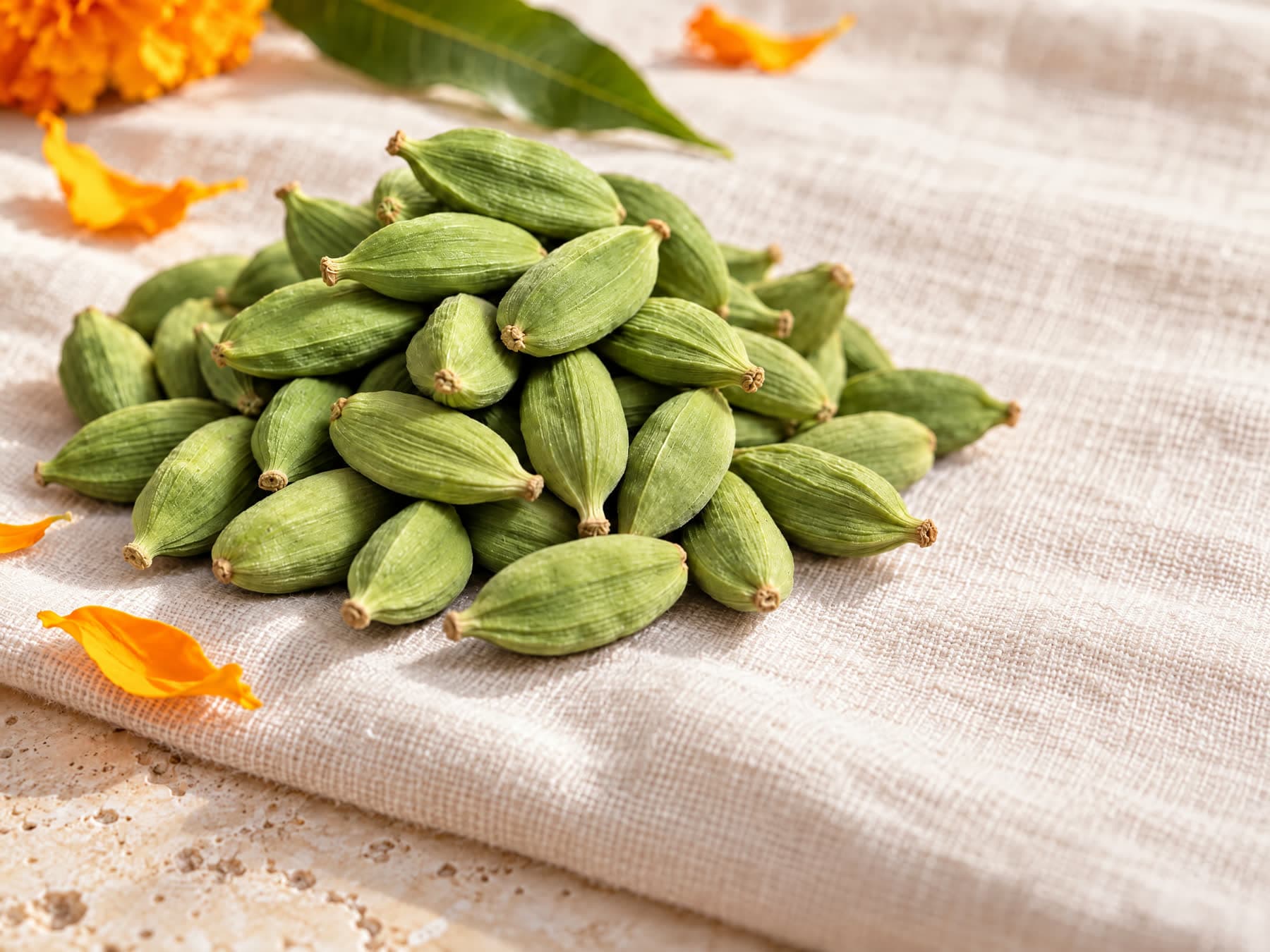
Alleppey (Alappuzha) was the trading and shipping town where cardamom from the hills was auctioned. Much of this cardamom grows in the Cardamom Hills of Idukki district. The name also became part of India's export grades, like AGEB (Alleppey Green Extra Bold). If you want to know more about sizes and grades, read our guide to green cardamom grades.
Coorg green cardamom
Grown in the Kodagu hills of Karnataka, often alongside coffee, Coorg cardamom is a second GI for small cardamom. Buyers value it for its green colour and aroma.
Byadgi chilli and the GI turmerics
Byadgi chilli, named after a market town in Haveri district of Karnataka, is prized for its deep red colour rather than fierce heat, which is why cooks reach for it when they want a rich colour in a masala without too much burn. Among turmerics, Erode, Kandhamal and Lakadong each carry their own GI. Lakadong turmeric from the Jaintia Hills of Meghalaya is often noted for its high curcumin content, while Kandhamal Haladi is largely grown by tribal farmers in Odisha using traditional methods.
Why origin matters for spices
A spice is a farm crop, and like wine grapes or tea leaves, it is shaped by where and how it grows.
Climate and soil
Pepper and cardamom need rain, shade and altitude of a particular kind. The Western Ghats give them that. The same plant grown somewhere with a different climate can taste different.
Variety and tradition
Many GI spices come from local varieties that farmers have kept for generations, along with drying and curing methods that suit them. A GI registration helps keep that knowledge tied to the place.
Honesty in the market
When a name like "Malabar" or "Alleppey" carries a premium, there is a temptation to use it on spice from somewhere else. A GI gives producers a legal way to stop that, which protects both farmers and buyers.
Traceability
Knowing where a spice comes from makes it easier to trace problems, understand quality, and support the growing regions you trust.
Does a GI tag mean better quality?
A GI tells you a spice is genuine to its region. It does not, by itself, tell you the grade, the freshness or how well it was stored. A small, dusty lot of GI pepper can be a poorer buy than a clean, bold, freshly packed pepper without any GI claim on it.
So treat a GI as one useful piece of information, alongside:
- The grade, such as 8 mm for cardamom or bold for pepper.
- The look: even size, good colour, little dust or broken pieces.
- The packing date and a pack that seals well.
- The FSSAI licence and certifications of the business that packed it.
How to buy GI spices with confidence
- Read the claim carefully. "Malabar pepper" and "Malabar-style pepper" are not the same thing.
- Ask the seller. A genuine GI seller should be able to tell you where the spice came from and whether they are an authorised user.
- Judge the spice itself. Smell it, look at it, and for pepper, check that the berries are heavy and firm.
- Buy whole. Origin character lives in the essential oils, and whole spices keep them far longer than powder.
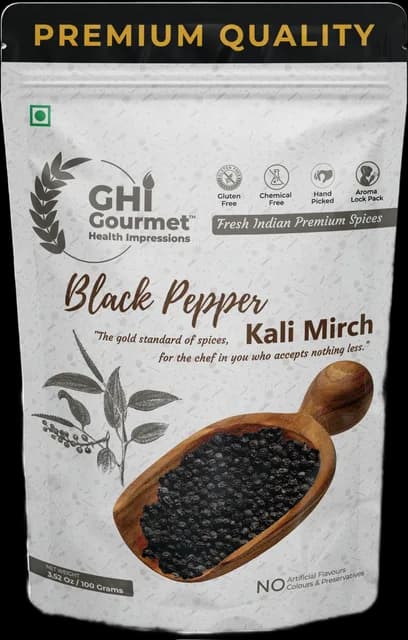
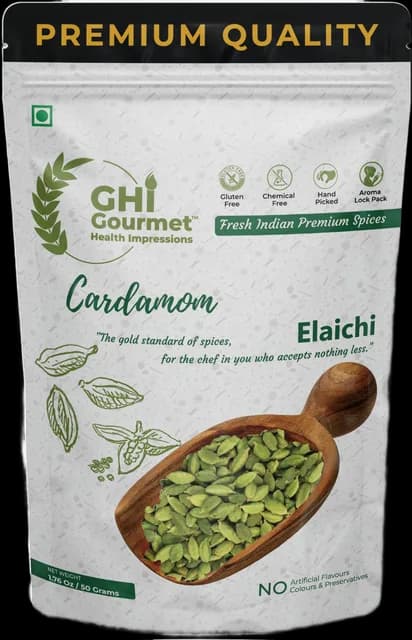
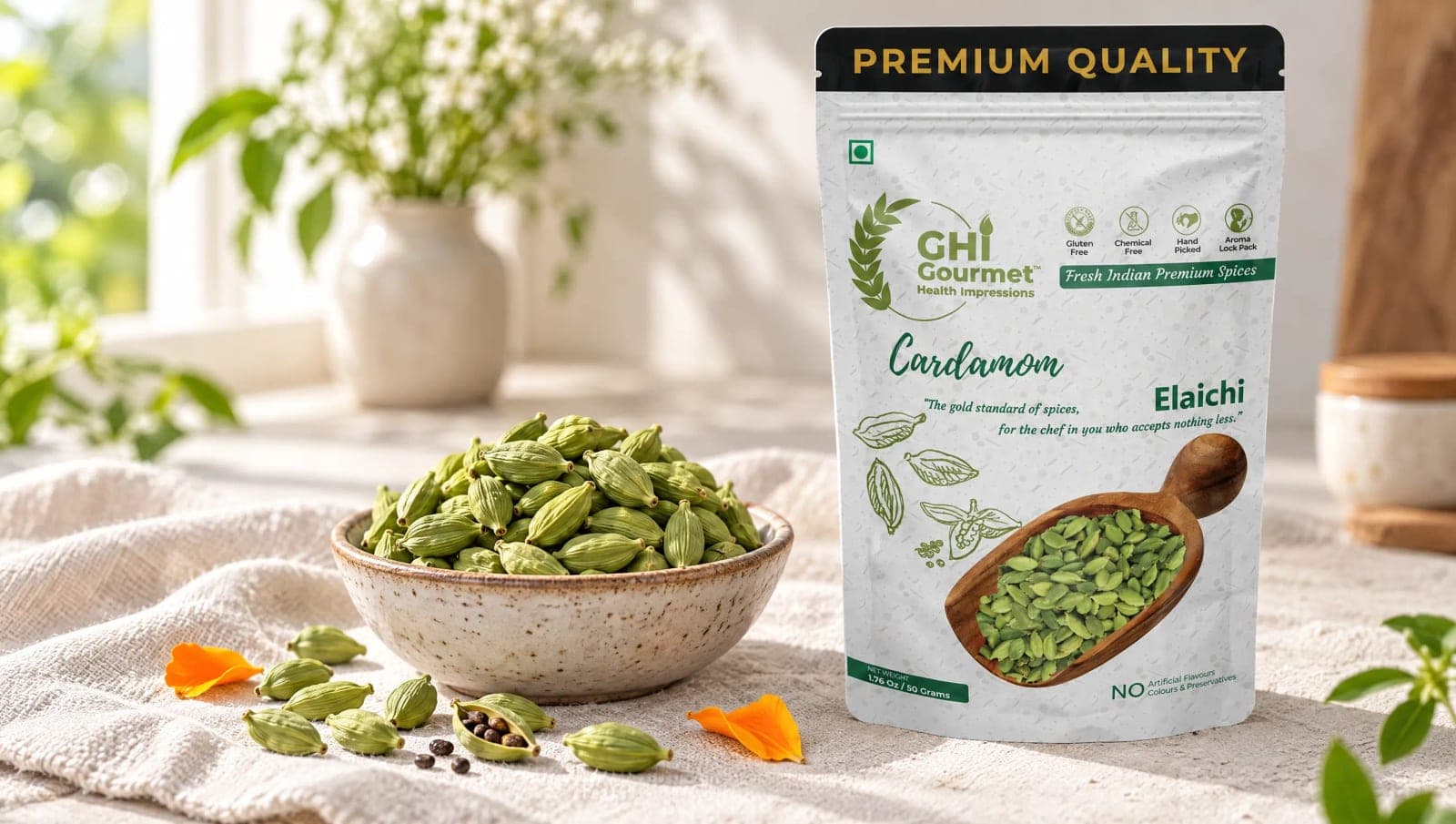
At GHI Foods, we describe our spices by what you can see and check in the pack: the grade, and how they are packed. Our whole black pepper is picked for a robust aroma and a proper pungent bite, and our whole green cardamom is hand-selected at 8 mm. Both are sealed fresh in resealable pouches. You can browse all of them in our whole spices collection.
Frequently asked questions
Which Indian spices have a GI tag?
Well-known examples include Malabar Pepper, Alleppey Green Cardamom, Coorg Green Cardamom, Byadgi Chilli, Erode Turmeric, Kandhamal Haladi, Lakadong Turmeric and Naga Mircha. The Spices Board of India publishes a list of GI registrations for spices.
Is Tellicherry pepper the same as Malabar pepper?
Tellicherry is a trade grade within Malabar pepper for the largest, boldest berries. All Tellicherry pepper is Malabar pepper, but only a small share of Malabar pepper is large enough to be sold as Tellicherry.
Does a GI tag guarantee purity?
No. A GI protects a regional name and links it to a place and method. Purity and freshness depend on how the spice is cleaned, graded, packed and stored, so still check the label, the packing date and the spice itself.
Who gives GI tags in India?
GIs are registered by the Geographical Indications Registry in Chennai, under the Geographical Indications of Goods (Registration and Protection) Act, 1999.