19 September 2026
Premium vs Loose Spices: Price per 100 g and What You Pay For
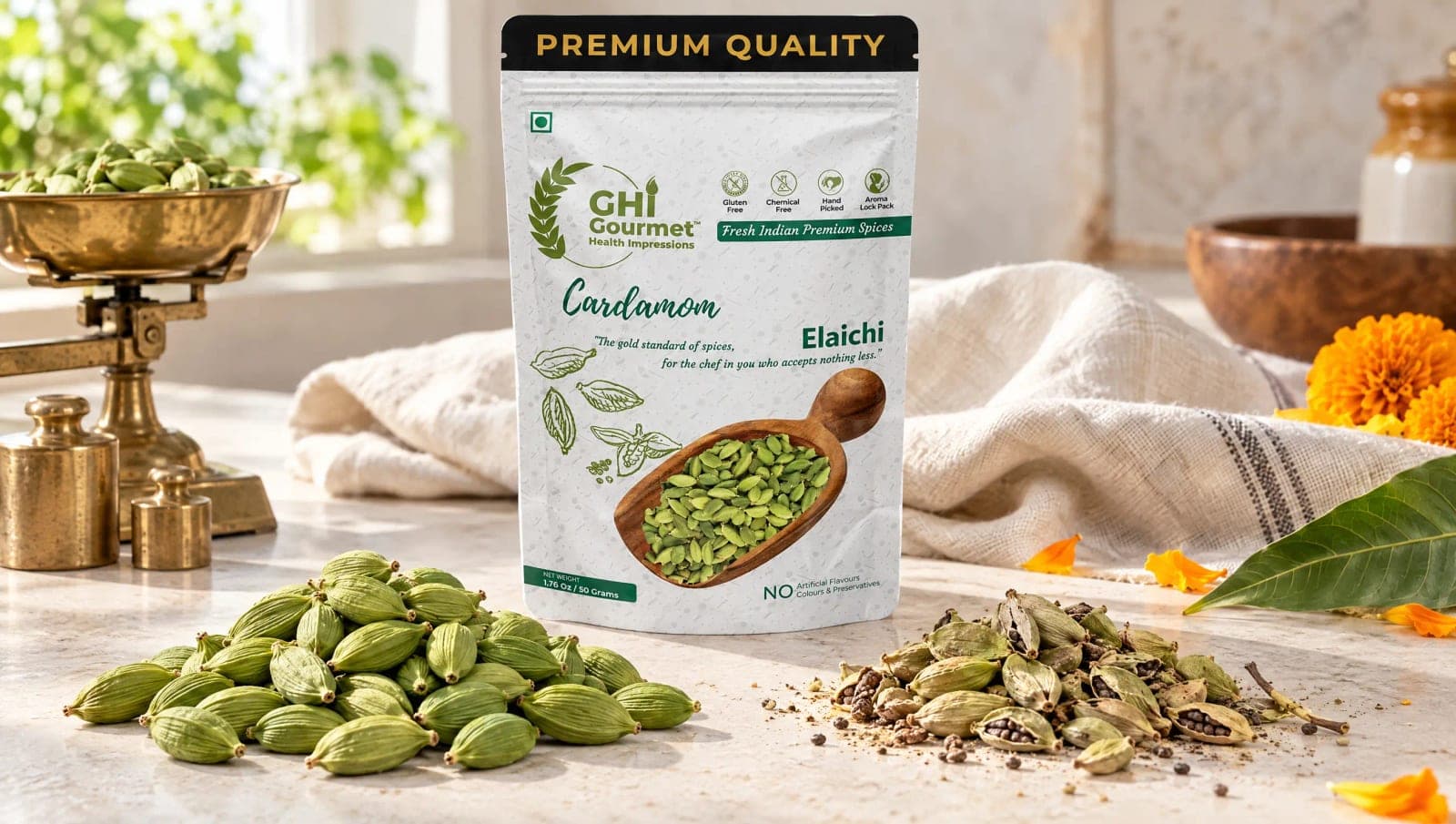
Stand at a mandi stall and loose elaichi looks like a steal next to a branded pouch. Then you get home, and half the pods are small, pale or split, there is dust at the bottom of the bag, and the chai tastes of very little. The premium vs loose spices question is not really about which is "better". It is about what you are paying for, and the easiest way to see that clearly is to compare price per 100 g and then ask what went into that 100 g. This guide walks through the maths and the four things a good pack pays for: grading, cleaning, packing and testing.
Price per 100 g: the only fair way to compare
Spices are sold in awkward sizes: 50 g, 75 g, 114 g, 250 g, or "one pao" at the local shop. Comparing the sticker price of different sizes tells you nothing. Convert everything to the same weight instead.
The formula: price ÷ weight in grams × 100 = price per 100 g.
A quick example with round numbers (these are illustrations, not real prices):
- A 50 g pouch at ₹200 works out to ₹400 per 100 g.
- A 250 g bag at ₹800 works out to ₹320 per 100 g.
- Loose pods at ₹3,000 a kilo work out to ₹300 per 100 g.
On paper the loose pods win. But that number assumes every gram you paid for is a usable, aromatic pod. If a tenth of the bag is dust, stalks, shrivelled pods or moisture, your real cost per useful 100 g goes up, and the flavour per pod goes down. That is the part the sticker does not show.
On ghifoods.com we show the price per 100 g on every single-spice product card and product page, so you can do this comparison without a calculator. Most large marketplaces also show a unit price near the main price. Use it.
Premium vs loose spices: what you actually pay for
"Premium" is printed on a lot of packets. It only means something if you can point to what was done to the spice. Here are the four things worth paying for.
1. Grading: size and density
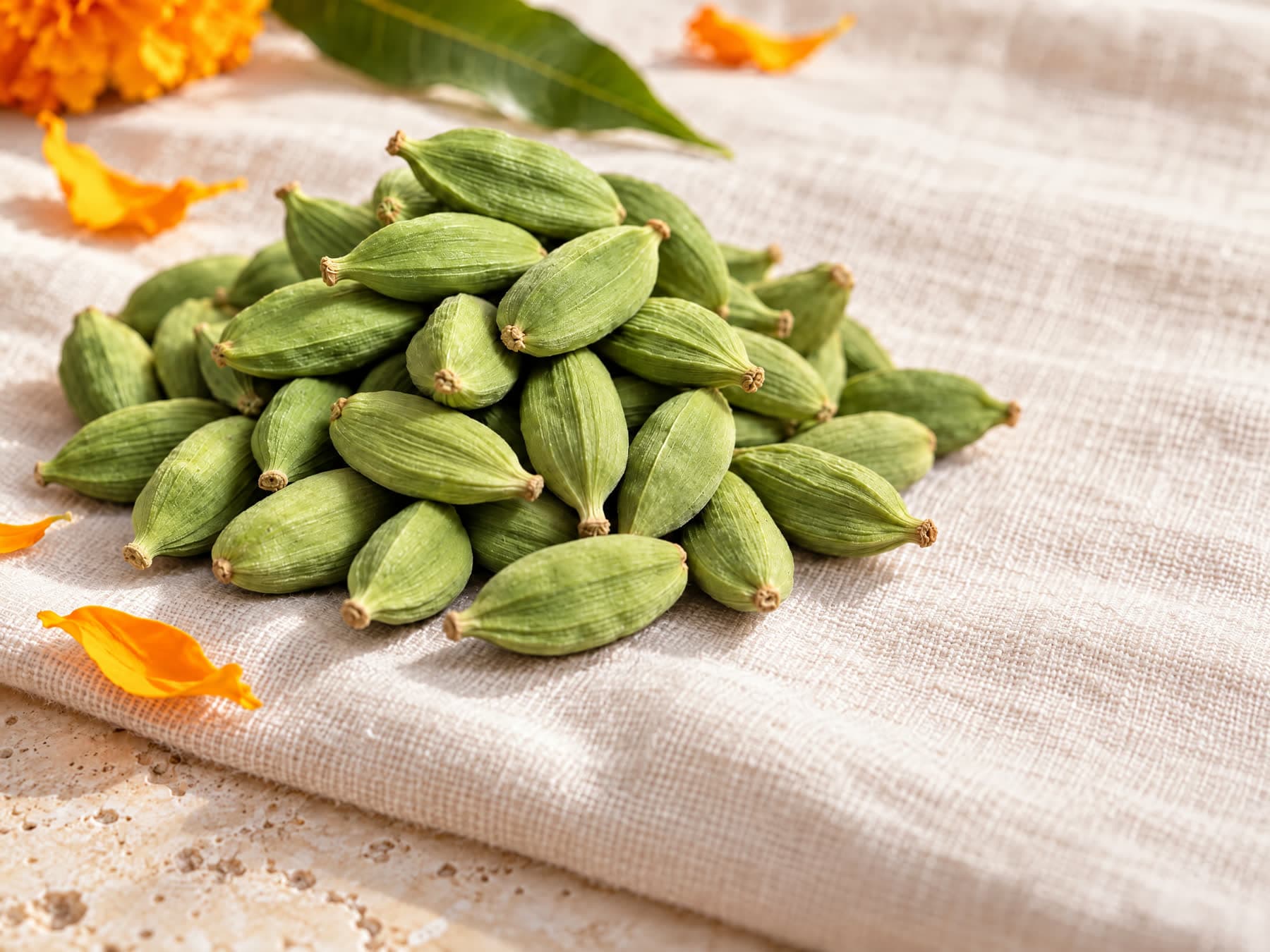
Whole spices are traded by grade, and grade is measurable. Green cardamom is graded by pod size. In the trade, bold grades such as 7 mm and 8 mm pods sit at the top, and smaller sizes sell for less. Bigger, fuller pods generally carry more seeds and more of the oil that gives cardamom its aroma.
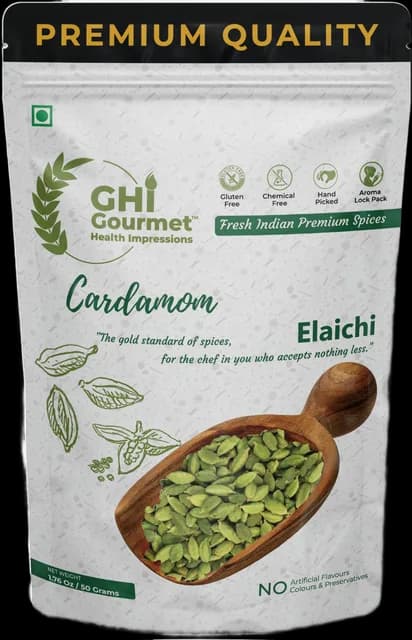
Black pepper is often graded by bulk density, written as "GL", meaning grams per litre. If a one litre measure of peppercorns weighs 550 g, that lot is 550 GL. Traders describe higher GL pepper as heavier, more mature berries, while light berries and "pinheads" lower the number. Our pepper is sorted to 600 GL and our whole green cardamom is 8 mm pods, which is why they cost more per 100 g than an ungraded mix.
2. Cleaning: stalks, stones and dust
Freshly dried spice comes with company: stalks, bits of husk, small stones and dust. Loose spice is often sold as it comes, and you do the cleaning at home, if you notice. A cleaned, sorted spice costs more to produce because part of the raw lot is removed before it reaches you. That removed part is weight you are not paying for.
3. Packing: sealed, dated and labelled
A loose spice sits in an open sack at the shop, taking in air, light, dust and humidity. A sealed pouch protects the aroma until you open it, and a resealable one keeps protecting it afterwards. Packed food in India also has to carry a label with the FSSAI licence number, the net weight, the date of packing or manufacture and a best before or use by date. Loose spice gives you none of that information. At GHI we pack in short, frequent runs into resealable pouches, so stock does not sit around for long before it is sealed.
4. Testing and accountability
This is the invisible one. The Food Safety and Standards Authority of India (FSSAI) ran a Pan India Surveillance on Spices between November 2024 and February 2025 and reported non-compliance on quality parameters, contaminants, microbial counts and labelling. It followed up with a nationwide enforcement drive on spice manufacturing units in October 2025. A branded, licensed packer can be traced, inspected and held to account. A handful of pods scooped from an unmarked sack cannot.
Testing costs money: lab reports, certification audits and record keeping all go into the price of a pack. GHI is FSSAI licensed, APEDA and Spices Board registered and ISO 22000 certified, and we smell and taste each lot before we buy it. That does not make every other seller unsafe, but it does explain part of the difference in price.
A simple home check you can do today
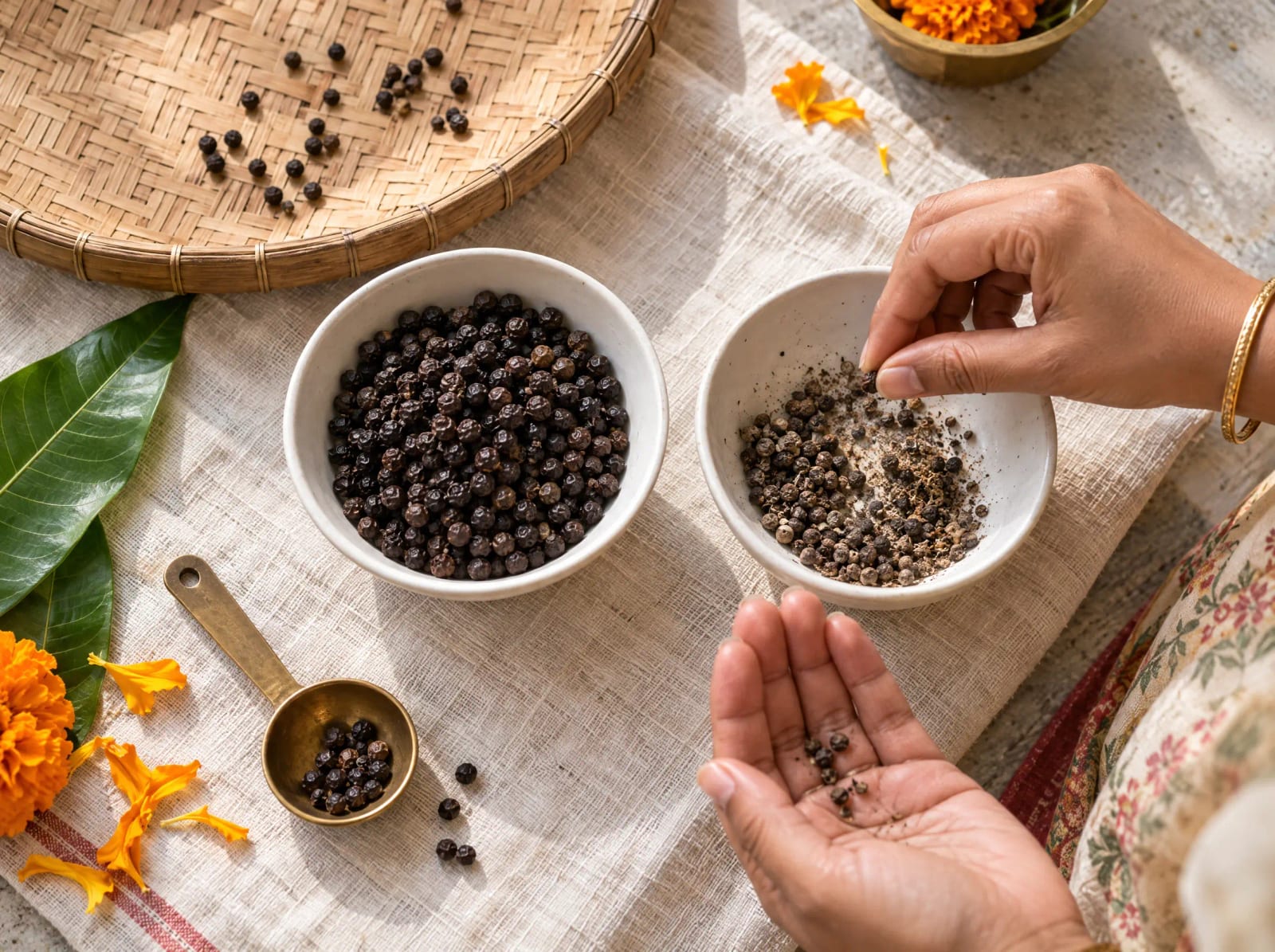
FSSAI's DART booklet (Detect Adulteration with Rapid Test) lists simple kitchen tests. One of the best known is for black pepper: drop a spoonful of peppercorns into a glass of water. Dense, mature peppercorns sink. Papaya seeds, which are sometimes mixed into cheap pepper, and light berries tend to float. It is not a lab test, but it is a useful first check for any pepper, loose or packed.
For cardamom, look and smell:
- Pods should be plump and fairly even in size, not a mix of large and tiny.
- Colour should be a fresh green, not straw yellow.
- Crack one open. The seeds inside should be dark and sticky with oil, and the smell should be strong the moment it opens.
When loose spices make sense
Loose spices are not always the wrong choice. If you know and trust a local trader, can see and smell the stock, and buy small amounts often, loose can be good value. It also makes sense for spices you use by the fistful in long-cooked dishes, where small differences in aroma matter less.
Premium, graded spices earn their price where the spice is the star: cardamom in chai and kheer, cloves in biryani and pulao, freshly cracked pepper on eggs, rasam and salads. In those dishes a few good pods do the work of many dull ones, so the cost per cup or per plate is often closer than the per 100 g figure suggests.
How to decide, in four questions
- What is the real price per 100 g? Convert every option to the same weight.
- What is the grade? Look for a size (like 8 mm for cardamom) or a clear description, not just the word "premium".
- When was it packed? A recent packing date and a clear best before date are worth paying a little more for.
- Who is accountable? An FSSAI licence number and a named packer on the label mean someone answers for what is inside.
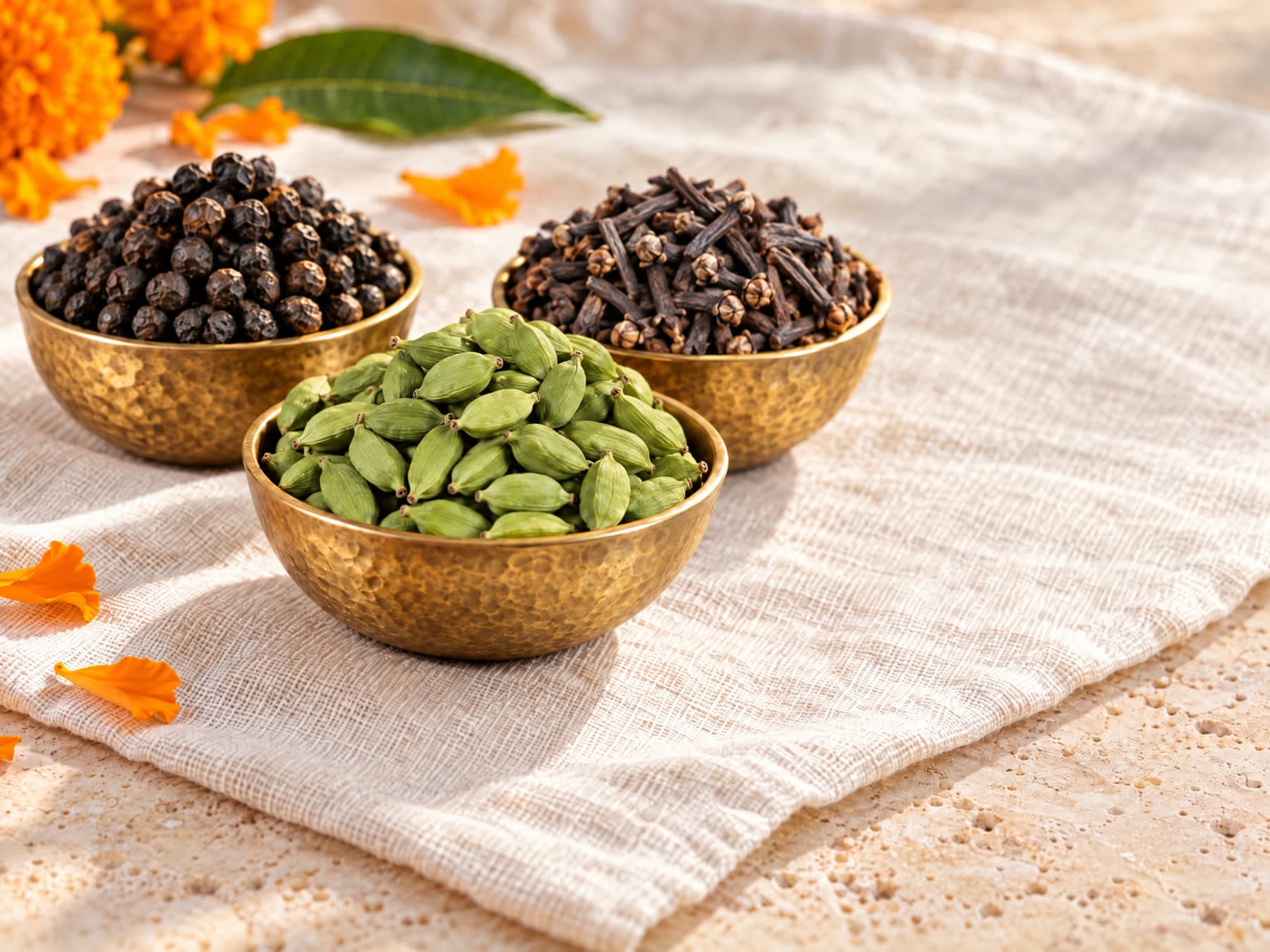
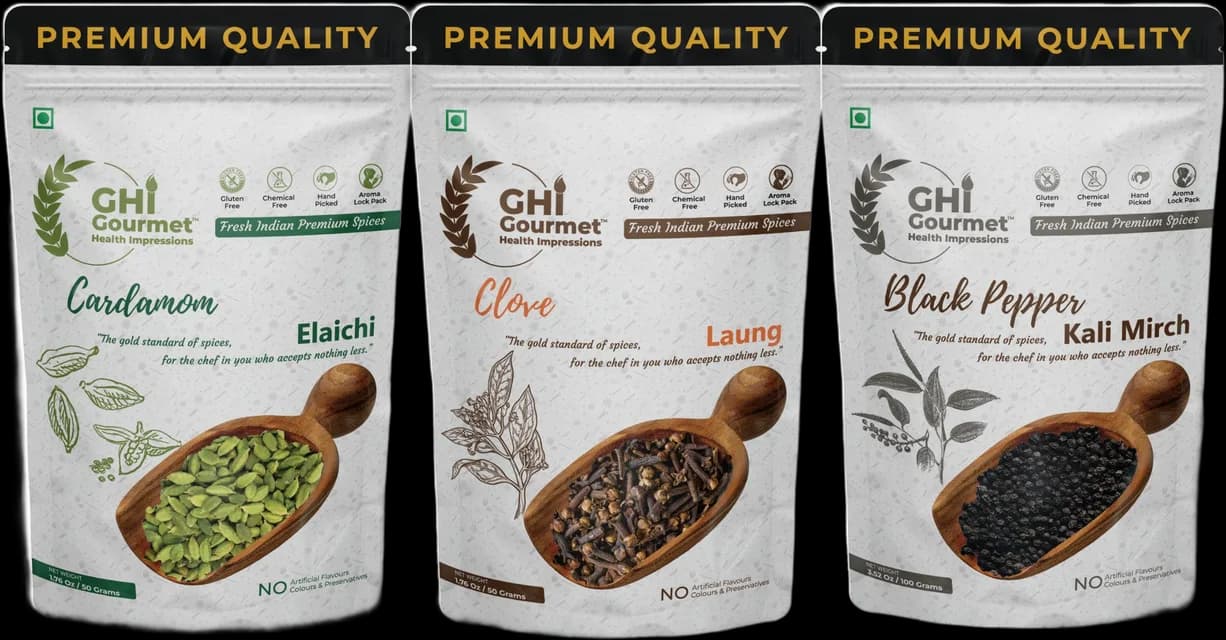
If you want to compare for yourself, browse our whole spices with the price per 100 g shown on each card, or see the Whole Spice Trio of black pepper, 8 mm cardamom and cloves.
Frequently asked questions
Why are premium spices more expensive than loose spices?
Because more work and more checks go into each gram. Grading removes smaller or lighter pieces, cleaning removes stalks and dust, sealed packing protects aroma and carries a dated label, and licensing and audits add cost. You pay for those steps instead of doing them yourself at home.
How do I calculate the price per 100 g of a spice?
Divide the price by the weight in grams and multiply by 100. For example, a 75 g pack at ₹150 is ₹200 per 100 g. Always compare different pack sizes this way.
Is loose cardamom bad quality?
Not necessarily. Some loose cardamom is excellent. The problem is that you cannot always see the grade, the age or the source. Check that the pods are large, even, green and strongly aromatic, and buy from a trader you trust.
What does 8 mm cardamom mean?
It refers to the size of the pods after grading. Cardamom is sorted through sieves, and 8 mm pods are among the largest trade sizes. Larger, fuller pods generally hold more seeds and more aroma.
Is a bigger pack always better value?
Only if you will use it before it loses aroma. A cheaper per 100 g price on a large pack is not a saving if half of it goes stale. Buy whole spices in larger sizes and powders in sizes you can finish within a few months.