29 July 2026
Spice Buyer's Glossary: Trade and Label Terms Explained
A spice buyer's glossary is handy the moment you look closely at a pack of pepper or cardamom and meet words like bold, garbled or volatile oil. Some of these terms come from the wholesale trade, others from food labelling rules, and a few are simply marketing. This guide explains the common ones in plain language, so you know which words tell you something useful and which ones you can safely skim past.
Form and size terms
These words describe what the spice physically is and how it has been sized. They are the first clue to how the spice will behave in your kitchen.
- Whole: the spice in its natural form, such as intact peppercorns, cardamom pods, cloves or cinnamon quills. Whole spices hold their aroma much longer because the essential oils are sealed inside.
- Ground or powder: the spice milled into a fine or coarse powder. Convenient and quick to disperse in food, but the larger surface area means aroma fades faster once the pack is open.
- Cracked or crushed: broken into coarse pieces, between whole and ground. Common for pepper used in rubs and finishing.
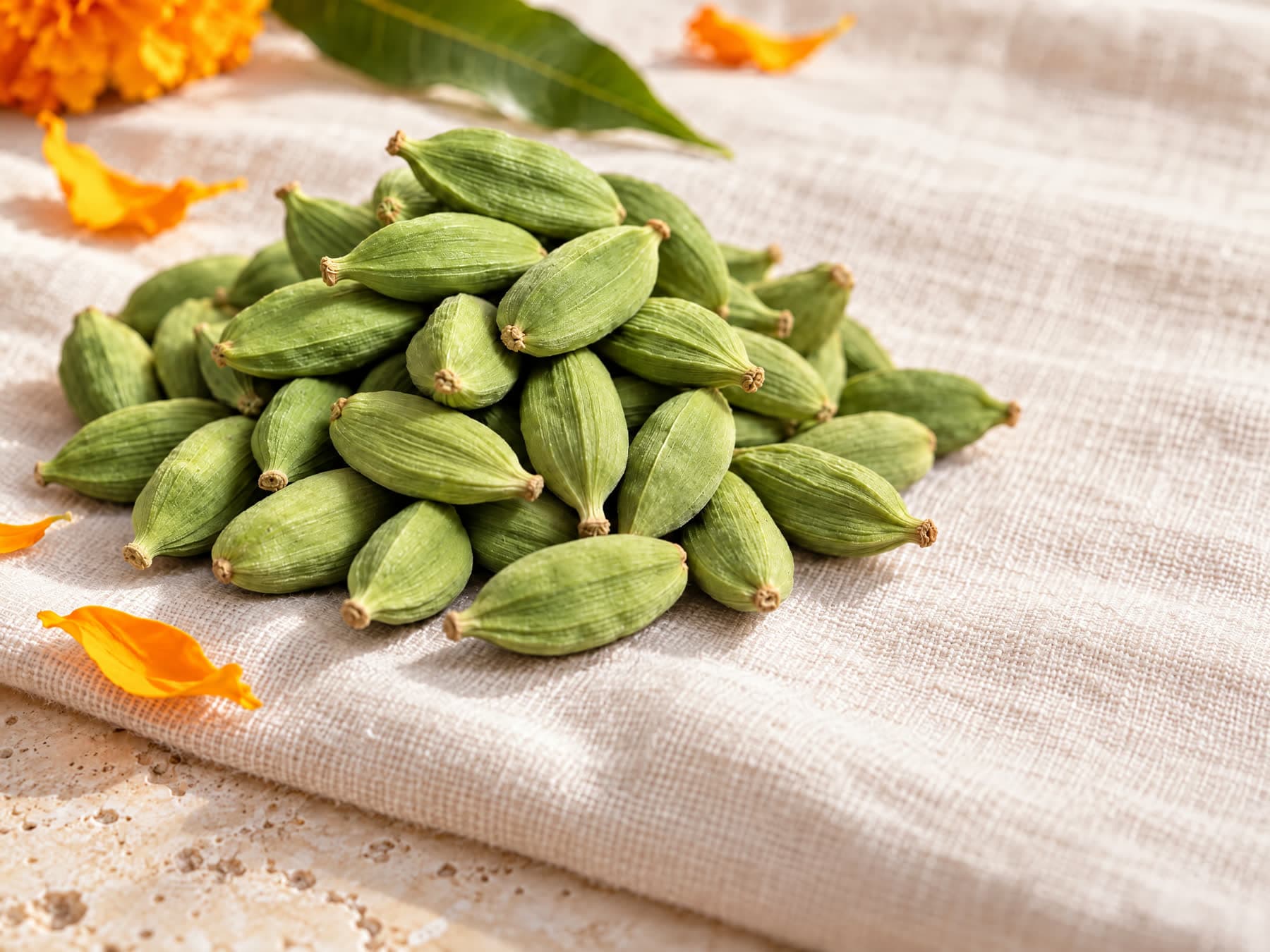
- Bold: a trade word for larger, fuller, well-developed pieces within a crop. Bold peppercorns and bold cardamom pods are usually denser and more aromatic than small or shrivelled ones. You may also see extra bold for the largest size band.
- Size in millimetres: cardamom in particular is often sold by pod size, such as 7 mm or 8 mm. This refers to the pod diameter after sieving through screens. Larger, even sizing generally means a more carefully sorted lot, which is why a label such as hand-selected 8 mm whole green cardamom tells you something concrete.
- Quills, featherings and chips: terms from the cinnamon trade. Quills are the long rolled sticks, featherings are smaller inner pieces, and chips are broken bark usually used for grinding.
- Mesh: for powders, a measure of how fine the grind is. A higher mesh number means a finer powder.
Grading and cleaning terms in the spice trade
Grading is how the trade separates a harvest into consistent lots. It is one of the most useful signals for a home buyer, because it tells you someone has sorted the spice rather than bagging it as it came.
Grade
A grade is a defined category based on factors such as size, colour, density and how much foreign matter is present. Grade names differ between spices and between standards bodies, so the name alone matters less than whether the seller can tell you what it means. In India, AGMARK is the government's grading mark for agricultural produce, and you may see it on some spice packs.
Garbled and ungarbled
These terms are common in the pepper trade. Garbled spice has been cleaned and sorted to remove stalks, dust, stones, light berries and other unwanted material. Ungarbled spice is closer to how it came from the drying yard, with more of that material still present. Garbled lots cost more for a reason: sorting takes work and some of the weight is removed.
Light berries and pinheads
Light berries are immature or hollow peppercorns that float in water and carry little aroma. Pinheads are very small, undeveloped berries. A good grade keeps both to a minimum.
Machine cleaned and hand-selected
Machine cleaned means the spice has passed through equipment such as sieves, air blowers, destoners and magnets to remove dust, stones, stalks and metal. Some lines also use optical colour sorters to reject off-coloured pieces. Hand-selected means people have picked through the lot as well, often to judge pod size, colour and wholeness more finely than a machine can.
Extraneous and foreign matter
Anything that is not the spice itself, such as stones, soil, stalks, husk or insect damage. Food standards set limits for these, and the limits vary by spice and by standard.
Quality measures: moisture, oil and density
These are the numbers a laboratory or buyer checks. You rarely see them on a retail pack, but understanding them helps you judge what you smell and see.
| Term | What it means | Why it matters to you |
|---|---|---|
| Moisture content | How much water remains in the dried spice | Too much invites mould and clumping, and adds weight you pay for |
| Volatile oil | The aromatic essential oils that give a spice its smell and much of its flavour | More volatile oil usually means a more fragrant spice; it fades with age, heat and air |
| Non-volatile extract | Flavour compounds that do not evaporate easily, such as those behind pepper's heat | Contributes to pungency and body |
| Bulk density or litre weight | How much a fixed volume of the spice weighs | Denser pepper generally has fewer light berries |
| Total ash | The mineral residue left after burning a sample | High ash can point to soil, sand or dust |
You cannot measure volatile oil at home, but your nose is a decent proxy. Crush a cardamom seed or crack a peppercorn: a strong, clean aroma suggests the oils are intact. With late July humidity in most of India, moisture is the term to watch most closely, since damp spices lose aroma and can spoil quickly.
Label and date terms on spice packs
These words are printed on retail packs and are the ones you can actually use at the shelf.
- Packed on or date of manufacture: when the product was packed. For spices, this is often more useful than the best before date, because aroma is freshest soon after packing.
- Best before: the date up to which the maker expects the product to keep its stated quality if stored as directed. Spices do not usually become unsafe the day after, but they gradually lose aroma.
- Use by: a stricter date used for more perishable foods. It is less common on dry spices.
- Batch or lot number: a code that links the pack to a specific production run. If you ever have a complaint, this is the number the brand needs.
- Net weight: the weight of the spice alone, without packaging.
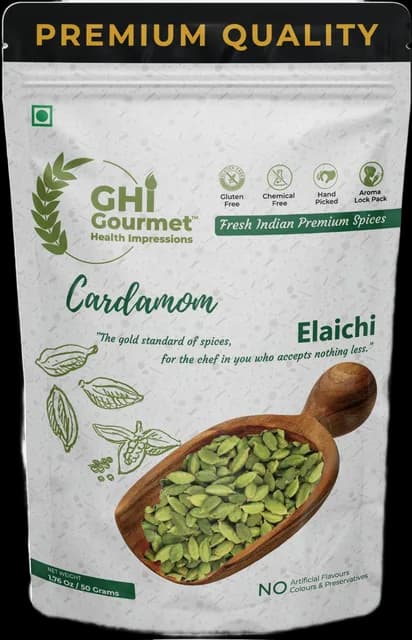
- FSSAI licence number: the licence of the food business responsible for the product. It shows the business is registered with India's food regulator.
- Ingredients: for a single spice this should list only that spice. Anything else, such as added starch, colour or anti-caking agents, should be declared.
- Non-GMO, no additives, no preservatives: claims about what is not in the product. They are most meaningful when backed by a traceable brand and certifications.
- Storage instructions: usually store in a cool, dry place and reseal after opening. Worth following, as it directly affects the best before promise.
Certification and packaging terms
Certifications you may see
- ISO 22000: an international standard for food safety management across the supply chain.
- Spices Board registration: registration with India's Spices Board, which is required for businesses exporting spices.
- APEDA: registration with India's agricultural and processed food export authority.
- US FDA registered: a food facility registration with the US regulator, needed to export food to the United States. It is a registration, not an approval of a specific product.
Packaging words
Resealable or zip-lock packs let you close the pack tightly after each use. Nitrogen flushed means the air in the pack was replaced with nitrogen before sealing to slow oxidation. Multi-layer or laminated packs block light and moisture better than a thin plastic bag. For spices, a pack that shuts properly after opening matters almost as much as the spice inside.
When you are comparing powdered spices, packaging becomes even more important, because ground spices lose their volatile oils faster than whole ones once exposed to air and damp.
Frequently asked questions
What does garbled black pepper mean?
Garbled black pepper has been cleaned and sorted to remove stalks, dust, stones and light berries. Ungarbled pepper has had little or no sorting, so it usually contains more unwanted material and weaker berries.
What is volatile oil in spices?
Volatile oil is the aromatic essential oil inside a spice that gives it its smell and much of its flavour. It evaporates over time, especially with heat and air, which is why old spices taste flat.
Is best before the same as expiry date for spices?
Not quite. Best before indicates when quality, mainly aroma, may start to decline. Dry spices stored well are generally fine a little after that date, but they will be less fragrant. Always discard anything with mould, damp clumps or an off smell.
What does bold mean on cardamom or pepper?
Bold describes larger, fuller, well-developed pods or peppercorns from a crop. They tend to be denser and more aromatic than smaller, shrivelled ones, and they usually cost more.
Why is the packed on date important for spices?
It tells you how long the spice has been sitting since packing. Aroma is at its best soon after packing, so a recent packed-on date is a better freshness guide than a distant best before date.
Once these words make sense, spice labels become far easier to read, and far harder to be fooled by. At GHI, we keep our labels simple: graded spices, clear batch details and resealable packs, so you can see exactly what you are buying.